Understanding Dividend Payment Dates and Their Impact on Stockholders
Finance

Understanding Dividend Payment Dates and Their Impact on Stockholders

authorBy Michele Ferrero
DateJul 17, 2026
Read time2 min

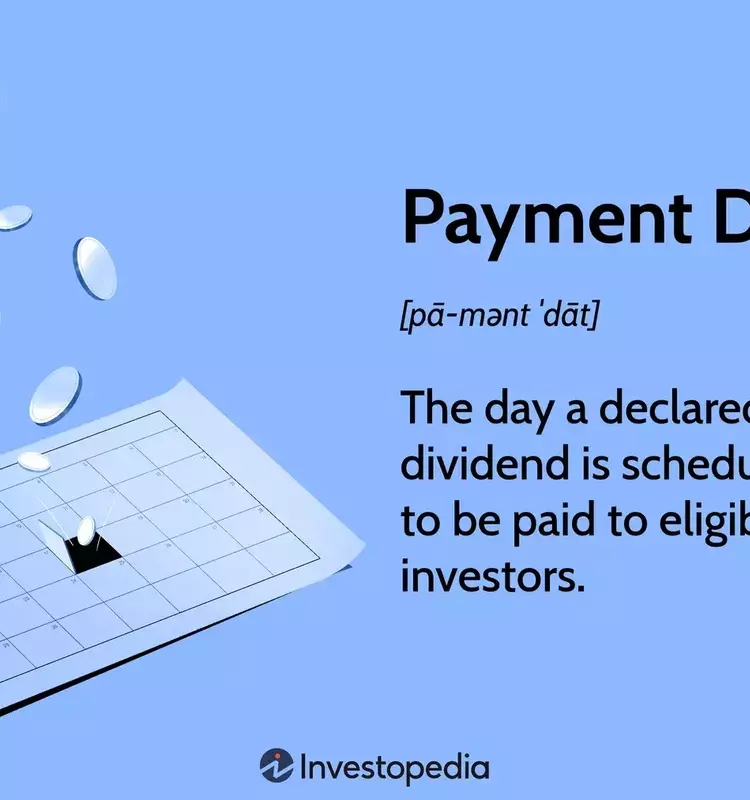
The payment date, often referred to as the pay date, signifies the day when a company distributes its declared dividends to eligible shareholders. Grasping the nuances of this date is essential for investors, as it plays a pivotal role in stock valuation and the actual receipt of dividend income. This intricate process encompasses several critical stages: the declaration date, the record date, and the ex-dividend date, each playing a crucial role in determining who qualifies for dividend payments.

On the payment date, the actual transfer of funds occurs, either through physical checks or electronic transactions, directed to qualifying shareholders. To be eligible for a dividend on this date, an investor must have held the stock prior to the ex-dividend date. It is important to note that dividends are typically remitted to the shareholder's broker, who then credits the investor's account or facilitates reinvestment as per instruction. Companies' stock values may experience fluctuations on the payment date, reflecting market perceptions of financial stability following the dividend distribution. While a dividend payout often leads to a stock price adjustment, external market forces can sometimes offset this, maintaining or even boosting the share value.

For investors, understanding the dividend timeline is paramount. This begins with the announcement or declaration date, when the company's board of directors publicly commits to a dividend. Following this, the company establishes a record date, which is the deadline for shareholders to be officially registered to receive the dividend. The ex-dividend date, usually one business day before the record date, is particularly significant; anyone purchasing shares on or after this date will not qualify for the upcoming dividend payment. Regular and consistent dividend payouts can signal a company's robust financial health, yet investors should also factor in tax obligations and the company's specific dividend strategies to make informed investment decisions.

Understanding these critical dates and the broader implications of dividend distributions empowers investors to strategically manage their portfolios, optimize their financial planning, and ensure they are maximizing their returns from income-generating assets. This informed approach fosters financial prudence and supports long-term investment success.

More Articles
Finance
Nexa Resources: Zinc's Untapped Potential
Nexa Resources S.A. (NEXA), a global leader in zinc mining and smelting, is poised for significant growth, with strong financial performance, strategic expansion projects, and an undervalued market position. The company's focus on deleveraging and responsible capital allocation further enhances its appeal to investors seeking exposure to the surging demand for zinc, copper, and silver.
By David RubensteinJul 17, 2026
Finance
Intel's AI-Powered Data Center Growth Poised to Propel Q2 Earnings
Intel Corporation is set to announce its second-quarter financial results on July 23. Analysts anticipate a significant revenue increase, driven primarily by robust demand in the Data Center and AI sector. The company's strategic investments in advanced semiconductor production, particularly its €5 billion expansion in Ireland, highlight its commitment to capitalizing on the burgeoning AI and high-performance computing markets. This growth trajectory builds on a strong first-quarter performance and positions Intel for continued expansion in key technological areas.
By Michele FerreroJul 17, 2026
Finance
Reinsurance Market Shifts Focus to Diversified Liabilities and Growth Strategies
The reinsurance sector is increasingly expanding its scope beyond traditional offerings, venturing into new geographical regions and a broader spectrum of liabilities previously overlooked. This strategic pivot includes a notable embrace of long-term care and universal life policies with secondary guarantees. The move is exemplified by a significant transaction where Fortitude Reinsurance Company Ltd. doubled its commitment to Unum Group's long-term care business, highlighting a broader trend of reinsurers seeking multifaceted growth avenues.
By David RubensteinJul 17, 2026
Finance
Emerging Markets Bonds: Resilience Amidst Shifting Global Dynamics
In a world where global risks are subsiding, the fundamental strengths of emerging markets (EM) are becoming increasingly prominent. This article delves into the compelling case for EM bonds, highlighting factors such as disciplined inflation management, attractive real interest rates, and the notable resilience of Chinese bonds. These elements collectively contribute to a robust investment landscape within emerging economies.
By Strive MasiyiwaJul 17, 2026
Finance
F.N.B. Corp: A Strong Contender in the Financial Sector
F.N.B. Corporation continues to be a compelling investment opportunity, demonstrating consistent performance driven by disciplined growth strategies, robust credit quality, and a solid capital foundation. The company's second-quarter results showcased strong financial health with a 6% revenue increase to $463 million and a 17% rise in earnings, alongside prudent loan and deposit expansion.
By Robert KiyosakiJul 17, 2026