Understanding the Dynamics of the Labor Market: A Comprehensive Analysis
Finance

Understanding the Dynamics of the Labor Market: A Comprehensive Analysis

authorBy Robert Kiyosaki
DateApr 30, 2026
Read time2 min

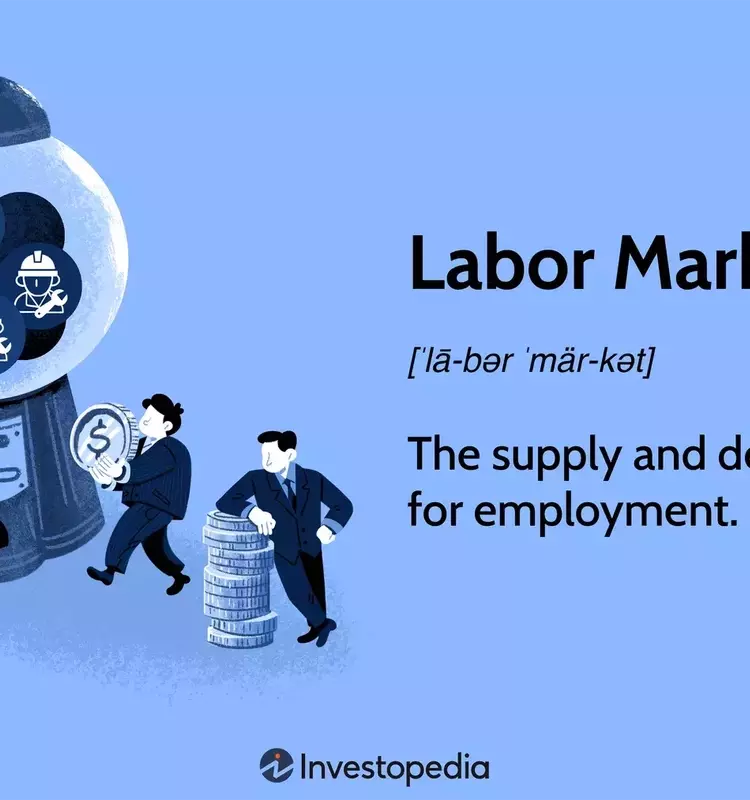
The labor market, a fundamental aspect of any economy, involves the intricate interplay between the supply of available workers and the demand from employers. This dynamic relationship is a cornerstone of economic activity, profoundly influencing broader economic systems such as capital, goods, and services. Understanding this market requires examining both its macroeconomic aspects, which deal with overall trends, and its microeconomic aspects, which focus on individual choices and firm behaviors. These two perspectives provide a complete picture of how labor impacts economic policies and business strategies.

A critical measure of the labor market's health is the unemployment rate, which indicates the percentage of the workforce actively seeking but unable to find employment. Historically, periods of economic downturns, such as the Great Recession, have seen a surge in unemployment as demand for goods and services, and consequently labor, sharply declines. While unemployment figures offer a snapshot of economic stability, another important indicator is labor productivity, which quantifies the output generated per hour of work. Although technological advancements have significantly boosted productivity in many economies, including the U.S., a noticeable gap has emerged where wage growth has not kept pace with these gains. This disparity suggests an oversupply of labor relative to demand, giving employers greater leverage in determining compensation.

Several factors critically shape the supply and demand dynamics within the labor market. Immigration, for instance, can expand the labor pool, potentially influencing wage levels, particularly in sectors requiring less specialized skills. Conversely, an aging population tends to shrink the labor supply, which could lead to increased wages. However, these factors rarely operate in isolation. The impact of immigration may also stimulate overall demand, as new workers are also consumers, creating a more complex interaction. Furthermore, the rise of automation, the effects of globalization allowing work to cross international borders, and varying access to quality education all contribute to the evolving nature of the modern labor market, with discussions often revolving around policies like the minimum wage and its broader economic implications.

Ultimately, a thriving labor market is essential for a robust economy. The ongoing efforts to enhance education and skills training, coupled with judicious policy-making, are crucial for fostering a dynamic environment where productivity gains are equitably shared, ensuring both economic growth and social well-being.

More Articles
Finance
CVR Partners Demonstrates Robust Performance with Increased Distribution
CVR Partners (UAN) reported an exceptional first quarter, nearly doubling its net income to $50 million and announcing a variable distribution of $4.00 per unit. This performance is attributed to strong fertilizer prices, high ammonia plant utilization of 103%, and significant demand driven by spring planting. The company's forward yield now exceeds 10%, reinforcing a positive outlook despite potential risks like fluctuating fertilizer prices, natural gas volatility, existing debt of $570 million, and geopolitical uncertainties. The company is positioned for continued growth.
By Morgan HouselApr 30, 2026
Finance
Berkshire Hathaway's Post-Buffett Era: Navigating Market Changes and Future Leadership
Berkshire Hathaway's upcoming shareholder meeting marks a new chapter without Warren Buffett's direct involvement. The company's stock has underperformed the S&P 500, prompting investors to seek clarity on future capital allocation and the strategic direction under new leadership. This pivotal event will shed light on how the investment giant plans to adapt to evolving market conditions.
By Michele FerreroApr 30, 2026
Finance
Werner Enterprises Navigates Fluctuating Logistics Landscape
Werner Enterprises (WERN) achieved a 13.6% year-over-year revenue increase in Q1 2026, largely due to strategic acquisitions and effective fleet management. Despite this growth, operating margins remain narrow at 0.5% due to persistent inflation and rising operational costs. The company's asset-light Werner Logistics division and robust financial health offer some protection against broader economic challenges. With a target price of $35.76, WERN is considered fully valued, suggesting a 'hold' rating given current market overbought conditions and limited upside potential.
By David RubensteinApr 30, 2026
Finance
KLA Corporation: Dominating Semiconductor Process Control for AI Growth
KLA Corporation holds a near-monopoly in semiconductor process control systems, essential for the escalating demands of AI-driven chip production. Despite a high 2026 P/E ratio of approximately 50x, the company's strong market position and projected industry growth make its stock a compelling investment. Management anticipates a doubling of revenue to $26 billion within five years, with earnings per share expected to outpace revenue growth by 2030. While valuation risks exist, KLA's industry leadership, consistent revenue streams, and exposure to the burgeoning AI sector underscore its potential for long-term value creation.
By Suze OrmanApr 30, 2026
Finance
Antero Resources Exceeds Expectations Amidst Market Fluctuations
Antero Resources (AR) reported a significant increase in diluted EPS, reaching $1.72 compared to $0.66 in the previous year's first quarter. The company's strategic market timing and a self-financing acquisition contributed to this success, despite hedging impacts on realized prices. Management anticipates substantial debt reduction and a positive production outlook for 2026.
By Lisa JingApr 30, 2026