Safeguarding Agreements: The Power of Escalator Clauses
Unpacking the Escalator Clause: A Fundamental Contractual Tool
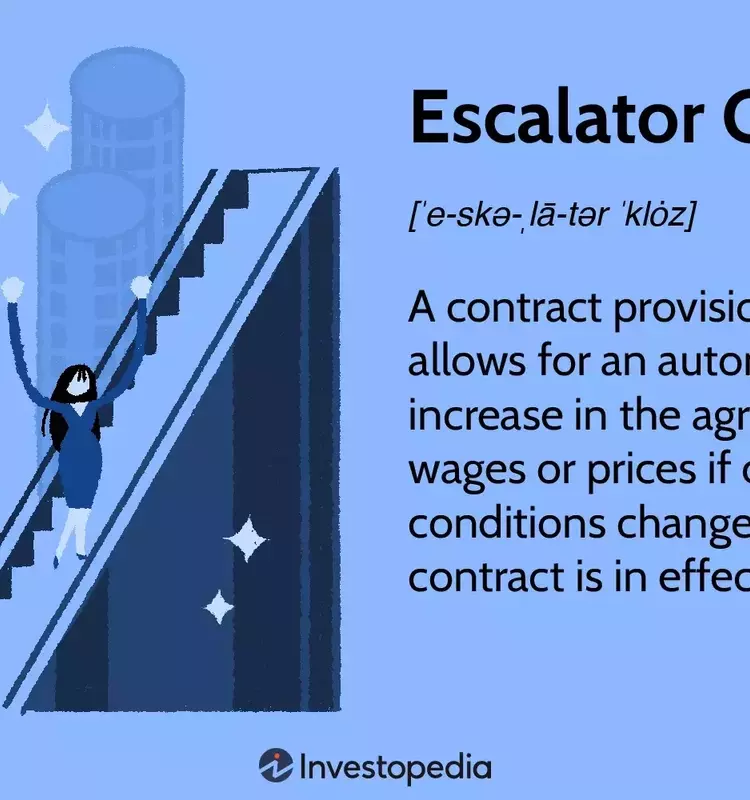
An escalator clause, also known as an escalation clause, is a contractual stipulation designed to permit the modification of predetermined wages, prices, or rental fees in response to shifts in external conditions during the agreement's active period. This mechanism ensures that the terms of a contract remain equitable for all signatories, even when unforeseen changes occur in the broader economic landscape.
The Strategic Advantages of Including Escalator Provisions
Incorporating an escalator clause offers significant advantages, primarily by enabling parties to commit to extended agreements without the apprehension that fluctuating market dynamics could render the terms disadvantageous. Such clauses are instrumental in upholding contractual fairness. They are frequently championed by labor organizations, which often seek to link wage increments in employment agreements to inflation rates, thereby protecting workers' purchasing power. Furthermore, these provisions are common in business contracts, particularly for entities dealing with goods or services susceptible to price volatility, such as those affected by changes in oil prices or material costs. In the real estate sector, landlords might insist on an escalator clause in prolonged rental agreements to account for potential tax hikes, thereby securing a consistent return on investment while offering tenants the stability of a long-term lease. Conversely, these clauses can also feature de-escalation provisions, allowing for price reductions if specific costs diminish.
Real-World Application: Escalator Clauses in Property Transactions
A prime illustration of an escalator clause in action can be observed in real estate transactions, specifically when a prospective buyer integrates such a clause into a home offer. This signifies the buyer's readiness to increment their bid if competing offers emerge. For instance, if an initial offer is $400,000, an escalator clause might state that the buyer will surpass any higher offer by $3,000, up to a maximum of $427,000. Should a $405,000 offer be presented, the escalator clause would automatically adjust the buyer's offer to $408,000. However, if a rival bid reaches $429,000, the clause's predefined cap of $427,000 would prevent any further increase from the original buyer.
Escalator Clauses in Workforce Agreements
In the realm of labor contracts, an escalator clause might stipulate that compensation levels will progressively rise in alignment with increases in the Consumer Price Index, thereby safeguarding employees against inflationary erosion of their earnings. Similarly, in contracts for construction projects, such clauses can explicitly detail current material costs while allowing for subsequent price adjustments if these costs fluctuate unexpectedly.
The Contentious Role of Escalator Clauses in Economic Stability
The implementation of escalator clauses in employment agreements often sparks considerable debate. Labor unions typically advocate for these provisions, asserting their necessity to shield workers from a potential decrease in purchasing power over time. Conversely, some economic experts contend that such clauses might inadvertently exacerbate the very inflationary pressures they are intended to mitigate, creating a cyclical effect within the economy.
Escalator Clauses in Commercial Engagements
Within commercial contracts, an escalator clause serves as a protective measure for contractors against unpredictable surges in the prices of essential supplies. These clauses typically outline the current costs of key materials and include a stipulation that actual prices are subject to change, thereby providing a framework for fair adjustments and mitigating financial risks for the contractor.
Concluding Thoughts on Escalator Clauses
An escalator clause, frequently termed an escalation clause, is a critical contractual tool. It enables adjustments to wages or prices in response to evolving economic conditions over the contract's duration. This type of clause is commonly applied across various sectors, including labor agreements and real estate deals, to ensure fairness and adaptability for all involved parties.
