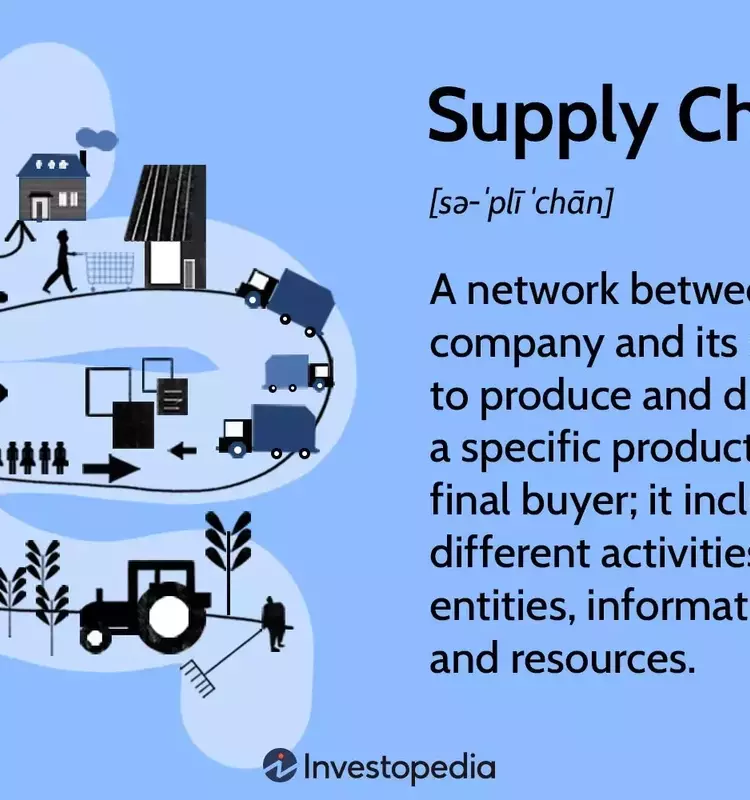
A supply chain represents the comprehensive journey a product undertakes, starting from its raw components and culminating in its delivery to the consumer. This intricate network involves numerous entities and processes, all working in concert to ensure the seamless transformation and movement of goods. Mastering supply chain management is crucial for businesses aiming to cut expenses and boost productivity, ultimately gaining a competitive edge in the marketplace. Recent global challenges, particularly the COVID-19 pandemic, have underscored the vulnerability of these networks, leading to widespread delays and shortages, and accelerating the industry's pivot towards digital solutions and enhanced operational transparency.
The Core Mechanics and Components of Supply Chains
The journey of a product from its initial state as raw materials to its final availability for the customer is orchestrated by a complex system known as a supply chain. This encompasses every stage, including the procurement of raw materials, their transportation to manufacturing facilities, the production process itself, and finally, the delivery of finished goods to distribution hubs or retail locations. This elaborate network typically involves a diverse group of participants: the original producers of raw materials, various vendors supplying intermediate components, storage facilities like warehouses, transportation providers, distribution centers, and ultimately, the retailers who connect with end consumers. The effective coordination of these elements is what defines successful supply chain functionality.
Beyond the physical movement of goods, a supply chain's operational framework begins with an order and extends through several key business functions. These include the development of new products, strategic marketing efforts to promote them, efficient operational processes for manufacturing, streamlined distribution channels, sound financial management, and responsive customer service. Optimizing these functions through proficient supply chain management not only drives down operational costs but also significantly boosts profitability. Conversely, a breakdown in any single part of this interconnected system can lead to substantial disruptions, causing delays, increasing expenses, and negatively impacting a business's overall performance and reputation.
Strategic Models and Practices in Supply Chain Management
Companies strategically choose their supply chain models based on their unique operational structures and specific business demands. The "Continuous Flow Model," for instance, is ideally suited for businesses that consistently produce high-demand products with minimal variations. This model emphasizes uninterrupted production and stringent inventory control, requiring a steady influx of raw materials to avert operational bottlenecks. In contrast, the "Fast Chain Model" caters to industries driven by rapidly changing trends, such as fast fashion, where swift movement from concept to consumer is paramount to capitalizing on fleeting market opportunities. For businesses dealing with seasonal or holiday-specific merchandise, the "Flexible Model" is preferred. This model allows for rapid scaling up of production during peak demand and efficient winding down during off-peak periods, with profitability heavily reliant on precise forecasting of material, inventory, and labor needs.
Exemplary supply chain management is characterized by several leading practices that foster efficiency and adaptability. These include a steadfast commitment to continuous improvement, a relentless pursuit of increased operational speed, and the cultivation of strong collaborative relationships among all entities within the supply chain. Furthermore, successful management involves the proactive adoption of new technologies to refine processes and the implementation of robust metrics to meticulously evaluate the efficacy of each stage. Such practices are instrumental in preventing delays, ensuring consistent product quality, and mitigating potential cost increases, thereby safeguarding against inflation and contributing to a more streamlined and responsive global economy. The ability to adapt and innovate within these frameworks is crucial for navigating disruptions and maintaining long-term success.
