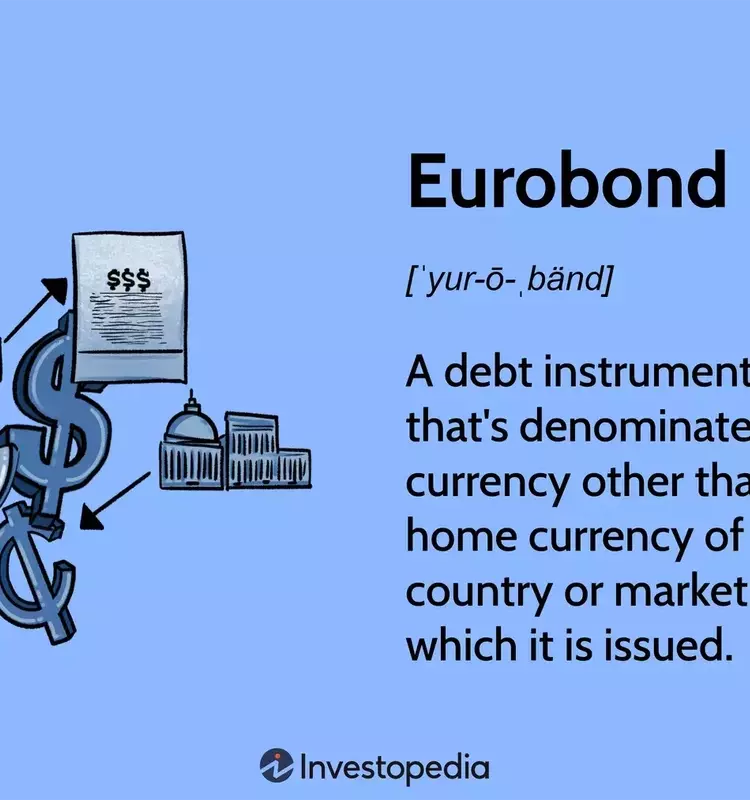
Eurobonds are debt instruments that enable companies and governments to access international capital markets by issuing bonds in a currency other than that of the issuing country. This structure offers flexibility to issuers and diverse opportunities for investors. These bonds are highly liquid, typically have small face values, and are often traded in bearer form, allowing for easy transfer of ownership.
A Eurobond is defined as a debt instrument where the principal and interest payments are made in a currency different from the country of issuance. For example, a bond issued in Japan denominated in U.S. dollars would be considered a Eurobond. This characteristic distinguishes them from traditional bonds and expands funding options for borrowers while providing investors access to international markets.
The flexibility of Eurobonds is a key factor in their widespread appeal. Issuers, whether multinational corporations or sovereign governments, can choose the country of issuance based on factors such as regulatory environment, prevailing interest rates, and market depth. This allows them to optimize borrowing costs and reach a broader base of investors. For investors, the small par values of Eurobonds make them accessible and affordable, promoting high liquidity in the secondary market. This means they can be easily bought and sold, enhancing their attractiveness as an investment vehicle.
The concept of Eurobonds originated in 1963 with the issuance of a $15 million eurodollar bond by Autostrade, an Italian company managing national railroads. This pioneering bond was designed by London bankers, issued at Amsterdam Airport Schiphol, and paid in Luxembourg, primarily to minimize tax implications. Its introduction provided European investors with a secure, dollar-denominated investment option, marking the beginning of a significant financial innovation.
Over the decades, the Eurobond market has grown substantially. While precise figures are challenging to obtain due to many Eurobonds being unregistered and trading in bearer form, estimates suggest they constitute about 30% of the total global bond market, which exceeds $100 trillion in outstanding debt. A growing trend in this market is the increased issuance by emerging market nations, whose governments and companies seek to tap into deeper and more developed financial markets for their borrowing needs, thereby diversifying their funding sources.
The issuance and delivery mechanisms for Eurobonds have also evolved. Initially, these bonds were physically delivered to investors. Today, however, they are primarily issued and managed electronically through various services, such as the Depository Trust Company (DTC) in the United States and the Certificateless Registry for Electronic Share Transfer (CREST) in the United Kingdom. The prevalence of Eurobonds in bearer form means that ownership is determined by physical possession rather than registration, which can offer investors certain advantages related to regulation and taxation.
In summary, Eurobonds offer a sophisticated financial instrument that bridges international capital markets. Their flexibility, liquidity, and ability to attract diverse issuers and investors have cemented their role as a crucial component of the global financial landscape. From their inception in the early 1960s to their current prominence, Eurobonds have continually adapted to meet the evolving needs of both borrowers and lenders across borders.
