Understanding Exhaustion Gaps in Stock Trading
Finance

Understanding Exhaustion Gaps in Stock Trading

authorBy Strive Masiyiwa
DateMay 19, 2026
Read time3 min

In the dynamic world of stock markets, identifying potential turning points is paramount for astute traders and investors. One such crucial technical pattern is the exhaustion gap, a signal that often precedes a significant shift in a stock's price trajectory. This phenomenon arises when a prolonged upward price trend culminates in a dramatic downward movement, accompanied by elevated trading volumes. It's a vivid illustration of market sentiment reaching a critical juncture, where the enthusiasm of buyers gives way to the urgency of sellers. Recognizing and accurately interpreting these gaps can provide valuable insights, enabling participants to position themselves strategically at the onset of a new trend.

Insightful Analysis of Exhaustion Gaps in Trading

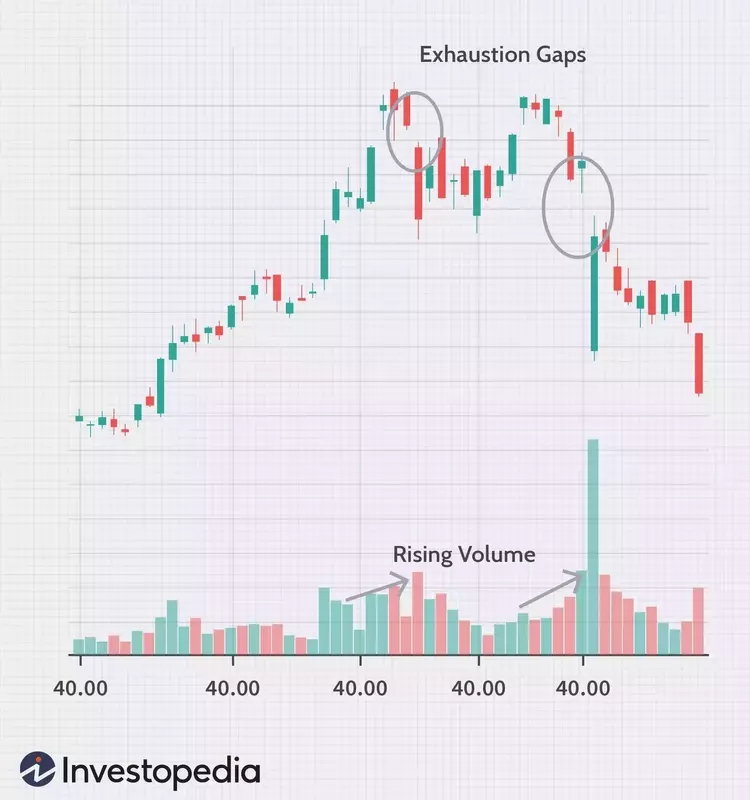
An exhaustion gap emerges as a compelling indicator within the realm of technical analysis, denoting a potential end to an ongoing price rally for a particular stock. This technical anomaly is predominantly observed on daily trading charts and manifests as a distinct downward price break, usually following an extended period of appreciation for the stock, often spanning several weeks. The core attributes that define an exhaustion gap are a notable surge in trading activity, reflected by increased volume, coupled with a significant price differential between consecutive trading sessions, marking a transition from bullish to bearish sentiment. This critical signal offers vigilant market observers an early alert to an impending trend reversal.

The underlying rationale for an exhaustion gap lies in the depletion of buying momentum and the aggressive influx of selling pressure. After a sustained period where buyers have enthusiastically driven up a stock's price, reaching what seems to be a climactic peak, the market witnesses a sudden cessation of this buying fervor. This void is quickly filled by sellers, often eager to capitalize on prior gains, leading to a sharp decline. A real-world illustration of this played out in the summer of 2018 with Netflix shares. The stock had experienced a robust upward trend, characterized by strong purchasing activity. However, a pronounced exhaustion gap appeared, featuring a substantial drop in price on heightened volume. This abrupt shift signaled that the collective buying power had been exhausted, paving the way for a notable price correction. Such a pattern, occurring over two trading days, vividly signals that prices are likely to recede in the subsequent days or weeks, marking a pivotal moment where the established trend line is violated, and a new market direction begins to form.

Navigating the complexities of market shifts requires a keen eye for subtle signals, and exhaustion gaps provide an invaluable lens for this. While not always easy to discern from other gap types, their predictive power for trend reversals makes them a potent tool. This insight reinforces the importance of continuous learning and adaptability for anyone involved in the stock market, highlighting that successful trading often hinges on recognizing these critical junctures and adjusting strategies accordingly. The market is a continuous narrative of ebbs and flows, and mastering the art of interpreting these turning points can transform potential risks into calculated opportunities.

More Articles
Finance
Maximizing Your Health Savings Account: Beyond Immediate Healthcare Expenses
This article explores the dual functionality of Health Savings Accounts (HSAs), highlighting how many account holders utilize them for immediate medical costs while a smaller segment strategically invests their balances for long-term, triple tax-advantaged growth. It delves into the benefits of both approaches and the flexibility HSAs offer in adapting to individual financial situations over time. Learn how to optimize your HSA for both short-term health needs and long-term financial planning.
By Robert KiyosakiMay 19, 2026
Finance
Understanding Cyclical Industries and Their Economic Impact
This article explores cyclical industries, which are highly influenced by economic fluctuations. It details how these industries, such as airlines and car manufacturing, thrive during economic growth and contract during downturns. The piece also contrasts cyclical industries with counter-cyclical ones like utilities and healthcare, highlighting their stability during economic shifts. Understanding the business cycle's phases—expansion, peak, contraction, and trough—is crucial for assessing the performance of cyclical stocks.
By David RubensteinMay 19, 2026
Finance
S&P 500 Earnings Growth Faces Headwinds Amidst One-Time Gains and Treasury Yield Fluctuations
The S&P 500's forward four-quarter earnings estimate recently experienced its first decline since January 2026, signaling a potential shift in market dynamics. This downturn coincides with significant earnings reports from major corporations like Walmart and Nvidia, marking an unofficial conclusion to the first quarter of 2026 earnings season. Investors are closely monitoring these trends, particularly the S&P 500's earnings yield and its relationship with the Treasury yield curve, as one-time gains influence overall market perception.
By Morgan HouselMay 19, 2026
Finance
Understanding the Expanded Accounting Equation
The expanded accounting equation offers a detailed view of a company's financial standing by dissecting shareholders' equity into contributed capital, retained earnings, revenue, and dividends. This granular approach provides insights into how profits are utilized, whether for distribution or reinvestment, offering a clearer picture for financial analysis. This article explores its components, functionality, and real-world applications using examples like Exxon Mobil and Apple.
By Suze OrmanMay 19, 2026
Finance
EHang: From Paper Bleeding to Reality Thriving
EHang Holdings Limited (EH) continues to demonstrate advancements in eVTOL technology, making electric air taxis a tangible reality. The company recently completed its inaugural passenger flight in Mexico and Latin America, marking a significant milestone in expanding its global presence. Furthermore, EHang is broadening its operational reach through regulatory advancements in Thailand. The Yunfu production facility, with an annual capacity of 1,000 eVTOLs, is poised to meet future demands, bolstered by robust commercialization efforts in China and operations spanning 21 countries worldwide.
By Lisa JingMay 19, 2026