Understanding Financial Premiums: Concepts and Applications
Finance

Understanding Financial Premiums: Concepts and Applications

authorBy Suze Orman
DateApr 29, 2026
Read time3 min

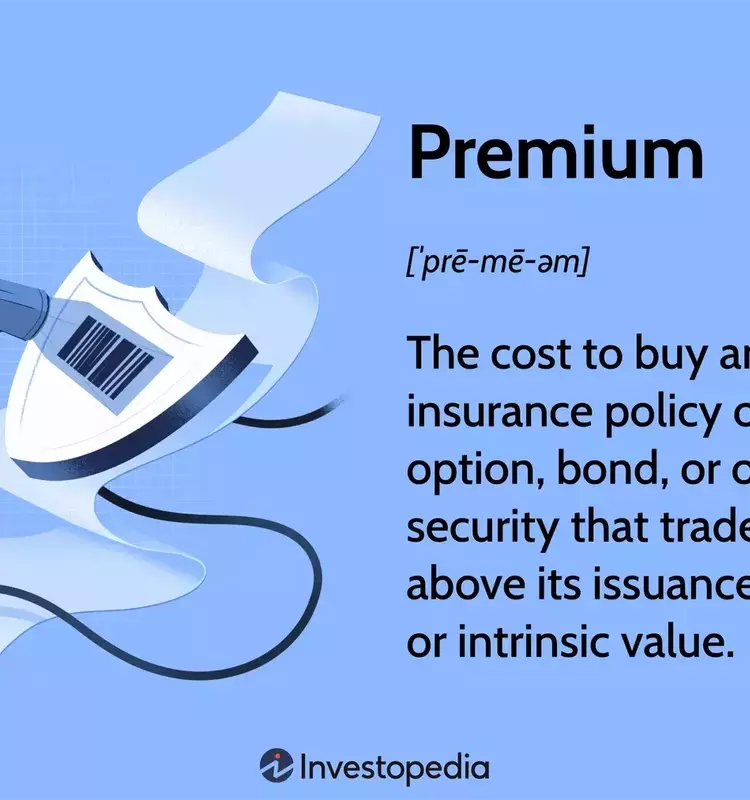
The term "premium" holds diverse meanings within the financial world, generally referring to an extra cost paid above a standard price. This additional expenditure can signify added value, reflect specific benefits, or compensate for inherent risks. Understanding premiums is crucial for navigating investment strategies, options trading, and insurance coverage effectively. Whether it involves securities trading above their intrinsic value, the cost associated with options contracts, or the periodic payments for insurance policies, premiums play a pivotal role in financial transactions and risk assessment.

Detailed Insights into Financial Premiums

In the vibrant financial markets, the term "premium" is a cornerstone, appearing in various contexts from bond trading to options and insurance. Imagine a bond, issued with a certain interest rate, suddenly becoming more attractive than newly issued bonds as market interest rates decline. This bond will then trade at a premium, meaning its market price exceeds its face value, offering investors a higher yield relative to current market alternatives. This phenomenon highlights how premiums can signal perceived value and demand.

Consider the sophisticated world of options trading. An options premium is the direct cost an investor pays to acquire an options contract. This payment grants the buyer the right, but not the obligation, to execute a trade at a predetermined price within a specified timeframe. The premium here is not static; it encapsulates the option's intrinsic value and its time value, which typically diminishes as the option approaches its expiration. Factors such as market volatility and the proximity of the strike price to the current market price also influence this premium. Astute investors often strategize by selling certain options to offset the cost of acquiring others, meticulously managing their portfolio's risk profile.

Finally, in the realm of insurance, premiums are the regular payments made by policyholders to their insurers. These payments act as a safeguard, covering the insurer's potential payout in the event of a covered incident, such as a car accident, a house fire, or health-related expenses. Insurance premiums are meticulously calculated, taking into account the policyholder's risk level and the extent of coverage desired. These periodic payments are essential for maintaining active policy coverage, ensuring financial protection against unforeseen circumstances.

Understanding premiums is paramount for anyone involved in finance. It's a versatile concept that illuminates how value, risk, and market dynamics are quantified and exchanged. For investors, it's a signal to carefully evaluate an asset's true worth against its market price. For options traders, it's a core component of pricing and strategy. And for everyday individuals, it's the gateway to essential financial protection through insurance. Delving into the nuances of premiums empowers individuals to make more informed financial decisions, optimize their investments, and secure their future against uncertainties.

More Articles
Finance
Controlled Foreign Corporations: A Detailed Overview
A Controlled Foreign Corporation (CFC) is a business entity operating outside its owners' primary country of residence, subject to taxation in the home jurisdiction due to substantial ownership. These regulations aim to combat tax evasion by ensuring that profits generated in low-tax regions abroad do not escape domestic taxation. This article explores the mechanics of CFCs, their regulatory implications, and reporting requirements for U.S. shareholders, emphasizing the importance of compliance with international tax laws.
By Morgan HouselApr 29, 2026
Finance
Understanding the Primary Mortgage Market
The primary mortgage market is where individuals secure home loans directly from lenders like banks, credit unions, and mortgage brokers. This market facilitates direct interaction between borrowers and financial institutions, offering various mortgage products and terms. It plays a crucial role in the initial phase of home financing, enabling property acquisition through accessible and flexible lending options. In contrast, the secondary market involves the trading of these loans among investors.
By David RubensteinApr 29, 2026
Finance
Inventory Financing: A Detailed Overview
Inventory financing is a critical financial tool allowing businesses to use their stock as collateral for loans or lines of credit. This method helps maintain cash flow, manage seasonal fluctuations, and acquire necessary products. It is especially beneficial for small to mid-sized businesses that may not have access to traditional financing options. However, it comes with risks such as higher interest rates and potential for increased debt. Understanding its mechanics, pros, cons, and various forms is essential for businesses considering this financing strategy.
By David RubensteinApr 29, 2026
Finance
Employee Buyout (EBO): A Comprehensive Guide
An Employee Buyout (EBO) is a strategic maneuver where employees are offered a voluntary severance package to leave their positions, often aimed at reducing company costs. It can also signify a corporate restructuring where employees collectively purchase a majority stake in their firm. EBOs are frequently initiated when companies face financial difficulties, serving as an alternative to layoffs or as a means for employees to take ownership and steer the company's future. The decision to accept an EBO involves carefully weighing the severance benefits against individual career prospects and financial stability.
By Fareed ZakariaApr 29, 2026
Finance
Market Movers: Robinhood's Q1 Struggle, Tech Surges, and Geopolitical Oil Shocks
This report examines key market events: Robinhood's disappointing Q1 results and declining user engagement; the impressive post-earnings rallies of Seagate Technology and NXP Semiconductors, driven by strong fundamentals and analyst upgrades; rising oil prices amidst Middle East tensions and robust US economic data; former President Trump's escalated pressure on Iran's oil exports; and Disney's decision to retain ESPN, signaling a continued focus on its streaming strategy despite leadership changes.
By Lisa JingApr 29, 2026