Navigating Tomorrow's Trades: Your Guide to Futures Markets
The Essence of Futures Markets: Contracts for Future Delivery
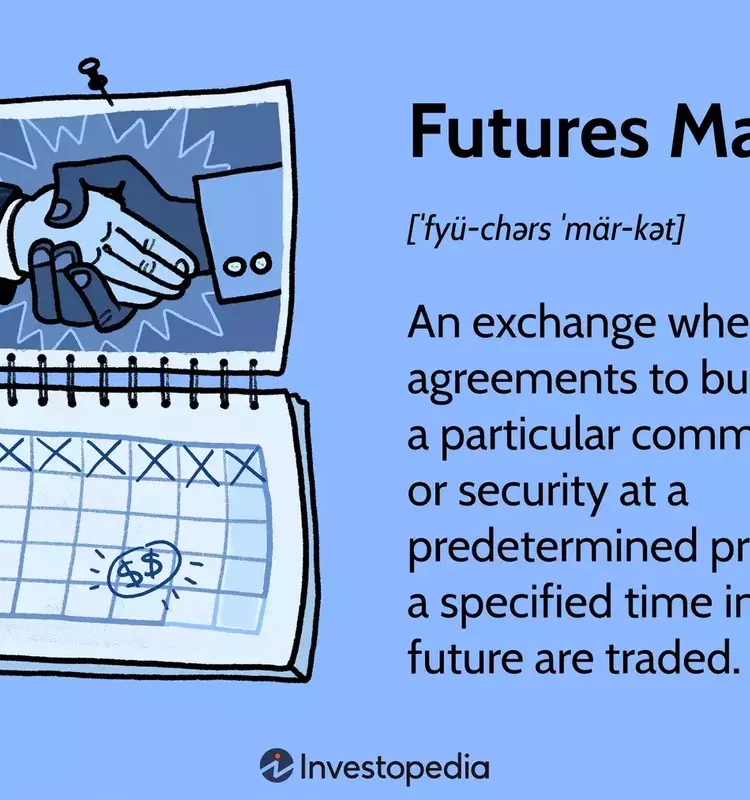
A futures market serves as a central hub where participants engage in the buying and selling of agreements for the future delivery of various assets, ranging from commodities to financial instruments. These contracts establish a fixed price today for a transaction that will occur on a specific date in the future. Originally, these markets thrived on the dynamic 'open outcry' system, where traders communicated using hand signals within bustling trading pits. However, with technological advancements in the 21st century, the vast majority of futures trading has transitioned to electronic platforms.
Distinguishing Futures from Other Financial Agreements
It's crucial to differentiate futures contracts from forward contracts. While both involve future transactions, forward contracts are typically private, highly customizable agreements negotiated directly between two parties, and generally lack the regulatory oversight found in futures markets. Futures contracts, on the other hand, are standardized and traded on regulated exchanges, providing transparency and liquidity. In the United States, bodies such as the Commodity Futures Trading Commission (CFTC) play a pivotal role in overseeing these markets, with major exchanges like the New York Mercantile Exchange (NYMEX) and the Chicago Mercantile Exchange (CME) ensuring the integrity and standardization of contracts.
Delving Deeper: The Mechanics of Futures Contracts
To truly grasp the function of a futures market, one must first comprehend the underlying futures contracts. These financial derivatives are primarily utilized by producers and suppliers to mitigate the impact of market price fluctuations. By entering into a futures contract, they lock in a price for their goods or services, effectively transferring the risk of price volatility to an investor. This investor, in turn, accepts both the potential risks and rewards associated with future price movements.
Expanding Horizons: Beyond Traditional Commodities
Initially, futures markets were predominantly associated with agricultural products. However, their scope has expanded dramatically to include a wide array of financial instruments, such as currencies, interest rates, and stock indices. This evolution allows for hedging and speculative opportunities across diverse asset classes. Unlike conventional securities, futures contracts can be created as long as there is an increase in 'open interest,' reflecting the dynamic nature of these markets. Futures markets often gain prominence during periods of uncertainty in stock markets, playing an increasingly critical role in the stability and health of the broader financial system, often surpassing the size of traditional commodity markets.
Key Players in the Futures Arena: Exchanges and Regulators
Prominent futures markets, such as the Chicago Mercantile Exchange (CME), the Intercontinental Exchange (ICE), and Eurex, operate their own clearinghouses, generating revenue from trading activities and transaction processing. These clearinghouses ensure the integrity of trades by acting as a counterparty to both buyers and sellers. Other exchanges, like Cboe, rely on external clearinghouses, such as the Options Clearing Corporation, to settle their trades. In the U.S., the Commodity Futures Trading Commission (CFTC) serves as the primary regulatory authority, ensuring fair and orderly markets. Globally, each futures market is typically regulated by the relevant oversight body in its home country.
A Glimpse into Practice: How Futures Contracts Operate
Consider a practical scenario involving a coffee farm and a coffee roaster. If the farm sells green coffee beans to the roaster at $4 per pound, and both entities find this price profitable, they seek to stabilize these costs. Through a futures contract, an investor agrees to cover the difference if the market price of coffee falls below a specified rate, protecting the farmer's income. Conversely, if the price of coffee surges above the agreed rate, the investor benefits from the increased profits. For the roaster, this arrangement guarantees a predictable cost for their raw material; if market prices fall below the agreed rate, the roaster still pays the contract price, with the investor capturing the surplus. This mechanism effectively insulates both producers and consumers from the unpredictable swings of market prices.
The Integral Role of Futures Markets in the Financial Ecosystem
Futures markets are organized exchanges where standardized futures contracts are bought and sold. These platforms provide crucial transparency, price discovery, and liquidity for a wide range of assets. Operating predominantly electronically, major exchanges like CME and ICE facilitate continuous trading, often around the clock. In the U.S., the CFTC ensures a secure and regulated trading environment. Exceeding the scale of traditional commodity markets, futures markets are indispensable to the financial system, offering vital tools for hedging against risk and enabling speculation across agricultural and financial products.
