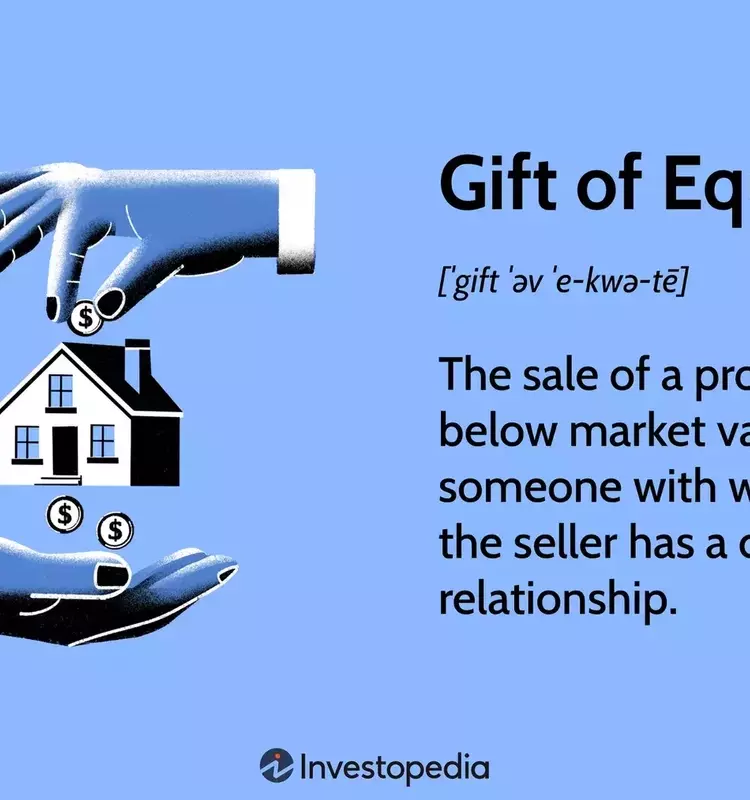
A gift of equity represents a unique financial arrangement where a property owner sells their home to a family member or close associate for less than its appraised market value. The difference between the market value and the sale price is considered a gift, offering a significant advantage to the buyer. This approach can substantially ease the path to homeownership, particularly by mitigating the need for a large down payment and potentially reducing associated costs. However, both the giver and the recipient must navigate various financial and tax implications. This article explores how gifts of equity operate, their benefits and drawbacks, essential documentation, and practical examples.
This mechanism not only supports family wealth transfer and simplifies the home-buying process but also entails complexities such as gift tax considerations for the seller and potential adjustments to the buyer's future capital gains tax. Understanding these facets is crucial for anyone considering or receiving a gift of equity, ensuring that the transaction is mutually beneficial and compliant with financial regulations.
How Equity Gifts Work and Their Mechanics
An equity gift enables a homeowner to transfer property at a reduced price, with the price difference constituting a direct financial gift. This can effectively eliminate or significantly lower the down payment requirement for the buyer, simplifying mortgage acquisition. For instance, if a property valued at $300,000 is sold for $200,000, the $100,000 difference functions as an equity gift. This arrangement primarily benefits family members acquiring a primary or secondary residence, helping them overcome financial hurdles to homeownership. Furthermore, these gifts are acceptable for various loan types, including conventional, FHA, and VA loans, broadening their applicability.
To qualify for a mortgage involving an equity gift, buyers must still meet stringent lender criteria, including favorable credit scores and stable income, and provide comprehensive financial documentation like tax returns, W-2s, and bank statements. The seller, in turn, must weigh the altruistic benefit of assisting family against the potential profit loss from selling below market value. The transaction necessitates an official gift of equity letter, confirming the value and intent of the gift and distinguishing it from a loan, alongside a property appraisal to verify its fair market value and the gift amount.
Benefits and Drawbacks of Equity Gifts
Gifting equity comes with several notable advantages, primarily benefiting the buyer by making homeownership more attainable. A major upside is the potential reduction or elimination of the down payment, which can be particularly advantageous for FHA loans, circumventing the 3.5% minimum. Beyond financial relief, equity gifts can serve as a valuable tool for estate planning, allowing older homeowners to transfer assets during their lifetime, which might reduce future estate taxes and ensure the property remains within the family lineage. Such transactions can also lead to lower closing costs due to a reduced sale price and can help buyers avoid competitive market fluctuations, especially in volatile real estate environments. The buyer also gains immediate equity in the property, positioning them favorably from the outset.
However, this strategy is not without its drawbacks. One significant concern is the potential for gift tax implications for the seller, particularly if the gifted amount exceeds annual or lifetime exclusion limits. The IRS mandates that sellers file a gift tax return for such transfers. Moreover, the lower purchase price set by an equity gift can affect the property’s cost basis, potentially leading to higher capital gains taxes for the buyer upon future sale. Additionally, recording a property sale below market value could negatively influence local real estate comps, potentially impacting the valuations of neighboring properties. Both parties must also still contend with various closing costs, irrespective of the equity gift.
