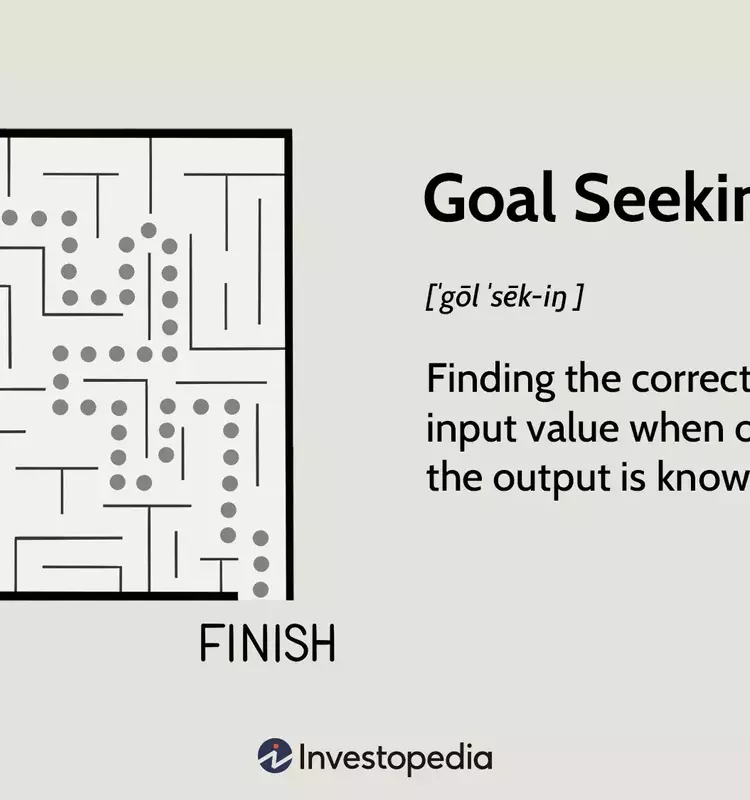
Goal seeking is a fundamental analytical approach that allows users to identify the specific input values required to attain a predetermined result. This technique is invaluable for conducting "what-if analysis," enabling individuals and organizations to simulate various scenarios and make well-informed decisions. While widely applicable across different fields, goal seeking is particularly powerful in financial contexts, especially when leveraging spreadsheet software such as Microsoft Excel to construct and analyze financial models. By working backward from a desired financial outcome, goal seeking empowers users to strategically plan and adjust their actions to meet their objectives effectively.
The Core Principle of Goal Seeking
Goal seeking is an analytical method designed to determine the precise input value necessary to achieve a specific, predetermined outcome. This technique is especially useful in what-if analysis, where users explore various scenarios by manipulating inputs to understand their impact on desired results. For instance, in financial modeling, it helps in identifying what interest rate is needed to achieve a target monthly payment or what sales volume is required to hit a profit goal. The essence of goal seeking lies in its ability to reverse-engineer problems, starting from the end state and working backward to pinpoint the crucial variables that influence it.
The concept of goal seeking is a fundamental tool within "what-if analysis" found in various computer software, particularly spreadsheet applications. What-if analysis involves systematically altering input values in a spreadsheet to observe how these changes affect the overall outcomes of formulas and calculations. When employing goal seeking, you essentially perform a what-if analysis on the output. This means you establish a desired target for a particular outcome and then instruct the software to identify the input value that will produce that exact result. This cause-and-effect approach allows users to understand the sensitivities of their models and to make strategic adjustments based on clear objectives. A key limitation, however, is that standard goal-seeking tools typically handle only one variable at a time; problems involving multiple unknown inputs usually necessitate more advanced analytical add-ons.
Practical Applications and Implementation in Excel
The practical application of goal seeking extends across various domains, offering a robust framework for strategic planning and problem-solving. Entrepreneurs, for example, frequently utilize this technique to map out their business objectives. By defining a target annual income, such as $100,000, they can then use goal seeking to determine the hourly rate they need to charge or the number of hours they must work to achieve that income, assuming other factors remain constant. This forward-thinking approach enables business owners to align their operational strategies with their financial aspirations, fostering clarity and actionable insights. By establishing clear targets, individuals and organizations can efficiently allocate resources and efforts toward their most critical objectives.
Microsoft Excel's built-in Goal Seek function provides a straightforward method for implementing this analytical technique, allowing users to efficiently determine the single input value required to achieve a known target output. To use this feature, begin by structuring your spreadsheet with clearly labeled columns for inputs such as "Loan Amount," "Term in Months," "Interest Rate," and "Payment." Populate the cells with all known values and enter the relevant formula for your desired goal, initially using a placeholder value (e.g., 0% for the interest rate). Then, navigate to the Data tab, select "What-If Analysis," and choose "Goal Seek." In the dialog box, specify the cell containing your formula, the target value you wish to achieve, and the cell representing the single input variable that Excel should adjust. Excel will then perform the necessary calculations to identify the precise input required to meet your objective, streamlining complex reverse computations into a simple, automated process.
