Understanding Green Marketing: Principles and Pitfalls
Finance

Understanding Green Marketing: Principles and Pitfalls

authorBy Lisa Jing
DateAug 26, 2026
Read time2 min

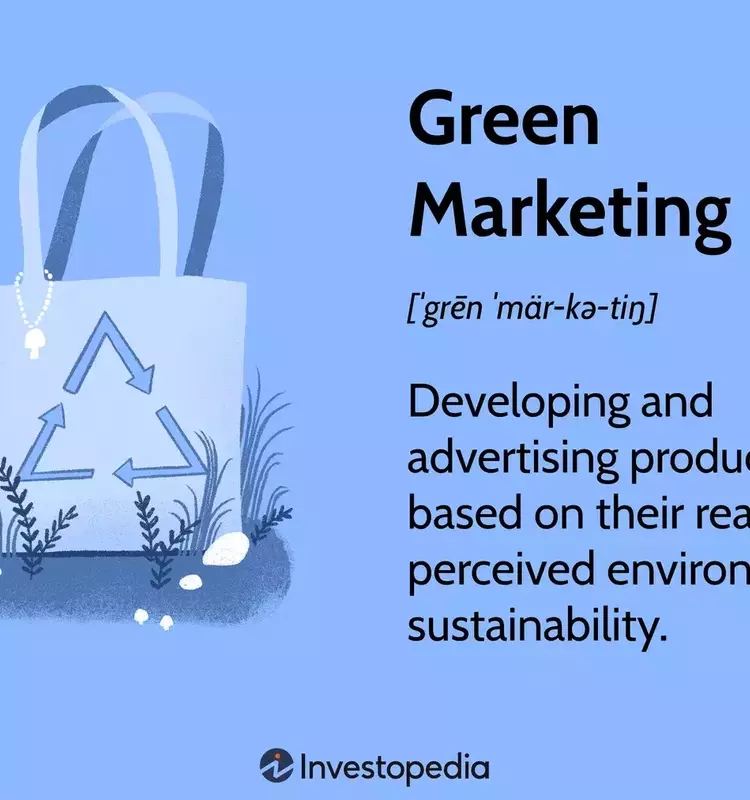
Green marketing, a strategy focused on highlighting the environmental benefits and sustainability of products, has gained significant traction. This shift is largely driven by a growing segment of consumers who are deeply concerned about the environmental impact of their purchases. For businesses, adopting green marketing can lead to improved brand perception and increased consumer loyalty. However, this strategy is not without its complexities, including the risk of 'greenwashing' – making unsubstantiated environmental claims – and the inherent challenges of higher production costs.

Central to effective green marketing is a genuine commitment to environmental, social, and governance (ESG) principles. Companies are increasingly expected to not only produce environmentally friendly products but also to demonstrate responsible business practices across their operations. This includes reducing carbon emissions, upholding fair labor standards throughout their supply chains, and engaging in philanthropic activities that benefit local communities. The integration of environmental concerns with broader social and governance policies creates a holistic approach to corporate responsibility. Nevertheless, the practice faces scrutiny, as evidenced by significant penalties imposed on companies for deceptive environmental claims. This highlights the critical need for transparency and authenticity in green marketing efforts.

Starbucks serves as a prime example of a company successfully integrating green marketing into its business model. Through substantial investments in renewable energy and various social initiatives, such as the Starbucks College Achievement Plan, the company demonstrates its dedication to both environmental stewardship and social welfare. These initiatives not only contribute to a positive brand image but also cater to the values of an increasingly eco-conscious consumer base. While large corporations like Starbucks can more readily absorb the financial implications of such programs, the added overhead costs can pose a considerable challenge for smaller businesses, potentially creating an uneven playing field in the competitive market.

Embracing green marketing signifies a commitment to a sustainable future, aligning business success with environmental and social well-being. Companies that authentically integrate ecological considerations into their core operations and transparently communicate these efforts will not only thrive in a conscious consumer market but also contribute positively to global sustainability goals. This forward-thinking approach fosters innovation and encourages a responsible paradigm for economic growth.

More Articles
Finance
Mastercard: A Compelling Investment Opportunity
Mastercard (MA) presents a strong investment case with a target price of $640.63, indicating a 10.3% upside within 12-18 months. The company's robust global network, industry-leading security, and capital-light model drive exceptional free cash flow growth. Valuation models, including DCF and forward P/E, support this target, suggesting that market expectations for FCF growth are conservative. MA is positioned as a low-risk, growth-oriented investment, ideal for capital preservation and moderate gains in volatile markets.
By Strive MasiyiwaAug 26, 2026
Finance
Understanding the Dynamics of Interest Rates and Their Influence on the Housing Market
This article explores how interest rates, set by central banks and influenced by economic factors like inflation, impact the housing market. It delves into the mortgage production line, distinguishing between fixed and adjustable-rate mortgages, and elucidates how investor behavior and the yield curve affect these rates. The content highlights the inverse relationship between interest rates and housing demand, offering insights for potential homebuyers to make informed decisions.
By Strive MasiyiwaAug 26, 2026
Finance
Chatham Lodging Trust Outperforms Peers with Strong Q2 Results and Silicon Valley Recovery
Chatham Lodging Trust (CLDT) has significantly outpaced its hotel REIT counterparts, boasting a 73% share price surge and a 76% total return since March. This impressive performance is fueled by robust Q2 results, leading to an upward revision of AFFO guidance to $1.28–$1.34/share. The company's margin expansion and record-breaking RevPAR, particularly in its Silicon Valley properties, underscore its strong operational momentum. Despite a narrowing valuation gap, CLDT remains a compelling "Buy" due to its undervaluation compared to peers, solid balance sheet, and projected growth from the ongoing recovery in Silicon Valley.
By Suze OrmanAug 25, 2026
Finance
Market Dynamics: Institutional Shifts, AI & Geopolitical Impact
This analysis delves into the evolving market landscape, highlighting a divergence in sentiment between institutional and retail investors, particularly concerning high-beta tech and crypto assets. It explores the nascent stages of AI adoption and its profound impact on technology sectors like semiconductors and enterprise software, alongside the geopolitical implications of AI dominance. The discussion also covers the resurgence of gold as a safe-haven asset and the anticipated transient volatility surrounding macroeconomic events.
By Nouriel RoubiniAug 25, 2026
Finance
Unifi Inc. Poised for Growth with Strong Fundamentals and Strategic Shifts
Unifi Inc. (UFI) is currently rated as a 'BUY' due to its robust product demand, enhanced cash flow, and the potential to achieve a debt-free status by the end of the year. The company's strategic pivot towards higher-margin industrial and military sectors is expected to fuel future margin expansion and earnings growth. Recent financial reports indicate a 4.1% year-over-year revenue increase, positive adjusted EBITDA, and a substantial profit contribution from its Brazilian operations. Despite these positive indicators, UFI is trading at a low 0.4x EV/Sales multiple, suggesting undervaluation. Management's projections for Fiscal Year 2027 anticipate further improvements in revenue and profitability.
By Robert KiyosakiAug 25, 2026