Understanding the Head and Shoulders Chart Pattern in Financial Markets
Finance

Understanding the Head and Shoulders Chart Pattern in Financial Markets

authorBy Mariana Mazzucato
DateMay 25, 2026
Read time3 min

The head and shoulders chart pattern is a widely recognized tool in technical analysis, signaling a potential reversal in market trends. This pattern helps traders anticipate shifts from upward (bullish) to downward (bearish) movements, making it a valuable indicator for strategic decision-making in financial markets.

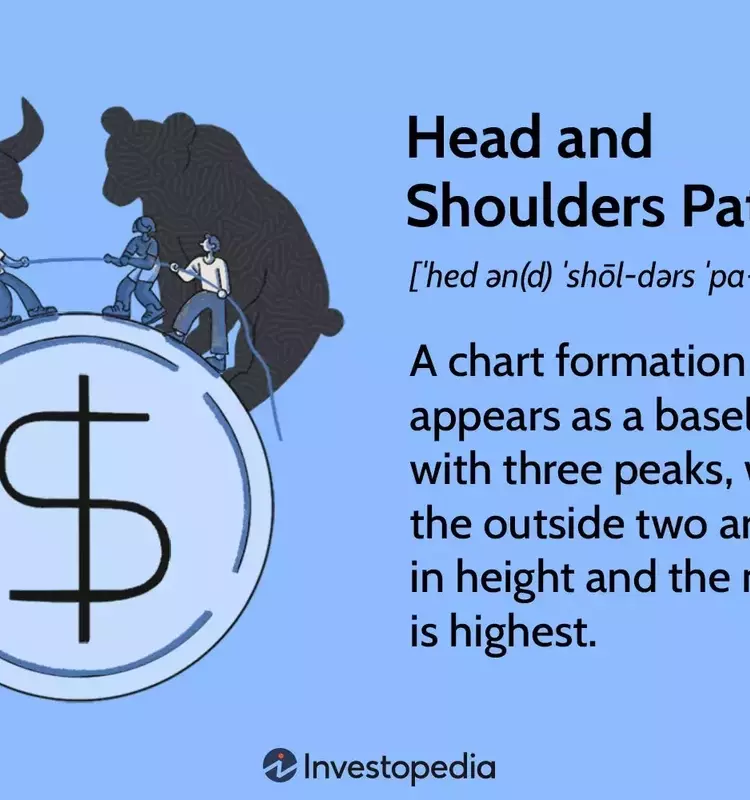
This pattern is characterized by three prominent peaks: a central, highest peak, referred to as the 'head,' flanked by two lower peaks of comparable height, known as the 'shoulders.' The formation begins with a price increase to the first shoulder, followed by a decline. The price then surges to create a higher peak (the head), before another retreat. Finally, it rises to form the second shoulder, which is typically level with the first, before declining once more. The 'neckline' is a crucial element, formed by connecting the lows between these peaks, and its breach often confirms the trend reversal. Conversely, the inverse head and shoulders pattern, often called a 'head and shoulders bottom,' indicates a reversal from a bearish to a bullish trend. This formation features three troughs, with the middle trough (the head) being the deepest, flanked by two shallower troughs (the shoulders). The neckline, in this case, connects the highs between these troughs, and a break above it signals an impending upward movement in asset prices. Both patterns offer insights into market sentiment and potential future price action, providing traders with strategic entry and exit points.

While the head and shoulders pattern is a reliable indicator for experienced traders due to its clear visual cues and defined profit targets, it presents certain challenges. The pattern's reliability is high, but not absolute, and its signals should be combined with other analytical tools for a comprehensive trading strategy. One of the main benefits is its applicability across various markets, including stocks and forex, allowing for significant profit opportunities from major market shifts. However, novice traders might find it difficult to identify accurately, especially when the neckline is not perfectly flat. Additionally, the timeframes involved can sometimes lead to considerable stop-loss distances, requiring careful risk management. The dynamic nature of price movements can also lead to retesting of the neckline, potentially causing confusion for less experienced traders. Despite these disadvantages, understanding and correctly applying the head and shoulders pattern can be a powerful asset in a trader's analytical toolkit, promoting a logical and disciplined approach to market participation.

The head and shoulders pattern serves as a powerful instrument in technical analysis, offering traders a structured way to anticipate market reversals and manage risk effectively. By diligently studying these formations and integrating them into a broader trading strategy, individuals can foster a proactive and optimistic engagement with the financial markets, continually seeking opportunities for informed decision-making and sustainable growth.

More Articles
Finance
Market Underestimates Prolonged Iran Conflict and Inflationary Pressures
The market appears to be prematurely pricing in a swift resolution to the ongoing conflict involving Iran, a sentiment that has persisted since the war's outset. This optimism seems to disregard recent escalations and rhetoric from both sides. Consequently, there's a growing concern about a potential second wave of inflation. This analysis explores investment strategies designed to thrive in such an environment, highlighting specific opportunities for investors.
By David RubensteinMay 25, 2026
Finance
Unpacking Amazon's Revenue Streams and Strategic Business Segments
Amazon, a global e-commerce giant, generates revenue primarily through its diverse business operations, including online retail, subscription services, and its robust cloud computing platform, Amazon Web Services (AWS). While its retail divisions in North America and internationally contribute the largest share of sales, AWS stands out as the main driver of operating income, showcasing the company's successful diversification into high-growth technology sectors. Recent innovations like Project Kuiper and AI-powered shopping tools further underscore Amazon's commitment to expanding its market reach and enhancing customer experience.
By Nouriel RoubiniMay 25, 2026
Finance
Duos Technologies: From Rail Inspection to AI Infrastructure
Duos Technologies is undergoing a strategic transformation, shifting its focus from traditional rail inspection to cutting-edge modular edge data centers and GPU infrastructure. This pivot includes a significant new GPU leasing contract, projected to generate substantial annual revenue with high gross margins. The company is actively deploying numerous edge data centers and plans aggressive expansion, primarily funded through debt. Despite its ambitious growth targets and a bullish market outlook, DUOT's valuation remains notably lower than its peers in the data center and GPU sectors.
By Morgan HouselMay 25, 2026
Finance
Suze Orman's Blunt Warning: The Peril of Procrastinating Retirement Distributions
Financial expert Suze Orman strongly criticizes the strategy of delaying retirement account distributions until Required Minimum Distributions (RMDs) are mandatory. She argues that this approach can lead to significant and avoidable tax burdens for retirees, especially during their lowest-income years between leaving work and the RMD age. Orman advocates for proactive Roth conversions or strategic withdrawals in these early retirement years to mitigate future tax liabilities and maximize retirement savings.
By Suze OrmanMay 25, 2026
Finance
Cavco Industries: Resilience Amidst Housing Market Volatility
Cavco Industries, a prominent manufacturer of factory-built homes, has demonstrated remarkable stability in its earnings despite the turbulent housing market. Although its Q4 revenue fell short of expectations, the company's performance has been considerably more consistent compared to traditional homebuilders, highlighting the inherent advantages of its affordable housing solutions during challenging economic periods. This analysis suggests a promising outlook for CVCO, with a potential upside.
By Suze OrmanMay 25, 2026