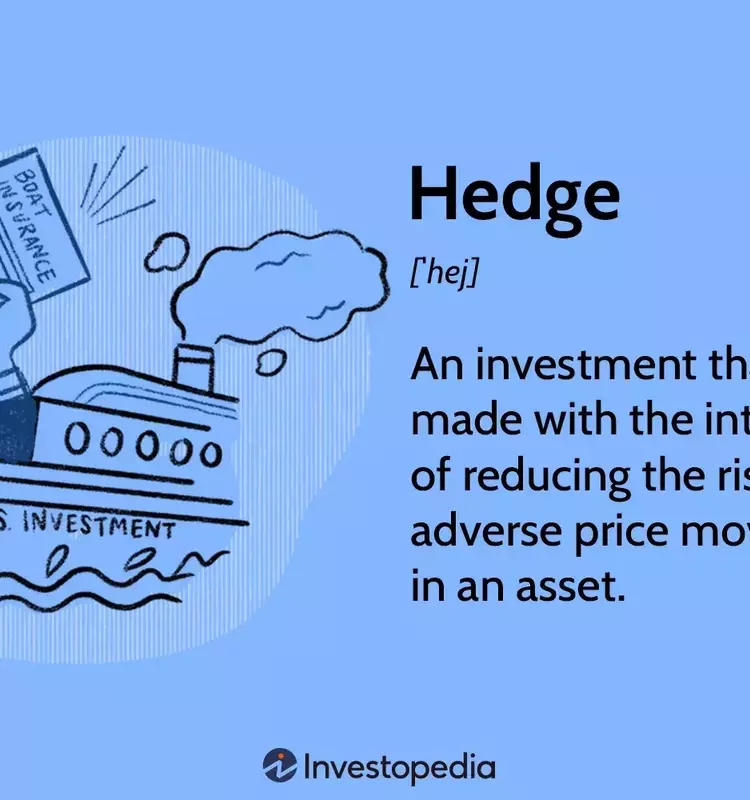
Hedging is a fundamental financial strategy aimed at mitigating potential investment risks. It involves taking an offsetting position in a related asset to protect against adverse price movements in an existing investment. While hedging can significantly reduce the risk of financial loss, it's crucial to understand that it doesn't guarantee profits or completely eliminate all risks. This strategy often employs specialized financial instruments known as derivatives, which derive their value from an underlying asset, to provide targeted protection. Additionally, broader approaches like portfolio diversification and sophisticated spread hedging techniques can also serve as effective risk reduction tools for investors.
Understanding the mechanisms and applications of hedging is essential for both institutional investors and informed individuals. Derivatives, such as futures and options contracts, are frequently used to create hedges due to their inherent relationship with underlying assets. These instruments allow investors to lock in prices, set limits on potential losses, or gain exposure to inverse movements of an asset. However, hedging comes with costs, similar to an insurance premium, which must be weighed against the potential benefits of risk reduction. Exploring various hedging strategies, from direct derivative use to broad portfolio management, reveals how investors can navigate volatile markets with greater confidence and controlled exposure to risk.
The Core Principles and Mechanics of Hedging
Hedging serves as a strategic financial maneuver to diminish the likelihood of losses stemming from unfavorable market shifts. It functions much like an insurance policy, where an investor pays a premium to protect an asset against unforeseen events. For instance, just as a homeowner in a flood-prone region might secure flood insurance to mitigate potential financial devastation, an investor can use hedging to safeguard their portfolio against downturns in stock values, currency fluctuations, or interest rate changes. This protective strategy involves establishing an opposing position in a related asset, ensuring that if one investment declines in value, the hedge gains, thereby offsetting some or all of the loss.
In the financial arena, hedging involves a variety of tools, predominantly derivatives. These sophisticated instruments, including options and futures contracts, are designed to have a direct relationship with an underlying asset. The effectiveness of a derivative-based hedge is often measured by its 'delta,' which indicates how much the derivative's price changes relative to a one-dollar movement in the underlying asset. The specific hedging instrument and its cost are determined by the perceived downside risk of the asset being protected. Assets with higher volatility or longer time horizons generally incur higher hedging costs, reflecting the increased potential for price swings. Investors can adjust these variables to tailor the cost and protection level of their hedge, balancing expense with desired security.
Practical Applications and Strategic Considerations of Hedging
One prevalent method for hedging involves the use of put options. A put option grants its holder the right, but not the obligation, to sell an underlying asset at a predetermined 'strike price' before a specified expiration date. For example, an investor holding 100 shares of a company's stock at $10 per share might purchase a put option with an $8 strike price expiring in a year. If the stock price rises to $12, the investor would not exercise the option, incurring only the cost of the option premium but benefiting from the stock's appreciation. Conversely, if the stock plummets to $0, the investor can still sell their shares at $8 each, significantly reducing their potential loss from $1,000 to $300 (including the option premium), demonstrating the protective power of the hedge.
Beyond derivatives, diversification stands as a foundational hedging strategy. By strategically spreading investments across various asset classes or industries, investors can mitigate risks tied to individual holdings. For instance, an investor bullish on a high-growth technology firm might also invest in stable consumer staples or utility companies. This approach aims to balance the portfolio, as these defensive stocks tend to perform well during economic downturns, cushioning potential losses from more volatile assets. However, diversification is not without its limitations; there's no guarantee that different assets will always move in opposite directions, and extreme market events, such as the 2008 financial crisis, can cause widespread declines. For individual investors, particularly those with long-term goals like retirement, a deep understanding of these hedging strategies, even if not directly trading derivatives, provides valuable insight into market dynamics and the actions of larger financial entities.
