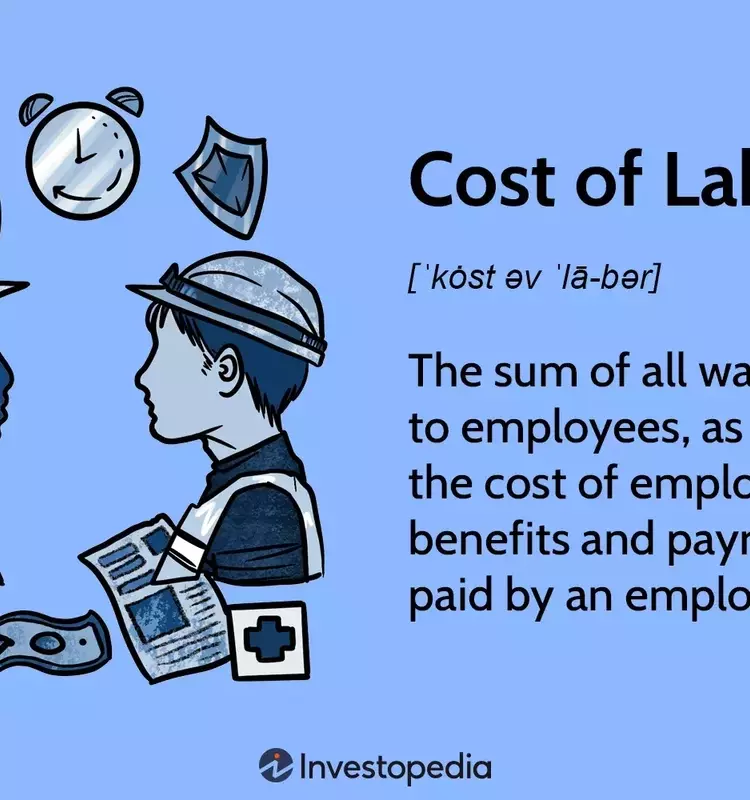
Understanding labor expenses is fundamental for any business, as these costs represent the total financial investment a company makes in its workforce. This includes not only salaries but also various benefits and taxes paid by employers. Accurately categorizing and managing these expenditures is essential for setting competitive prices, ensuring profitability, and making informed operational decisions. This article explores the different types of labor costs, their significance for businesses, and how they contrast with broader living expenses.
Labor expenses are categorized into two main types: direct and indirect. Direct labor costs are directly attributable to the production of goods or services. For instance, the wages paid to assembly line workers in a manufacturing plant are considered direct costs because they are directly involved in creating the product. In contrast, indirect labor costs, often referred to as overhead, are those that support the overall operation but are not directly tied to a specific product. Examples include the salaries of administrative staff, security personnel, or maintenance crews. Proper allocation of both direct and indirect labor costs is crucial for accurate product pricing and maintaining desired profit margins. Misjudging these allocations can lead to products being either underpriced, resulting in lower-than-expected profits, or overpriced, potentially impacting competitiveness.
Furthermore, labor costs can also be classified as fixed or variable. Variable labor costs fluctuate with the level of production. For example, the cost of hourly workers whose hours increase or decrease based on demand is a variable cost. This type of cost offers businesses flexibility, allowing them to scale their workforce up or down in response to market changes. Fixed labor costs, on the other hand, remain constant regardless of production levels. These might include long-term contracts for specialized services or salaries of permanent administrative staff. Businesses need to carefully balance fixed and variable labor costs to ensure operational stability while retaining the flexibility to adapt to economic shifts.
The effective management of labor costs goes beyond simple calculation; it involves strategic allocation and an understanding of its impact on pricing and profitability. For example, a furniture manufacturer producing both dining chairs and bed frames must meticulously assign shared indirect labor costs, such as machinery maintenance, to avoid skewing the true cost of each product. Incorrect allocation, leading to either undercosting or overcosting, can significantly distort profit margins and undermine competitive pricing strategies.
It is also important to differentiate labor costs from the concept of the cost of living. While labor costs reflect the employer's financial commitment to its employees, the cost of living pertains to the expenses individuals incur to maintain a certain quality of life in a given location. This includes housing, food, transportation, and other personal expenditures. These two concepts, though related to an individual's income and expenses, serve distinct analytical purposes in business and economic discussions. Businesses must manage labor costs to remain competitive, while individuals navigate the cost of living to sustain their desired lifestyles.
Effectively managing labor expenses, which comprise both direct and indirect components, is paramount for businesses to ensure accurate product pricing and healthy profit margins. By adjusting staffing levels or enhancing productivity, companies can control these expenditures. It's crucial to distinguish labor costs from living expenses, as the former reflects business outlay while the latter covers individual sustenance. Furthermore, certain industries, like hospitality, often pass a portion of their labor costs to consumers through practices such as tipping, illustrating the diverse strategies businesses employ to optimize their financial structures.
