Secure Your Ventures: The Shield of Limited Company Structures
Defining the Limited Company Framework
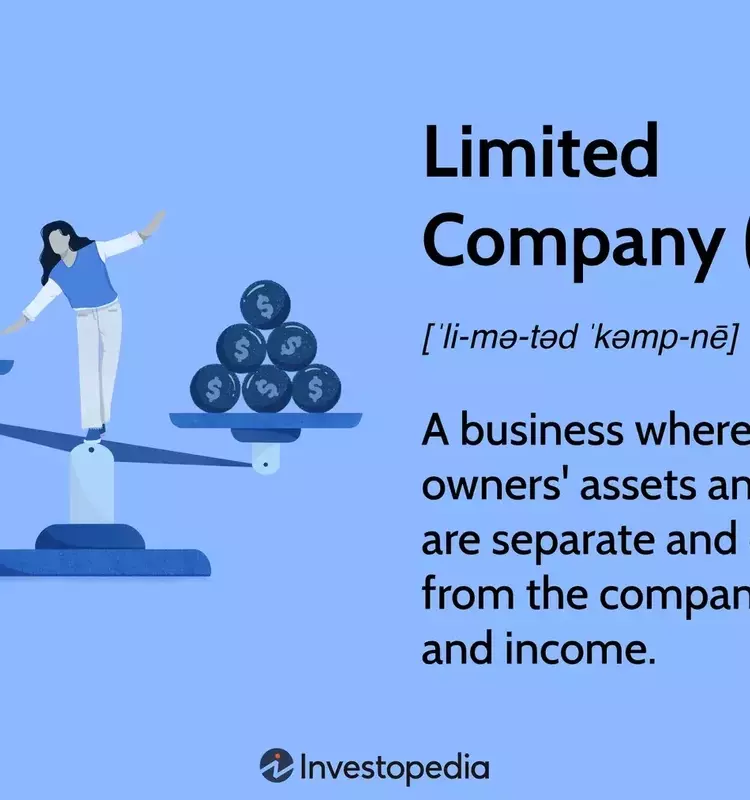
A limited company (LC) is a corporate entity designed to legally differentiate the personal finances and assets of its proprietors from the company's financial standing and debts. This critical distinction means that the owners' personal wealth is safeguarded against the company's liabilities.
Operational Dynamics of Limited Companies
The core principle of a limited company revolves around the legal separation of its assets and debts from those of its shareholders. Consequently, if the company faces financial difficulties due to its regular operations, the personal assets of the shareholders remain insulated from creditors' claims. The ownership of a limited company can be readily transferred, and many such entities have transitioned through multiple generations. Unlike publicly traded corporations where anyone can purchase shares, membership in an LC is typically governed by its foundational rules and applicable laws. A limited company can be established either 'by shares' or 'by guarantee'. In a 'limited by shares' model, ownership rests with one or more shareholders, and management is handled by at least one director. Conversely, in a 'limited by guarantee' structure, the company is owned by one or more guarantors and overseen by a minimum of one director.
Advantages of Adopting a Limited Company Structure
Operating as a limited company offers a multitude of advantages. These include the establishment of a clear legal distinction between the company and its managing personnel. Furthermore, this structure provides a robust barrier, safeguarding the personal finances of the owners from the company's financial exposures. A limited company possesses the legal capacity to own assets and retain profits after tax deductions, and it can independently enter into contractual agreements. In jurisdictions like the U.K., limited companies are subject to various taxes, such as Value-Added Tax (VAT) and Capital Gains Tax, and are required to contribute to National Insurance. The tax obligations of U.K. limited companies are determined by their income levels and whether they operate as 'ring-fenced' entities, which are businesses profiting from oil extraction or oil rights within the U.K. or its continental shelf. In contrast, unincorporated businesses, such as sole proprietorships and traditional partnerships, do not offer comprehensive liability protection for their owners, as there is no legal separation between the business and its proprietors. Should such a business encounter insolvency, its owners would bear responsibility for its debts.
Diverse Manifestations of Limited Companies Globally
The structural framework of limited companies is recognized in numerous countries, though the specific regulations governing them can vary significantly across national borders. For instance, in the United Kingdom, limited companies are categorized into private limited companies and public limited companies. Private limited companies are prohibited from offering shares to the public and are a popular choice for small businesses. Public limited companies (PLCs), however, can offer shares to the public to raise capital. These shares may be traded on a stock exchange once a specific total share value threshold is met, typically £50,000 or €57,100. This structure is frequently utilized by larger corporations. In the United States, a limited company is often referred to as a corporation (Corp.) or incorporated (Inc.). Some states allow the use of 'Ltd.' (limited) after a company's name, provided the correct documentation is filed; merely adding the suffix does not confer liability protection. U.S. limited companies are mandated to file annual corporate taxes with regulatory bodies. It is important to note that limited liability companies (LLCs) and limited companies, while sharing similarities, operate under distinct structures. Globally, many countries differentiate between public and private limited companies. For example, Germany uses the 'AG' (Aktiengesellschaft) designation for public limited companies that can sell shares to the public, while 'GmbH' (Gesellschaft mit beschränkter Haftung) denotes private limited companies that are restricted from issuing shares.
