Understanding Loan Forbearance: A Comprehensive Guide
Finance

Understanding Loan Forbearance: A Comprehensive Guide

authorBy Michele Ferrero
DateJun 29, 2026
Read time2 min

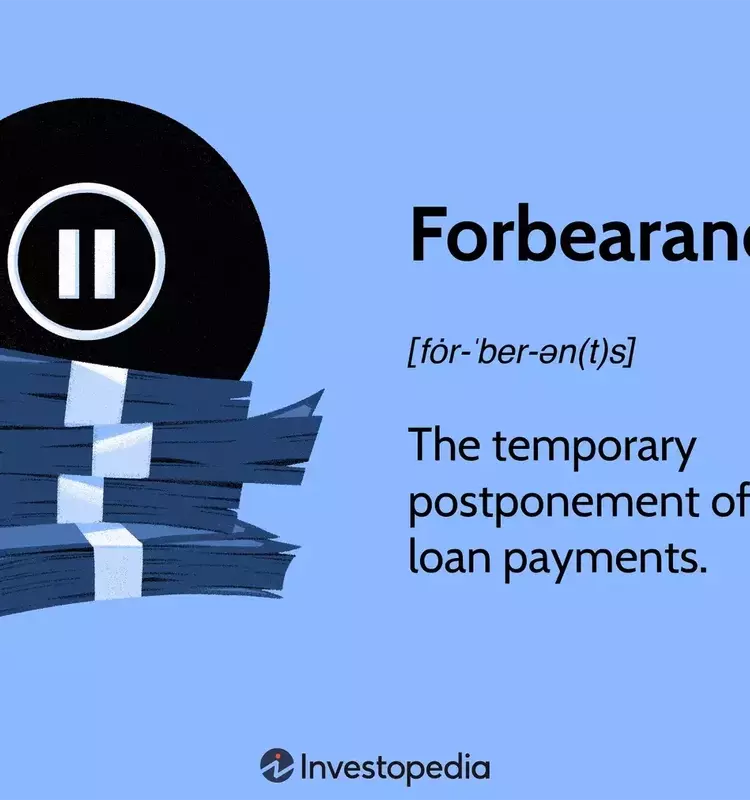
Loan forbearance is a financial arrangement where a lender temporarily allows a borrower to reduce or postpone loan payments. This measure is commonly applied to mortgages and student loans, offering a crucial lifeline to individuals experiencing financial hardship. It serves as an alternative to more drastic actions like foreclosure or loan default, which can be detrimental to both borrowers and lenders.

The mechanics of forbearance involve a negotiated agreement between the borrower and the lender. Eligibility often hinges on demonstrating a genuine financial struggle, such as job loss or severe illness. Lenders, including mortgage providers and student loan servicers, are incentivized to offer forbearance because it can mitigate their losses associated with loan defaults and property repossessions. Under forbearance, payment adjustments can range from a complete suspension of payments to reduced principal or interest payments, or even interest-only payments. However, it's critical to understand that forbearance is a temporary solution; the borrower remains responsible for the full loan amount, including any accrued interest or deferred payments, once the forbearance period concludes.

Government initiatives, such as the CARES Act enacted during the COVID-19 pandemic, have historically mandated forbearance options for federal student loans and federally backed mortgages, providing widespread relief during times of crisis. While some programs, like the SAVE plan for student loans, aimed to offer more flexible repayment options, their implementation can be subject to legal challenges, sometimes resulting in temporary forbearance periods. It is essential for borrowers to proactively communicate with their lenders, understand the terms of their forbearance agreement, and plan for repayment once the temporary relief ends to avoid negative impacts on their credit standing.

Forbearance acts as a bridge during difficult financial times, helping individuals maintain their financial stability and avoid the severe consequences of defaulting on their loans. By engaging with lenders, understanding the options, and diligently planning for post-forbearance repayment, borrowers can navigate temporary setbacks and preserve their financial well-being. It underscores the importance of proactive financial management and open communication with financial institutions.

More Articles
Finance
Gabelli Commercial Aerospace & Defense ETF Soars in Q1 2026
The Gabelli Commercial Aerospace & Defense ETF (GCAD) experienced significant growth in the first quarter of 2026, achieving a year-to-date return of 7.2%. This actively managed ETF focuses on capital appreciation by investing in companies within the commercial aerospace and defense sectors. Its strong performance highlights the robust potential within these critical industries, driven by strategic investments and market dynamics.
By Fareed ZakariaJun 29, 2026
Finance
Singapore ETF: A Beacon of Stability and Growth in Asia
The iShares MSCI Singapore ETF (EWS) presents an attractive investment opportunity due to Singapore's robust economy and stable environment. The ETF has surpassed long-term consolidation, indicating potential for further gains towards its 2007 peak. Investors can also benefit from a consistent 3.97% dividend yield, a testament to Singapore's pro-business policies, diversified economic landscape, and strategic geographical advantage in Asia.
By Michele FerreroJun 29, 2026
Finance
Understanding the Annual Russell Index Rebalancing and its Market Impact
The yearly Russell U.S. Index reconstitution acts as a major market reset, influencing sector allocations and investment flows. This rebalancing leads to significant shifts in technology exposure across various investment styles, with mega-cap companies driving substantial sector changes. Financials are solidifying their position as a key value component, while healthcare is expanding its presence, particularly in small and mid-cap growth sectors.
By Mariana MazzucatoJun 29, 2026
Finance
Top Tax Software for Small Businesses
Navigating small business taxes can be complex, but the right software simplifies the process. This article explores leading tax solutions for businesses of all sizes, from sole proprietors to corporations, highlighting options like H&R Block for comprehensive coverage, TurboTax for QuickBooks integration, TaxAct for online filing, TaxSlayer for self-employed individuals, and Cash App Taxes for freelancers, ensuring accuracy and efficiency in tax preparation.
By Fareed ZakariaJun 29, 2026
Finance
Bloom Energy's Meteoric Rise: A Deep Dive into Growth and Valuation
Bloom Energy has experienced a remarkable 715% surge in market capitalization over the past 11 months, fueled by the escalating demand for its solid oxide fuel cells in AI data centers. The company reported a 56% increase in trailing twelve-month revenues, with its product backlog swelling to $6 billion and gross margins reaching approximately 30% GAAP. Management projects $3.6 billion in revenue by fiscal year 2026, alongside an adjusted gross margin of 34%. Analysts anticipate even higher figures, forecasting $3.75 billion, which implies an impressive 85% top-line growth. Despite this robust performance, I maintain a Neutral stance, awaiting a 30-35% price correction to achieve a more attractive valuation at 12-13 times forward revenue, or $148-160 per share, before considering an investment.
By Lisa JingJun 29, 2026