Understanding Local Taxes: Funding Community Services
Finance

Understanding Local Taxes: Funding Community Services

authorBy Michele Ferrero
DateJun 20, 2026
Read time2 min

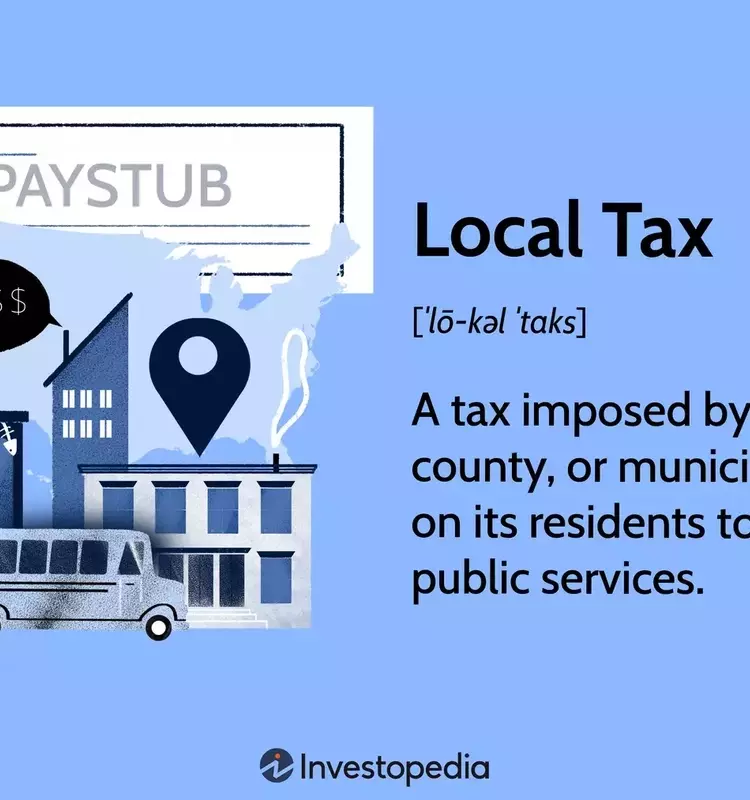
Local taxes, levied by states, counties, or municipalities, serve as the financial backbone for crucial public services within communities. These imposts ensure the provision of essential amenities like educational institutions, public safety forces, and foundational infrastructure. Distinct from federal impositions, the advantages of local taxation are often tangibly observed at the community level.

These assessments contribute to a diverse range of services, including the operation of police and fire departments, educational facilities, healthcare services, public libraries, road upkeep, and recreational areas. While some of these services receive supplementary federal aid through grants, the primary burden is borne by local taxpayers. Property taxes, typically the most substantial local financial obligation for homeowners, are calculated based on the appraised value of their residences. Sales taxes, applied to goods and services, are another significant revenue stream, though they are often classified as regressive due to their uniform application irrespective of income. Additionally, municipalities may issue bonds to finance major capital projects, with the repayment of these debts often necessitating the introduction of new, or increases to existing, local taxes.

Understanding the mechanisms and objectives of local taxation is vital for residents. It highlights the direct correlation between these contributions and the enhancement of their immediate living environment. This financial framework fosters a sense of collective responsibility and directly translates into visible improvements in local services, infrastructure, and overall community well-being, reinforcing the idea that individual contributions collectively build a stronger, more vibrant society.

More Articles
Finance
Open Houses: A Comprehensive Guide for Sellers and Buyers
An open house is a dedicated period when a property is showcased for potential buyers. These events, typically managed by real estate agents, aim to generate interest and offer valuable feedback to sellers. While online listings and virtual tours have grown in popularity, the in-person experience of an open house remains a significant tool in the real estate market. This guide explores the mechanics, advantages, and disadvantages of hosting and attending open houses, including a distinction between public events and broker-exclusive viewings.
By Nouriel RoubiniJun 20, 2026
Finance
Abbott Laboratories: A Comprehensive Investment Analysis Ahead of Q2 Earnings
This article analyzes Abbott Laboratories (ABT) ahead of its Q2 earnings report on July 16. It highlights the company's diversified business model across medical devices, diagnostics, nutrition, and established pharmaceuticals. Key growth drivers include the FreeStyle Libre continuous glucose monitoring platform and innovations in cardiovascular care. The article also discusses the importance of growth in these segments and future guidance in assessing the company's long-term investment potential amidst competitive pressures.
By Mariana MazzucatoJun 20, 2026
Finance
Analyzing Dividend Stocks: Identifying Opportunities and Risks
This article examines dividend-paying stocks, highlighting projected net gains from top Reader Favorite/Rogue (ReFa/Ro) selections. It also delves into the concept of "IDEAL status" for dividend stocks, where dividends from a $1,000 investment surpass their single share prices. Furthermore, the analysis compares the potential performance of lowest-priced, highest-yield ReFa/Ro stocks against the broader top ten, revealing a projected outperformance. The presence of negative free cash flow margins in several ReFa/Ro stocks underscores crucial sustainability concerns for investors focused on income. The article is based on reader mentions of 40 equities, categorizing them as 'rogues' or 'favorites'.
By Nouriel RoubiniJun 20, 2026
Finance
Wells Fargo Raises S&P 500 Target, Citing Strong Earnings and AI Growth
Wells Fargo has increased its year-end 2026 S&P 500 target to 7,950, up from 7,300, driven by higher earnings-per-share estimates rather than market exuberance. The bank's optimism stems from easing geopolitical tensions and a strong outlook for AI spending, particularly in cyclical stocks, semiconductors, and infrastructure. Despite acknowledging some market froth, Wells Fargo believes the broader market's earnings engine remains robust, though risks related to AI capital spending and market breadth bear watching.
By Robert KiyosakiJun 20, 2026
Finance
Analyzing Campbell's Company's Structural Inefficiencies and Future Outlook
This report examines The Campbell's Company's persistent issues with gross and operating margins, which appear to be worsening. While recent quarterly results met sales expectations and slightly surpassed earnings estimates, the company faces significant challenges ahead. A detailed review of fixed asset utilization reveals systemic inefficiencies when compared to industry peers. These factors suggest a likely dividend reduction within the next 12 to 18 months, as debt levels rise and dividend coverage weakens. The author recommends selling the stock with a projected price target of $16 within an 18-month timeframe.
By Strive MasiyiwaJun 20, 2026