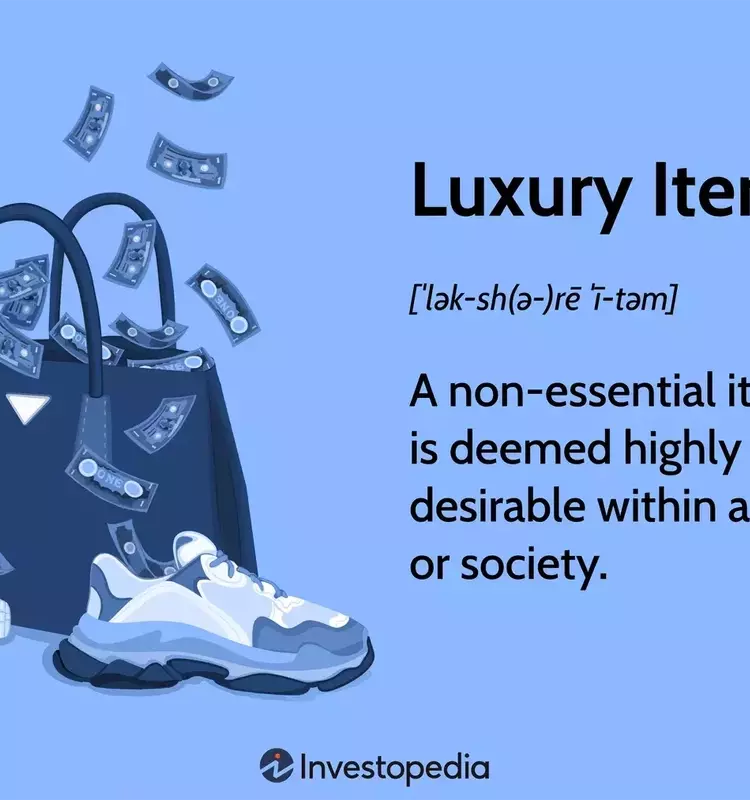
Luxury goods are non-essential items that symbolize affluence and social standing, with their demand often escalating at a higher rate than income growth. These goods differ from everyday necessities or inferior products, appealing to consumers who seek exclusivity and prestige. This article explores the characteristics of luxury items, their responsiveness to income changes, their distinction from inferior goods, and the economic principles governing their market, including the concept of Veblen goods and the implications of luxury taxes.
Luxury items are defined as non-essential goods that signify affluence and social standing. The demand for these items typically increases disproportionately with rising income. Unlike essential goods, which are purchased out of necessity, luxury items cater to desires for exclusivity and high status. These can range from bespoke clothing to high-performance vehicles, and premium services. The acquisition of such goods often serves as a public display of financial success. Consequently, the market for luxury items is highly sensitive to economic fluctuations, experiencing reduced demand during downturns as consumer confidence and disposable income decline.
The relationship between income and the purchase of luxury goods is characterized by a high positive income elasticity of demand. This means that as an individual's wealth grows, their expenditure on luxury items tends to increase at an even faster pace. Conversely, a decrease in income leads to a more pronounced drop in the demand for luxury goods. For instance, while a standard television might be a common household item, a large, high-definition model could be classified as a luxury. During periods of economic prosperity, demand for such televisions rises, but it falls sharply during recessions when financial resources become constrained. In contrast, essential goods like food and utilities maintain relatively stable demand across varying income levels, though the choice of premium versions of these essentials can also signify luxury.
The concept of luxury goods stands in stark contrast to that of inferior goods. An inferior good is characterized by a decrease in demand as consumer income rises, exhibiting a negative income elasticity of demand. For example, a budget-brand coffee might be popular among those with lower incomes, but as their income increases, they are likely to switch to higher-priced, premium coffee brands, rendering the budget option an inferior good. Luxury goods, on the other hand, are typically the preferred choice when income permits, effectively replacing inferior alternatives in a consumer's spending patterns. Interestingly, a luxury item can transition into an inferior good at very high income levels; an individual of extreme wealth might move from collecting luxury cars to acquiring private jets or yachts, indicating that luxury cars have become 'inferior' in comparison to even grander acquisitions. While not always synonymous with superior quality, luxury items are generally perceived as embodying both higher quality and price, aligning with their esteemed status.
A unique category within luxury goods is Veblen goods, named after economist Thorstein Veblen. For these items, demand paradoxically increases as their price rises, because the higher price enhances their perceived exclusivity and status. This phenomenon reflects a positive price elasticity of demand, where an elevated price point, such as for a premium perfume, can actually boost its desirability and sales by reinforcing its high-value image. Furthermore, governments may impose luxury taxes on certain high-value items, such as expensive vehicles or recreational boats. These taxes are often considered progressive, as they predominantly affect individuals with substantial wealth or high incomes, thereby influencing both consumer purchasing behavior and government revenue.
Luxury goods, whether a designer wardrobe, an exquisite watch, a grand yacht, fine wine, or a sprawling estate, transcend mere functionality. They are symbols of success and refined taste, their allure heightened by their cost and exclusivity. The market for these items is a fascinating interplay of economics and human psychology, reflecting our aspirations and the societal value placed on opulence.
