Understanding the Margin of Safety in Investing and Accounting
Finance

Understanding the Margin of Safety in Investing and Accounting

authorBy Mariana Mazzucato
DateAug 24, 2026
Read time2 min

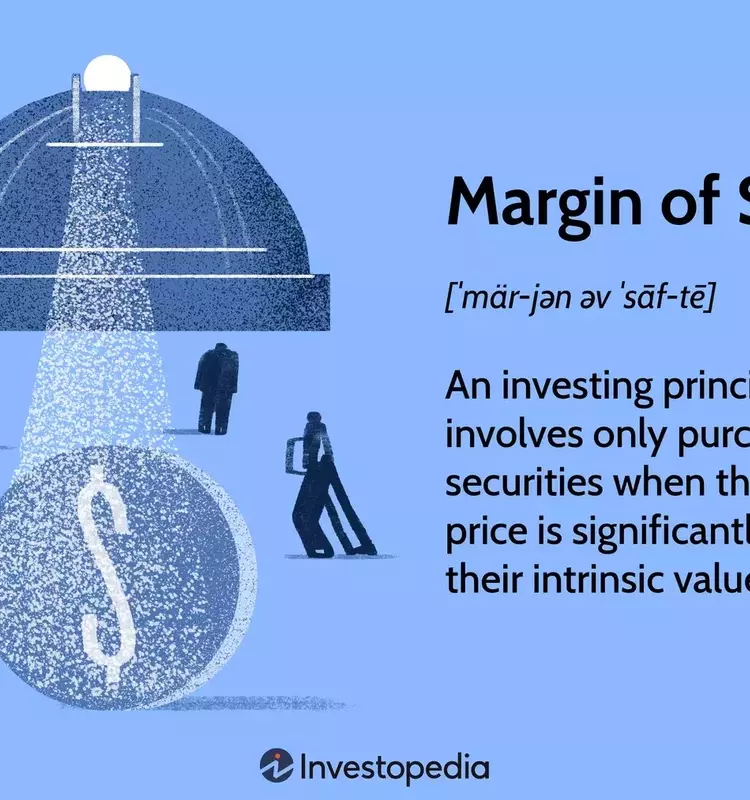
The margin of safety is a fundamental principle that acts as a protective buffer in both the investment world and financial accounting. This concept, widely recognized in value investing, emphasizes acquiring assets at prices considerably lower than their inherent worth. Such a strategy creates a safety net against potential market fluctuations, analytical errors, or unexpected financial setbacks.

In the realm of investing, the margin of safety means deliberately seeking out opportunities where an asset's market price is substantially below its calculated intrinsic value. This approach, championed by figures like Benjamin Graham and Warren Buffett, aims to minimize the risk of capital loss even if initial valuations prove slightly inaccurate or market conditions deteriorate. Investors perform thorough qualitative and quantitative analyses of a company's management, governance, industry standing, assets, and earnings to determine its true value, then compare this to the market price. A significant discount to this intrinsic value forms the margin of safety, with some investors targeting discounts as deep as 50% to build a robust protective layer into their portfolios.

From an accounting perspective, the margin of safety quantifies how much a company's sales can decrease before it starts incurring losses, essentially measuring the distance between current or projected sales and the break-even point. This metric is vital for financial planning, risk assessment, and guiding management decisions, particularly in volatile economic environments. It provides clear insight into a company's resilience, indicating how much sales volume can be absorbed before profitability is jeopardized. Calculating this margin involves subtracting the break-even sales from current or budgeted sales, often expressed as a percentage to represent the cushion available to the business.

Embracing the margin of safety principle, whether in personal investments or corporate financial management, fosters a disciplined and prudent approach. It encourages a proactive stance toward risk, promoting careful analysis and strategic planning to navigate an uncertain future. This foresight not only safeguards against potential losses but also lays the foundation for more stable and resilient financial growth.

More Articles
Finance
Optimizing Production: A Deep Dive into Material Requirements Planning (MRP)
Material Requirements Planning (MRP) is a crucial software-based system for businesses to efficiently manage inventory, materials, and production schedules. By leveraging key inputs such as the Master Production Schedule, Inventory Status File, and Bill of Materials, MRP helps companies accurately determine material needs, optimize stock levels, and enhance overall manufacturing productivity. This system supports just-in-time production, minimizing costs and preventing shortages, making it an indispensable tool in modern manufacturing.
By Suze OrmanAug 24, 2026
Finance
Stride's Uncertain Future: Enrollment Declines and State Funding Risks Lead to 'Neutral' Rating
Stride, an e-learning company, faces growing uncertainty due to worsening enrollment and revenue declines. Despite a durable business model and 25% adjusted EBITDA margin, demographic shifts threaten long-term growth. Heavy reliance on state funding creates significant risk, as revenue per enrollee depends on external budget decisions. Given the current market, investors are advised to trim LRN positions and seek better opportunities in software.
By Michele FerreroAug 24, 2026
Finance
Gold Market Signals Strong Buying Opportunity Amidst Extreme Bearish Sentiment
Gold has received a rare "Green Zone" buy signal, marking the first significant opportunity since 2022. This signal is driven by extreme bearish sentiment indicators, such as the GLD put-to-call ratio and the Hulbert Gold Survey, both of which registered historic lows. The Sentiment King's composite gold indicator reached its most extreme Green Zone reading in over fifteen years on July 20, suggesting an intermediate-term gold rally expected to last three to nine months.
By Suze OrmanAug 24, 2026
Finance
Why Invesco Solar ETF Faces a 'Strong Sell' Rating Amidst Market Challenges
The Invesco Solar ETF (TAN) receives a 'Strong Sell' rating due to persistent industry headwinds and significant market saturation concerns. Despite a dramatic increase in global solar photovoltaic installations, TAN has considerably underperformed the S&P 500 over the past five years. This underperformance is primarily attributed to severe price deflation and margin erosion within the solar sector. Key structural limitations, including grid integration, high storage costs, and seasonal power fluctuations, continue to hinder broader solar adoption and challenge optimistic growth forecasts.
By Fareed ZakariaAug 24, 2026
Finance
Slide Insurance: A Focused Look at a Niche P&C Insurer
Slide Insurance, a property and casualty insurer concentrating on the Florida market, grew substantially by taking on policies when larger companies exited the state. While its recent combined ratios have been exceptionally low, a more conservative long-term estimate suggests a normalization to around 77%. The company currently trades at a price-to-earnings ratio of 6-7x and offers a 1.23% dividend yield. Despite having a strong balance sheet compared to its peers, its high exposure to the Florida market presents significant concentration risk. Therefore, a neutral rating is assigned, with a price target of $16 per share, due to an unappealing risk-reward profile at its current valuation.
By Morgan HouselAug 24, 2026