Understanding Net Interest Rate Spread: A Key Metric for Bank Profitability
Finance

Understanding Net Interest Rate Spread: A Key Metric for Bank Profitability

authorBy Robert Kiyosaki
DateMay 13, 2026
Read time3 min

The net interest rate spread (NIRS) serves as a vital indicator of a bank's financial performance, reflecting the difference between the income generated from interest-earning assets and the cost incurred from interest-bearing liabilities. This metric is a fundamental tool for assessing a bank's profitability and its effectiveness in managing its balance sheet. Unlike the net interest margin (NIM), NIRS specifically zeroes in on the direct interest-generating and interest-paying activities, providing a clear snapshot of how a bank capitalizes on its lending and borrowing operations.

For financial institutions, especially commercial banks, maintaining a robust net interest rate spread is paramount to their economic viability. Banks predominantly generate revenue by offering loans (such as mortgages, auto loans, student loans, and credit card facilities) at interest rates higher than what they pay for deposits (like checking accounts, savings accounts, and certificates of deposit). This differential, or spread, is essentially the bank's core operational profit. A broader spread typically signifies healthier earnings and sound management of assets and liabilities.

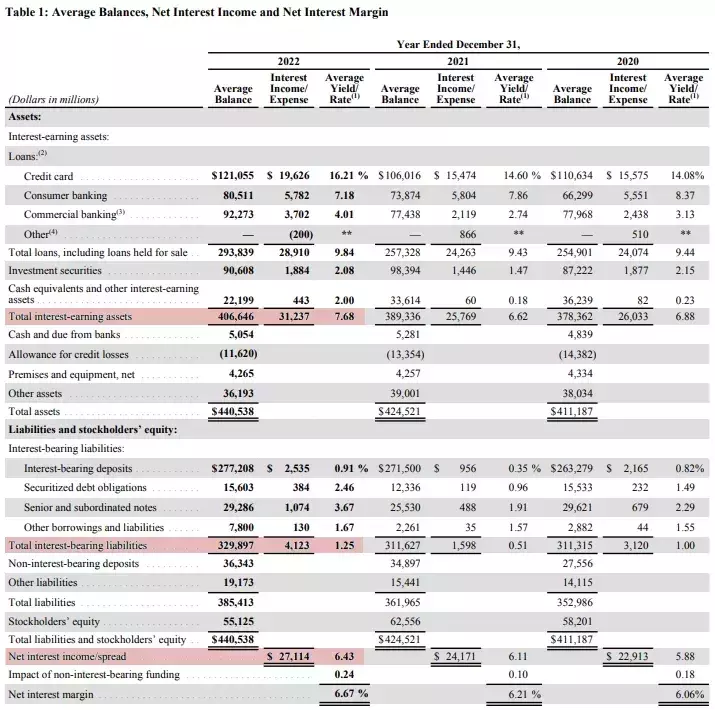
The calculation of the net interest rate spread involves subtracting the average interest rate paid on interest-bearing liabilities from the average yield earned on interest-earning assets. The formula can be simply expressed as: Ii - Io = Net Interest Rate Spread, where 'Ii' represents the interest rate received by the bank on its assets, and 'Io' stands for the interest rate the bank pays on its liabilities. This calculation provides a tangible value, often presented as a percentage, that indicates the bank's profitability from its primary banking functions. For instance, Capital One Financial Corporation reported a net interest spread of 6.43% in 2022, derived from its interest income and interest-bearing liabilities.

It is important to differentiate NIRS from net interest margin (NIM). While both metrics assess a bank's interest-generating capabilities, NIM offers a more comprehensive view by incorporating all funding sources, including those that do not bear interest. This means NIM can be higher than NIRS if a bank effectively utilizes non-interest-bearing funds or other investments to bolster its overall profitability. Therefore, while NIRS provides a focused insight into a bank's core lending and borrowing efficiency, NIM offers a broader perspective on its total financial performance.

The net interest rate spread functions as a crucial measure of a bank's core operational profitability, analogous to the gross profit margin seen in other business sectors. It quantifies the financial gain derived from the core banking activities of lending and borrowing. While distinct from the net interest margin, which encompasses a wider array of income and funding factors, NIRS remains an indispensable metric. When evaluated in conjunction with other financial indicators, it contributes to a comprehensive understanding of a bank's overall financial health and strategic effectiveness.

More Articles
Finance
Qualcomm: A Deep Dive into its AI-Powered Future and Market Position
This article explores Qualcomm's upgraded market position, driven by its AI diversification and the bottoming out of its China handset business. Despite recent market fluctuations due to geopolitical concerns and inflation data, Qualcomm's core business outlook remains strong. The company's engagement in custom silicon for hyperscalers, with shipments expected soon, signals a promising future. This analysis suggests Qualcomm is poised for significant growth in the evolving AI landscape.
By Strive MasiyiwaMay 13, 2026
Finance
Structural Adjustment Programs: Definition, Operations, and Controversies
Structural Adjustment Programs (SAPs) involve economic reforms such as currency devaluation, public spending cuts, and privatization, imposed by the IMF and World Bank in exchange for loans. While proponents argue they foster growth and self-sufficiency, critics contend they inflict austerity on developing nations and perpetuate neocolonialism, often lowering living standards and limiting policy freedom during economic crises. SAPs saw a resurgence in 2014, renewing debates over their impact.
By Suze OrmanMay 13, 2026
Finance
Top Savings Account Bonuses for May 2026
Discover the leading savings account bonus offers available in May 2026, featuring options from PNC Bank, SoFi, and TD Bank. This guide details how to qualify for bonuses ranging from $50 to $400 by meeting direct deposit or balance maintenance requirements. Learn about the varying conditions and restrictions to maximize your earnings while navigating account fees and regional availability.
By Suze OrmanMay 13, 2026
Finance
Understanding External Debt and Its Economic Implications
External debt, or foreign debt, represents a nation's borrowings from international entities, such as foreign banks, governments, or global financial organizations. This financial obligation, including interest, typically necessitates repayment in the original borrowed currency, often requiring the debtor nation to boost exports. While it can provide crucial capital for development or crisis relief, excessive external debt, especially for developing economies, heightens default risks and can severely impact credit ratings and economic stability.
By Suze OrmanMay 13, 2026
Finance
Understanding IRS Section 1041: Tax-Free Property Transfers in Marital Situations
IRS Section 1041 enables spouses or former spouses to transfer property without incurring immediate tax liabilities, especially during divorce. This critical provision helps couples manage asset division smoothly by deferring capital gains taxes until the property is eventually sold by the recipient. However, certain conditions apply, such as limitations for nonresident alien spouses and specific trust arrangements, ensuring its application is precise within the framework of tax law.
By Suze OrmanMay 13, 2026