Understanding the Open Position Ratio in Forex Trading
Finance

Understanding the Open Position Ratio in Forex Trading

authorBy Lisa Jing
DateJul 24, 2026
Read time3 min

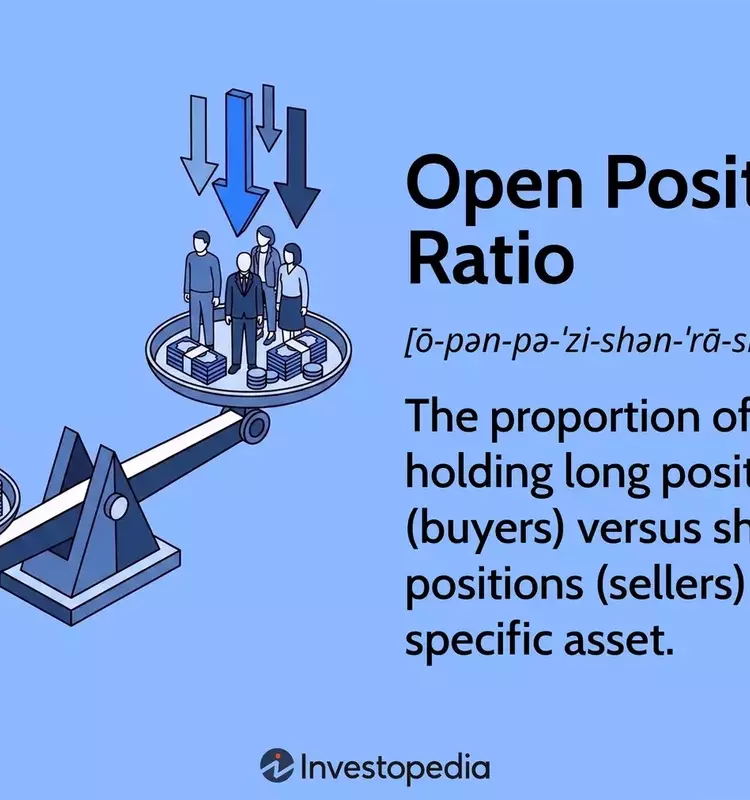
The open position ratio, a key metric in the forex market, helps currency traders understand the relative popularity of various currency pairs on a specific trading platform. It quantifies the proportion of open positions for each major currency pair against the total open positions across all major pairs on that platform. This ratio offers a localized view of market interest, revealing which currency pairs are most actively traded among platform users.

While providing insights into localized market focus, the open position ratio's utility is inherently limited. It reflects only a fraction of the vast global forex market, which is largely dominated by institutional players like investment banks. Furthermore, it measures overall open interest rather than the specific breakdown of long versus short positions for any given pair. Consequently, this ratio primarily indicates concentrated retail trading activity and might even suggest herd behavior, making it a less comprehensive tool for broader market analysis.

The Essence of the Open Position Ratio

The open position ratio serves as a vital indicator for foreign exchange participants, enabling them to gauge the primary focus areas of investors by illustrating the comparative standing of major currency pairs. This metric is refreshed multiple times daily and is typically analyzed in conjunction with overall trading volume to form a comprehensive understanding of market dynamics. It fundamentally reveals how specific currency pairs are performing relative to others within a particular trading ecosystem.

However, it is crucial to recognize that this ratio is a relative measure of open interest across different currencies, distinct from individual long-short ratios that specify the percentage of buying versus selling positions for a currency pair. Because it is largely determined by the positions of traders on a single retail trading platform, the open position ratio captures only a minuscule sample of activity compared to the expansive forex market, where major financial institutions hold significant sway. Therefore, its primary value lies in identifying potentially crowded retail trades, which may sometimes be influenced by collective trading trends.

Interpreting Open Position Ratio Examples

Consider a hypothetical trading venue, 'FutureForex,' where the currency pairing of Euros against U.S. Dollars (EUR/USD) records an open position ratio of 25.8. This figure signifies that the EUR/USD pair accounts for 25.8% of all currently active positions on the FutureForex platform. This demonstrates the localized focus of traders on this particular currency pair within that specific environment.

The sum of all available open position ratios will typically approach 100%, though it may not always reach it precisely, especially if minor currency pairs are excluded from the calculation. Major currency pairs, which are the most actively traded in the foreign exchange market, generally include EUR/USD, USD/JPY, GBP/USD, and USD/CHF. These pairs are often the primary focus of such ratio calculations, reflecting their significant trading volume and liquidity.

More Articles
Finance
Understanding Resistance Zones in Financial Markets
Resistance zones represent the upper price limits a stock typically struggles to surpass. These levels are crucial for technical analysts aiming to identify potential selling opportunities and maximize short-term gains. By understanding how these zones interact with support levels, investors can make more informed trading decisions. This concept is fundamental to technical analysis, guiding traders in predicting price movements and identifying breakout opportunities.
By Mariana MazzucatoJul 24, 2026
Finance
Understanding Premium Income in Finance and Insurance
Premium income refers to the earnings an investor gets from selling options contracts or the revenue an insurer collects from policyholder payments. It fundamentally represents the compensation received for providing risk protection to another party. In both financial markets and the insurance sector, this income stream is central to covering potential liabilities and generating profit from risk management.
By Morgan HouselJul 24, 2026
Finance
Wabtec's Fundamental Strengths Drive Growth Amid Valuation Concerns
Wabtec Corporation showcases robust fundamentals, characterized by vigorous order growth and expanding margins. Despite its strong performance and raised full-year guidance, particularly in its Freight, Transit, and non-rail divisions, its current market valuation suggests limited potential for significant near-term gains. Long-term growth is underpinned by international aftermarket expansion, infrastructure enhancements, and technological innovations, both within and beyond the rail sector. While holding the stock remains justifiable, substantial re-rating appears unlikely given present valuations.
By Michele FerreroJul 24, 2026
Finance
Infosys: Reassessing Investment Potential Amidst Underperformance
Infosys Limited continues to trail major market benchmarks, including US, Indian, and global technology indices. Despite a robust financial foundation, strong margins, and consistent cash flow, the company has consistently fallen short of expectations over the past five years. My previous 'Hold' recommendation was based on its resilience and potential for recovery, rather than an impending downturn. With the release of Q1 2027 results, I am now re-evaluating whether Infosys's trajectory shows any meaningful signs of change.
By Michele FerreroJul 24, 2026
Finance
Reddit: Maintaining a Bullish Stance Ahead of Q2 Earnings
This article supports a bullish outlook for Reddit (RDDT) as it approaches its Q2 earnings report. Despite recent market fluctuations, the company shows promising valuations and a historical tendency for significant stock movement around earnings. Key points include strong revenue growth projections, a healthy EBITDA margin, and the potential for upside from a renegotiated Google licensing deal. The author emphasizes the importance of cost management, user engagement, and potential share repurchases.
By Suze OrmanJul 24, 2026