Understanding the Operating Expense Ratio in Real Estate
Finance

Understanding the Operating Expense Ratio in Real Estate

authorBy Morgan Housel
DateMay 01, 2026
Read time2 min

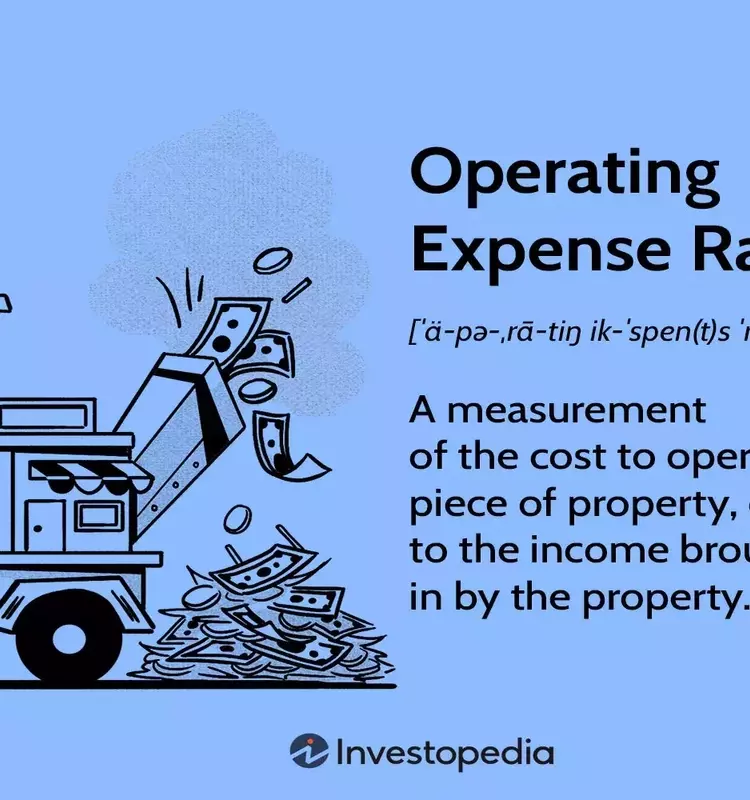
Understanding a property's financial health is critical for any real estate investor. The Operating Expense Ratio (OER) serves as a vital indicator, illustrating the relationship between a property's operational expenditures and the revenue it generates. This ratio helps stakeholders gauge how effectively a property is being managed and its potential for sustained profitability.

The OER is calculated by taking all operational expenses, excluding depreciation, and dividing them by the property's gross operating income. A lower ratio is generally more favorable, as it signifies that a larger portion of the property's income remains after covering day-to-day costs. For instance, an OER falling between 60% and 80% is typically considered healthy. Analyzing trends in OER over time can reveal crucial insights; if expenses grow faster than income, it signals a potential decline in profitability for the owner. It is also important to factor in potential vacancies when calculating OER, using effective rental income rather than potential rental income, as this provides a more accurate picture of management efficiency.

While the OER is invaluable for assessing operational efficiency, it does have limitations. It does not incorporate the market value of the property, meaning it cannot fully inform an investor about the overall value of an asset at the point of purchase or sale. Therefore, the OER should be used in conjunction with other financial metrics, such as the capitalization rate, which measures the expected rate of return on a real estate investment based on net operating income and current market value. Additionally, the variability in depreciation accounting methods can potentially skew the OER, highlighting the need for careful consideration of how this component is calculated.

In essence, the Operating Expense Ratio empowers investors to evaluate the efficiency and profitability of their real estate ventures. By carefully analyzing this metric alongside other financial indicators, investors can make informed decisions, identify areas for improvement, and optimize their property portfolios for long-term success and financial well-being.

More Articles
Finance
Understanding Annuities: A Guide to Retirement Income Decisions
Annuities offer a crucial retirement income stream that guarantees payments for life, preventing individuals from outliving their savings. This article explores the mechanics of annuitization, its suitability for various financial situations, and factors like life expectancy that influence payout choices. It also highlights the trade-offs between guaranteed income and liquidity, using a hypothetical example to illustrate decision-making in retirement planning.
By Michele FerreroMay 01, 2026
Finance
Understanding the Rising Costs and Value of Premium Travel Credit Cards
Premium travel credit cards are becoming more expensive, with annual fees potentially reaching close to $1,000. These cards offer extensive benefits like travel credits, concierge services, and airport lounge access. However, cardholders must maximize these perks through sufficient spending and travel to justify the increased cost. Issuers raise fees to offset benefit expenses, stay competitive, and generate profits. Evaluating the worth of a high annual fee involves comparing your spending habits with rewards and ease of benefit redemption.
By Nouriel RoubiniMay 01, 2026
Finance
Schneider National's Q1 2026 Performance: Challenges and Outlook
Schneider National recently released its first-quarter 2026 financial results, revealing continued pressure on profit margins and a decrease in revenue across all business segments. Despite a generally optimistic tone from management regarding market improvements, the company's operating income experienced a 20% year-over-year decline. Although there were positive developments like increased network efficiency and higher intermodal volumes, these were insufficient to counteract broader operational weaknesses. Management has maintained its full-year EPS forecast of $0.70 to $1.00, acknowledging that demand uncertainty remains a significant factor, even with some indications of supply tightening. Given these factors, particularly the company's capital-intensive nature, cyclicality, and modest growth projections, I continue to rate SNDR as a Hold.
By Nouriel RoubiniMay 01, 2026
Finance
Maximizing Home Value: Strategic Renovations and Emotional Rewards
This article explores the financial and emotional aspects of home renovations. It highlights that while few projects offer a full return on investment, some improvements provide significant resale value. The piece also emphasizes the "joy scores" associated with certain renovations and advises homeowners to consider their long-term plans before undertaking major projects. Ultimately, it suggests prioritizing personal benefits alongside potential financial gains.
By Nouriel RoubiniMay 01, 2026
Finance
Crafting Effective Client Emails: Strategies for Financial Advisors
Many financial advisors struggle to engage clients through email, with most messages remaining unread. This article outlines key strategies to boost email open rates and foster stronger client relationships. By focusing on personalization, clear value propositions, and authentic communication, advisors can transform their emails from ignored broadcasts into powerful tools for connection and trust.
By Nouriel RoubiniMay 01, 2026