Unlock the Power of Ownership: Your Guide to Property and Wealth Creation
Defining Property and Its Fundamental Principles
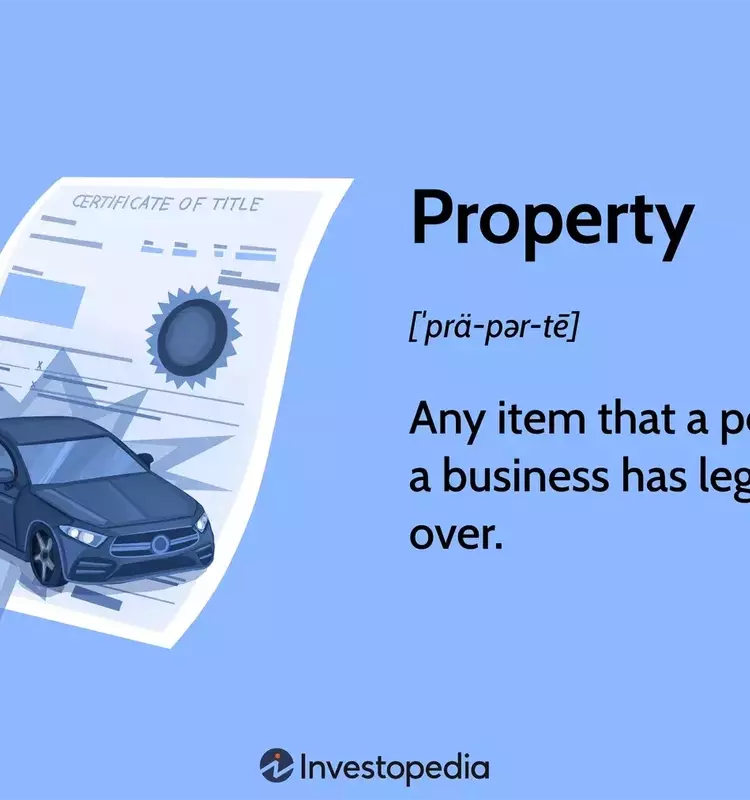
Property signifies the legal entitlement to both physical and non-physical assets. Tangible assets encompass physical items like land, buildings, and vehicles, while intangible assets include elements such as stocks, patents, and copyrights. Ownership bestows upon individuals or entities the authority to utilize, oversee, sell, or transfer these assets. While property can be a significant driver of wealth accumulation and value appreciation, it also entails financial commitments, such as ongoing maintenance costs or legal obligations. This exploration will delve into the diverse categories of property, the rights associated with them, and the dual nature of property as both an asset and a liability.
Exploring the Core Concepts of Property
Intangible property refers to assets that hold current or prospective value without possessing inherent physical form, such as stock and bond certificates. Although these documents are merely symbolic, they can represent substantial monetary value. Other intangible properties, like a brand's reputation, are less concrete and cannot be represented by physical documents. Intellectual properties, such as design concepts, musical compositions, literary works, and screenplays, despite their non-physical nature, can hold considerable worth. Iconic examples include Nike's distinctive "swoosh" logo and the proprietary chemical formula for Coca-Cola. To safeguard ownership of intangible properties, individuals and businesses often engage legal counsel to secure their assets against infringement.
Categorization of Property Forms
Property, in its broadest sense, refers to anything owned by an individual, group, or entity. This includes real property, personal property, private property, and government-owned property, among other classifications.
Delving into the Concept of Real Property
Real property is a widely recognized category of ownership, encompassing land, structures erected on that land, and the associated rights to its use and enjoyment. This forms the bedrock of real estate, which involves transactions such as purchasing, selling, leasing, and managing land and buildings for residential, commercial, or agricultural purposes. Just as property itself varies, so do the interests in property. Real property interests include freehold estates, which denote perpetual and inheritable ownership, and non-freehold estates (or leasehold estates), which are temporary, non-transferable interests such as leases and rental agreements. Property law dictates the permissible uses of real property and the legal procedures for its transfer.
Understanding Personal Property
Personal property is a well-understood concept, distinct from real property in that it excludes real estate. It comprises movable physical items not permanently affixed to land, such as apparel, automobiles, furniture, and tools. Personal property also extends to intangible assets like bank accounts, patents, and investments. Although not physically movable, the rights to these assets remain with the designated legal owner, thereby classifying them as personal property.
Defining Private Property
Private property refers to any asset owned by a private individual or entity. This encompasses personal, real, tangible, and intangible assets, including intellectual property. While private property is frequently categorized as either real or personal, it's important to note that not all real or personal property falls under the "private" designation. Private property is generally not open to public access or government ownership. However, governments can acquire private property under specific circumstances, such as through eminent domain.
Exploring Government-Owned Property
Government-owned property includes all assets, whether real property, resources, or other tangible and intangible holdings, under the ownership of a governmental body. Unlike private property, most government-owned assets are accessible to the public, exemplified by libraries, public schools, and municipal parks. Nevertheless, not all government-owned property is universally accessible, and some publicly accessible properties may have restricted access. For instance, a city park might enforce a curfew, limiting public entry after certain hours. Similarly, government facilities like military research centers or laboratories may be entirely off-limits to the public. Occasionally, private property may be transferred to a local government through escheat, making it temporarily or permanently government-owned. In other scenarios, private property owners may willingly forfeit or sell their property rights to the government.
Strategies for Evaluating Property Assets
When financial experts like auditors, appraisers, and analysts determine the value of a business, they meticulously consider all its underlying assets. For example, a small machine parts manufacturer, despite modest annual gross earnings of $80,000, could have a significantly higher overall valuation if it owns the factory, appraised at $1 million. Furthermore, if this company possesses a patent for a specific part, it has the potential to generate substantial revenue by licensing manufacturing rights to a larger entity, rather than producing the part internally. Such licensing agreements can establish lucrative income streams, significantly enhancing a company's total value.
Leveraging Property for Net Worth Enhancement
An individual's net worth is calculated by summing the total value of their owned assets, which can include real estate, vehicles, jewelry, stocks, bonds, and retirement savings, and then deducting all liabilities or debts. For example, if an individual's assets comprise a home valued at $100,000, a car at $7,000, and an IRA worth $65,000, their total property value amounts to $172,000. If this same individual has a $20,000 student loan and a $3,000 credit card balance, their total liabilities would be $23,000. Consequently, their overall net worth would be $149,000 ($172,000 minus $23,000).
