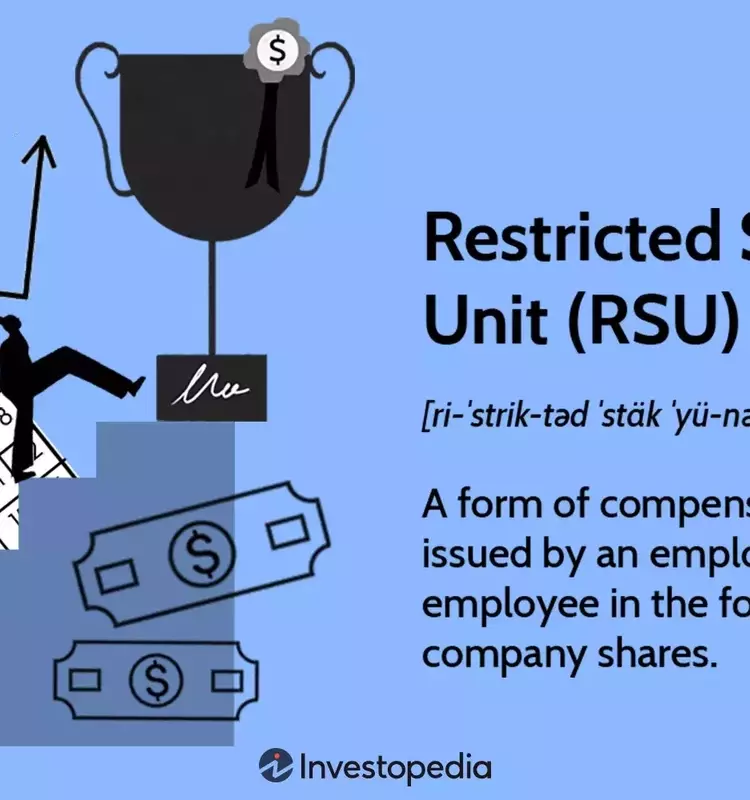
Restricted Stock Units (RSUs) are a significant component of modern employee compensation, offering a share in company ownership that vests over time. This approach incentivizes long-term commitment and aligns employee interests with the company's financial success. This article delves into the mechanics of RSUs, their benefits and drawbacks, and their tax treatment, contrasting them with traditional stock options and illustrating their practical application with real-world examples.
RSUs serve as a form of equity-based remuneration for employees, typically involving a vesting period that can span several years. During this period, the recipient must satisfy specific criteria, such as maintaining employment for a predetermined duration or achieving particular performance targets, before the stock units are officially transferred. Upon vesting, RSUs transform into company stock that employees can either retain or liquidate. Unlike stock options, which provide the right but not the obligation to purchase shares, RSUs inherently possess value as long as the underlying company stock holds value. This characteristic makes them a more stable form of incentive compensation.
The prevalence of restricted stock as an employee compensation tool surged in the aftermath of major accounting scandals in the mid-2000s, exemplified by cases like Enron and WorldCom. These events prompted a reevaluation of compensation practices, leading the Financial Accounting Standards Board (FASB) to mandate that companies account for stock options as expenses. This regulatory shift spurred organizations to explore alternative equity compensation methods. Consequently, RSUs, traditionally reserved for senior management, became a more widespread offering across various employee levels. Data from between 2003 and 2005 reveals a notable trend: the median number of stock options granted by Fortune 1000 companies decreased by 40%, while RSU awards saw a nearly 41% increase during the same timeframe. This shift underscored the growing appeal of RSUs as a reliable mechanism for attracting and retaining talent, providing employees with a tangible stake in the company's future while mitigating some of the accounting complexities associated with stock options. In specific scenarios, such as an employee's disability or retirement, vesting periods may be extended or accelerated, demonstrating the flexibility inherent in RSU plans.
From a tax perspective, RSUs are treated distinctively. The full value of vested RSUs is considered ordinary income in the year they vest. When an employee eventually sells the stock, the difference between the sale price and the fair market value at the time of vesting is categorized as either a capital gain or loss. This contrasts with the tax treatment of other stock options, where different rules may apply. Importantly, RSUs do not qualify for the IRC 83(b) Election, which allows taxpayers to pay taxes on restricted stock before it vests, because the Internal Revenue Service (IRS) does not classify RSUs as tangible property. Furthermore, employees do not acquire voting rights until the actual shares are issued upon vesting. Should an employee depart the company prior to completing their vesting schedule, they forfeit any unvested shares. For instance, if an employee is granted 5,000 RSUs over a two-year vesting period but resigns after 12 months, they would forfeit the remaining 2,500 unvested RSUs.
RSUs are a potent tool for companies aiming to retain employees and encourage strong performance, as they tie individual success directly to company growth. While they offer capital gains potential upon stock price appreciation and entail minimal administrative costs for employers, RSUs do come with certain limitations. Notably, they do not confer dividend rights or voting privileges until shares are fully vested, and they are subject to specific tax rules that differ from those of other stock-based compensation. Despite these nuances, RSUs have cemented their place as a popular and effective mechanism for aligning employee incentives with corporate objectives.
