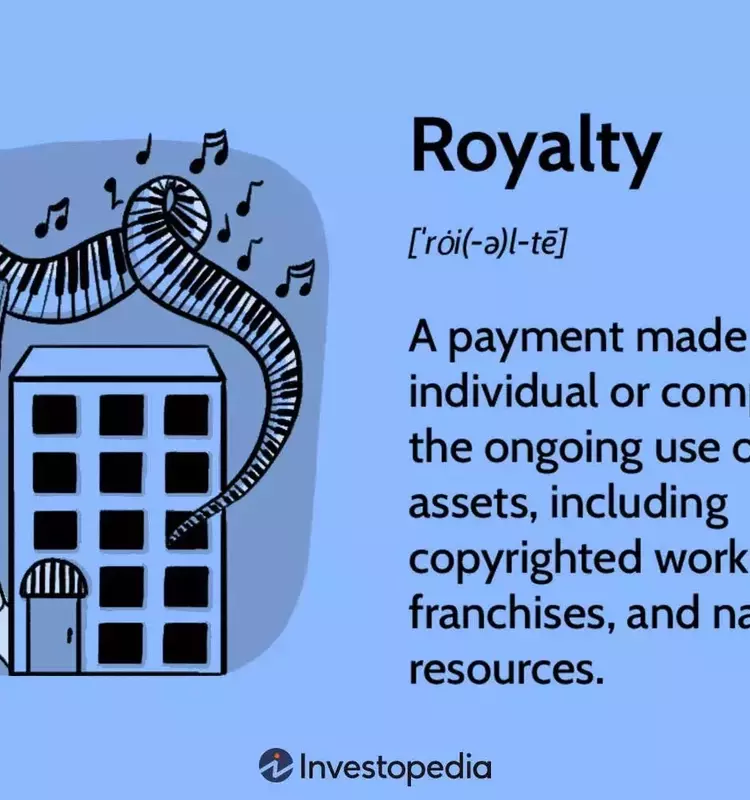
Royalties represent a form of compensation granted to individuals or entities who own valuable assets, ranging from creative works to natural resources, in exchange for allowing others to utilize those assets. These payments are typically governed by intricate licensing agreements that detail the terms of usage, payment structures, duration, and geographical limitations. This system ensures equitable benefit for both the asset owner (licensor) and the user (licensee), facilitating market access and innovation.
The world of royalties encompasses a diverse array of categories, each tailored to specific asset types. Literary works generate book royalties, where authors receive a share of each sold copy. The music industry relies on performance royalties, compensating copyright holders whenever their compositions are publicly broadcasted or used in other media. Patented inventions lead to patent royalties, obliging third parties to pay innovators for the right to employ their creations. Furthermore, business expansion often involves franchise royalties, where franchisees pay for the privilege of operating under an established brand. Finally, the extraction of natural resources is commonly associated with mineral royalties, paid by extractors to property owners.
At the heart of any royalty arrangement lies a comprehensive licensing agreement. This document precisely delineates the scope and constraints of the royalty, including geographical boundaries, the agreement's timeframe, and specific revenue-sharing formulas for different products. Effective agreements are mutually advantageous. For asset owners, they offer a pathway to market expansion and broader utilization of their creations. For licensees, these agreements grant access to essential products or technologies that might otherwise be unattainable, fostering collaboration and economic activity.
The determination of royalty rates is a nuanced process influenced by several factors. A fundamental principle dictates that all royalty transactions must occur at arm's length, meaning that involved parties operate independently without pre-existing relationships, ensuring fair market value. Key considerations impacting royalty rates include the degree of innovation embedded in the product, the exclusivity of the granted rights, the availability of alternative solutions, prevailing market demand, and the profit margins associated with the product. For instance, in the music industry, specific per-minute rates are established for copyrighted songs, varying based on the duration and format of sales, such as physical copies or digital downloads.
The structure of royalty payments typically involves a percentage of sales, a fixed fee per unit, or a share of the gross or net revenues generated from the asset's use. However, these structures are highly adaptable and can be customized through negotiation to align with the unique requirements and preferences of both parties involved. Beyond traditional categories like books and music, royalties extend to non-renewable resources, trademarks, and even the use of a fashion designer's name or designs. These payments ultimately contribute to the ordinary income of the recipient, highlighting their crucial role in monetizing diverse assets.
Authors, for example, commonly receive a percentage of their book sales, often with varying rates for different formats like hardcovers and paperbacks. The franchise model also heavily relies on royalties; for instance, a McDonald's franchisee makes an initial investment followed by ongoing royalty payments calculated as a percentage of monthly gross sales. Intellectual property, which includes copyrights, patents, and trademarks, is an intangible asset legally protected from unauthorized use. Royalties serve to uphold these intellectual property rights, ensuring that innovators and creators are fairly compensated when others leverage their patented inventions. Entities such as television satellite companies pay royalties to broadcast popular stations, while oil and gas companies pay landowners for the right to extract natural resources from their properties. Royalty interests specifically pertain to mineral rights agreements, granting owners a share of produced minerals or the gross revenue from their sale.
Royalties provide a vital mechanism for creators, innovators, and property owners to generate income from their diverse assets, spanning intellectual property and natural resources. Through carefully crafted licensing agreements, these payments define the parameters of asset usage, ensuring that both the licensor and licensee derive value from the arrangement. Whether structured as a percentage of sales or revenue, royalties are a cornerstone of asset monetization, contributing significantly to the recipient's income.
