Understanding Short Selling: Risks, Mechanisms, and Real Estate Applications
Finance

Understanding Short Selling: Risks, Mechanisms, and Real Estate Applications

authorBy Morgan Housel
DateJun 24, 2026
Read time2 min

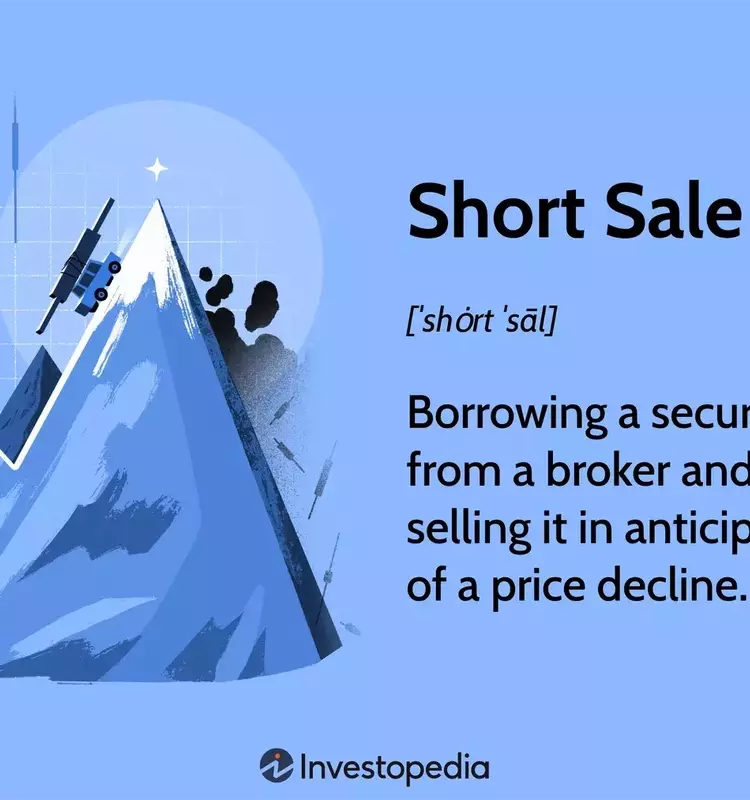
Short selling is an investment approach involving the sale of borrowed assets, such as stocks or bonds, with the anticipation of a future price decrease. Investors using this method borrow securities from a broker, sell them at the current market price, and then plan to buy them back later at a lower price. The objective is to return the borrowed securities to the broker and profit from the price differential. This tactic demands an advanced comprehension of market dynamics and precise timing.

This strategy, however, is not without its considerable dangers. If the asset's value appreciates instead of depreciating, potential losses can be theoretically limitless. Additionally, investors must maintain a margin account, which can amplify these losses. Short selling also incurs various costs, including fees for borrowing the security, interest on the margin account, and trading commissions. The efficiency of the market further complicates this strategy, as market prices often already reflect anticipated negative news, meaning short sellers must foresee price drops before they are widely analyzed. The practice can also be criticized for potentially harming a company's stock price, though some experts, like Warren Buffett, view short sellers as crucial for identifying problematic companies and correcting market inefficiencies.

Beyond the stock market, the concept of a short sale extends to real estate, where it refers to the sale of property for less than the outstanding mortgage or lien debts. In such cases, lenders agree to accept a reduced amount to avoid foreclosure, which is typically a less favorable outcome for all parties involved. This type of transaction is usually an arm's length transaction, meaning it is conducted between independent, unrelated parties. Whether in finance or real estate, short selling is a sophisticated strategy that should only be undertaken by experienced individuals with a thorough understanding of the associated risks and mechanisms.

Engaging in short selling requires more than just a basic understanding of market trends; it demands a disciplined approach and continuous learning. Investors must be prepared to cut losses quickly if a position moves unfavorably, a challenge highlighted by the contrasting "buy-and-hold" strategy that allows for longer-term market fluctuations. Therefore, comprehensive education and a strong grasp of market intricacies are essential for anyone considering this high-stakes investment method.

More Articles
Finance
Virtus Newfleet Senior Floating Rate Fund Q1 2026 Commentary
The Virtus Newfleet Senior Floating Rate Fund (Class I) achieved a 0.11% return in Q1 2026, outperforming the S&P UBS Leveraged Loan Index which posted a -0.47% return. The fund's strong performance was primarily driven by strategic underweighting and astute issue selection within the information technology sector, which experienced a selloff fueled by AI disruption concerns. Conversely, issue selection in CC, C, and default credits had a negative impact on the fund's performance during the quarter.
By Fareed ZakariaJun 24, 2026
Finance
Veralto: Strategic Cost Optimization and Growth Prospects
Veralto Corporation, a recent spin-off from Danaher, is implementing a cost optimization program aimed at generating $70 million in annual savings by 2028. This initiative is expected to boost EPS growth, exceeding sales increases, and positively influence its market valuation. The Water Quality division is experiencing strong demand, particularly from data centers, while the PQI segment anticipates a recovery in the latter half of the year. Despite potential challenges such as inflation and execution risks, the company projects stable free cash flow conversion and achievable margin targets.
By Morgan HouselJun 24, 2026
Finance
Telephone and Data Systems: A Brighter Future on the Horizon
This article explores the promising outlook for Telephone and Data Systems (TDS), focusing on its strategic initiatives in fiber service expansion and broadband network enhancement. The author rates TDS as a 'Buy' for long-term investors, suggesting that these foundational investments are poised to drive substantial future growth and competitive advantage in the telecommunications sector. The emphasis is on increasing customer base and leveraging robust infrastructure.
By Fareed ZakariaJun 24, 2026
Finance
US Equity REIT Capital Fundraising Sees Decline in May
Capital raised by US equity real estate investment trusts experienced a downturn in May, with a total of $4.14 billion garnered. This figure marks a slight decrease from April's $4.22 billion and a substantial 54% drop compared to May of the previous year. The specialty sector, encompassing diverse areas like advertising and data centers, emerged as the leader in capital-raising activities among all US REIT segments up to May 31st.
By Suze OrmanJun 24, 2026
Finance
Intel's Advanced Packaging for AI Data Centers Receives Analyst Boost
Mizuho has increased its price target for Intel (NASDAQ: INTC) to $135 from $128, maintaining a 'Neutral' rating, due to the company's advanced packaging technologies. These innovations are expected to enhance performance and meet the growing demands of AI data centers, despite the need for improved manufacturing yields.
By Suze OrmanJun 24, 2026