Understanding Stock Dividends: A Comprehensive Guide
Finance

Understanding Stock Dividends: A Comprehensive Guide

authorBy Robert Kiyosaki
DateJul 21, 2026
Read time2 min

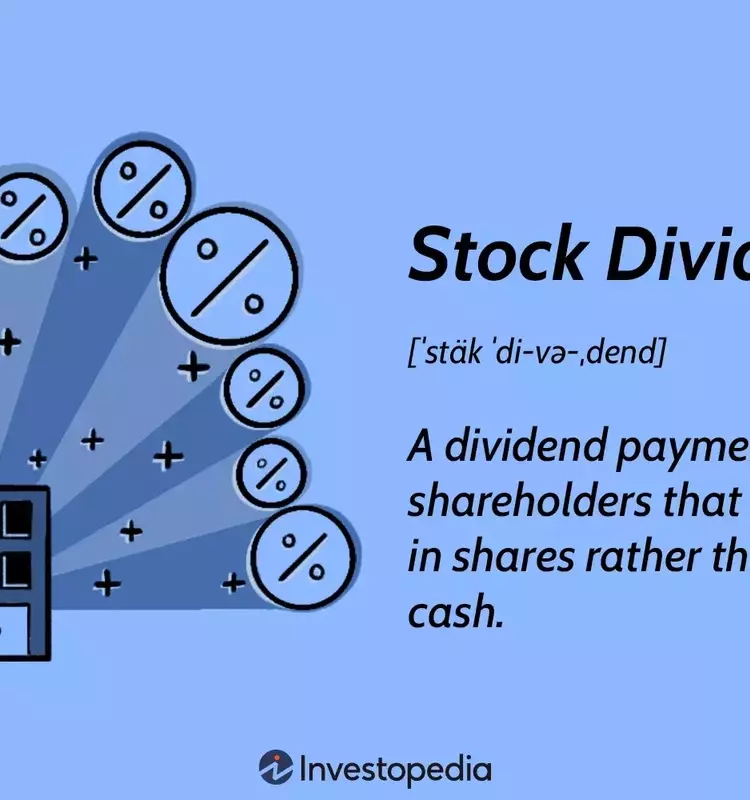
Stock dividends, unlike their cash counterparts, provide shareholders with additional company shares rather than monetary payments. This approach allows companies to maintain their cash liquidity while still compensating investors. While each share's individual value might see a slight reduction initially, shareholders gain a larger ownership stake.

Companies utilize stock dividends to distribute profits without impacting their cash reserves, which can be crucial for funding operations, growth, or navigating challenging financial periods. From the investor's perspective, a notable advantage is the deferred tax liability: taxes on these additional shares are only incurred when they are eventually sold. This makes stock dividends an attractive option for long-term investors focused on capital appreciation rather than immediate income. However, the issuance of new shares leads to dilution, reducing the earnings per share and the percentage of ownership for existing shareholders. This can be a disadvantage if the company's net income does not grow proportionally to the increased number of shares.

The accounting treatment for stock dividends varies depending on the quantity of new shares issued relative to existing shares. Small stock dividends, defined as less than 25% of outstanding shares, involve transferring the market value of the new shares from retained earnings to paid-in capital. Conversely, large stock dividends, exceeding 25% of outstanding shares, are recorded by transferring the par value of the issued shares. Regardless of size, the overall equity value of the company remains unchanged. Both companies and investors must carefully consider these factors. For companies, stock dividends are a strategic tool for shareholder reward and cash management. For investors, they represent a potential for future gains, albeit with an initial dilution effect and a different tax implication compared to cash dividends.

Stock dividends are a testament to a company's commitment to its shareholders, offering a pathway to increased ownership and potential long-term wealth accumulation. They embody a forward-looking perspective, encouraging investors to participate in the company's future growth. This method of distribution fosters a sense of partnership, aligning the interests of the company and its investors for mutual prosperity and sustained value creation.

More Articles
Finance
Dorian LPG: Assessing Investment Risks and Opportunities in a Volatile Shipping Market
Dorian LPG offers a focused investment in the LPG shipping sector, characterized by a modern fleet and strong exposure to the spot market. The company is benefiting from high freight rates, strategic vessel sales, and significant cash returns, including a special dividend. However, the current valuation, near adjusted net asset value, limits downside protection. Future risks include the potential normalization of rates, increased vessel supply, and the absence of a fixed dividend policy, necessitating a neutral stance despite strong near-term earnings.
By Lisa JingJul 21, 2026
Finance
Parnassus Value Equity Fund Q2 2026 Performance Review
The Parnassus Value Equity Fund (PARWX) achieved a significant 17.86% return in Q2 2026, outperforming the Russell 1000 Value Index by nearly four percentage points. This strong performance was primarily driven by strategic investments in information technology companies, particularly those benefiting from the surge in AI data center demand, alongside avoiding underperforming energy sector stocks. The fund also made notable portfolio adjustments, including adding Coca-Cola for its global brand strength and divesting from Bio-Rad Laboratories.
By Fareed ZakariaJul 21, 2026
Finance
Top General Liability Insurance for Small Businesses in 2026
This review analyzes the best general liability insurance providers for small businesses in 2026, evaluating companies based on coverage limits, customer satisfaction, financial stability, and online experience. Thimble, The Hartford, Huckleberry, Travelers, and ERGO NEXT Insurance are highlighted for their unique strengths, helping businesses navigate potential risks with comprehensive protection.
By Robert KiyosakiJul 21, 2026
Finance
NVIDIA's Next Evolution: Physical AI and Foundational Models
NVIDIA remains at the forefront of AI infrastructure, leveraging its GPU technology and developing advanced foundational AI models like Nemotron and Cosmos. This strategic expansion, however, is met with rising copyright challenges and potential market volatility. The semiconductor industry is experiencing a broad-based downturn, prompting closer examination of NVIDIA's resilience and future prospects in a rapidly evolving landscape.
By Lisa JingJul 21, 2026
Finance
Netflix: Persistent Underperformance Signals Ongoing Bearish Outlook
Netflix has significantly underperformed the market, confirming earlier bearish predictions. The company's recent quarterly report reveals a 13.4% year-over-year revenue increase, marking the slowest growth rate in several quarters, with no clear signs of operating margin improvement. This sluggish performance, coupled with a high annualized P/E ratio exceeding 20x, raises concerns about its valuation. The intense competition within the streaming sector further reinforces a negative view of Netflix's future prospects, particularly given its substantial $285 billion market capitalization.
By David RubensteinJul 21, 2026