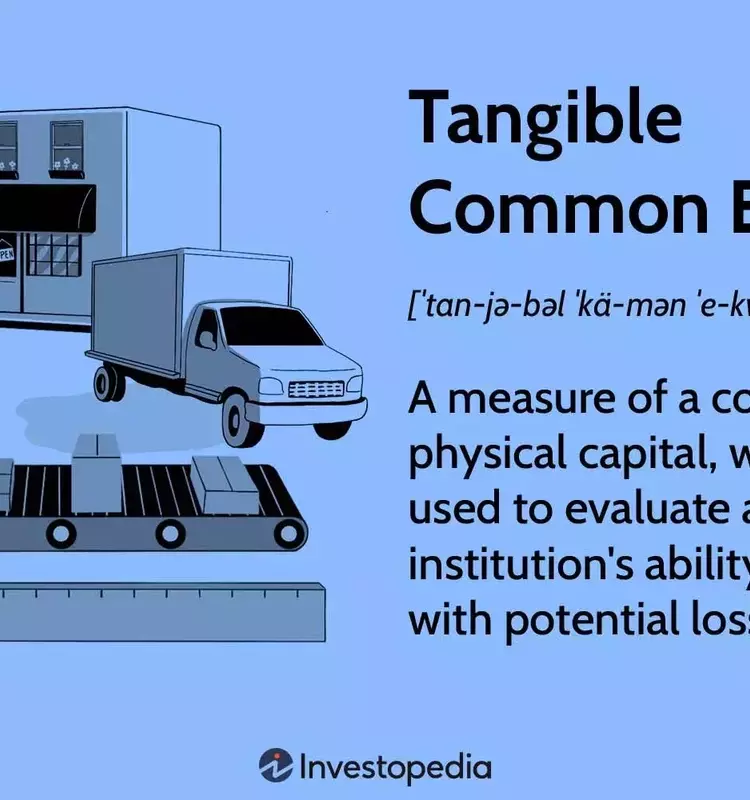
Tangible Common Equity (TCE) serves as a critical measure for evaluating the financial robustness of institutions, particularly within the banking sector. It provides insights into a firm's capacity to absorb financial setbacks by focusing solely on its physical capital. This metric is a cornerstone for assessing solvency and is often employed in financial stress tests to gauge an institution's resilience against adverse economic conditions.
The calculation of TCE involves deducting intangible assets, such as goodwill, along with preferred equity, from a company's total book value. This refined approach to capital assessment is especially pertinent for financial entities that typically possess fewer physical assets compared to other industries. Its conservative nature makes it a reliable indicator for analysts seeking to understand a bank's fundamental stability and its ability to manage risks effectively.
Understanding Tangible Common Equity (TCE)
Tangible Common Equity (TCE) is a crucial financial metric designed to assess the core capital strength of financial institutions, specifically their capacity to absorb potential losses. It focuses on the physical, or 'tangible,' assets owned by a company, providing a clear picture of its inherent financial stability. This measure is particularly vital for entities like banks, which often have significant intangible assets on their balance sheets. By stripping away these less liquid components, TCE offers a more conservative and realistic valuation of a firm's equity, highlighting its true ability to withstand economic pressures and maintain operational integrity during crises or downturns.
The methodology for calculating TCE is straightforward yet powerful: it involves subtracting all intangible assets, including goodwill, as well as preferred equity, from a company's total book value. This calculation isolates the tangible assets that can be readily used to cover liabilities, providing a reliable indicator of a bank's capital adequacy. The significance of TCE extends to scenarios such as the 2008 financial crisis, where many U.S. banks, after receiving bailout funds, adjusted their capital structures by converting preferred shares into common shares to bolster their TCE. This strategic move underscored the importance of TCE in enhancing a bank's perceived and actual financial resilience. Furthermore, the TCE ratio, which compares tangible equity to tangible assets, serves as a conservative benchmark for evaluating a bank's solvency and its capacity to sustain losses before its equity base is eroded.
Analyzing Financial Health with Tangible Common Equity
Evaluating the financial health of an institution using Tangible Common Equity (TCE) offers a profound insight into its core stability. This metric is particularly pertinent for financial firms, including banks, which are often characterized by a mix of both tangible and intangible assets. By concentrating on tangible capital, TCE provides a more robust assessment of an institution's ability to absorb economic shocks and maintain solvency, making it a preferred tool for discerning financial resilience. Its utility becomes especially pronounced during periods of financial uncertainty, allowing stakeholders to gauge a firm's fundamental strength independent of less liquid or subjective asset valuations.
The emphasis on tangible common equity also plays a significant role in assessing capital adequacy, particularly for financial institutions that may carry substantial amounts of preferred stock. Historical events, such as the 2008 financial crisis, demonstrated how banks used TCE adjustments, like converting preferred shares to common shares, to reinforce their capital base and navigate severe economic turbulence. While not a regulatory requirement under Generally Accepted Accounting Principles (GAAP) or standard banking regulations, TCE is widely adopted internally by institutions and analysts as a crucial benchmark for capital adequacy. This metric, especially when considered alongside other capital measures like Tier 1 capital, offers a comprehensive view of a bank's solvency, risk exposure, and its overall preparedness to face financial adversities.
