Understanding Trading Assets: Purpose, Valuation, and Accounting
Finance

Understanding Trading Assets: Purpose, Valuation, and Accounting

authorBy Mariana Mazzucato
DateApr 30, 2026
Read time2 min

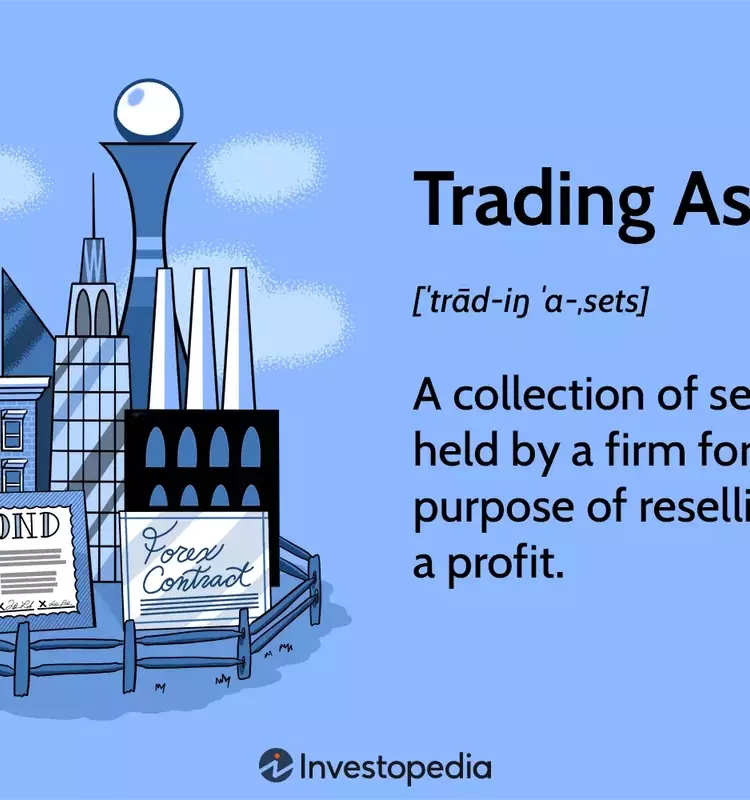
Trading assets are financial instruments that companies acquire with the intent of selling them in the near future to capitalize on short-term price movements. These assets are recorded distinctly from a firm's long-term investment holdings, emphasizing their immediate liquidity and speculative nature. Their valuation reflects current market conditions, with any fluctuations directly impacting the company's financial statements.

Specifically, trading assets encompass various securities such as U.S. Treasury securities, mortgage-backed securities, foreign exchange contracts, and interest rate contracts. A key characteristic is their classification as current assets on a company's balance sheet, signifying their rapid turnover. For instance, if a company invests in shares of another firm, and those shares experience a significant price change, the value of the trading asset on the balance sheet must be adjusted accordingly. Any resulting gain or loss, even if unrealized, is reflected in the income statement during the reporting period.

Companies, particularly financial institutions, manage these assets to generate quick profits. For example, a bank might hold a diverse investment portfolio for long-term growth and stability, but it would maintain a separate account for trading assets to actively engage in short-term market speculation. The distinction is crucial: investment portfolios focus on sustained value accumulation, while trading assets are managed for agile responses to market dynamics.

Beyond profit generation, some companies utilize trading assets for hedging purposes. An oil producer might sell oil futures to mitigate risks associated with future price drops, while an airline might buy oil futures to guard against price increases. In such scenarios, trading assets serve as a tool to manage and offset market exposures inherent in their core business operations. These assets are consistently revalued at fair market price, with unrealized gains and losses accounted for in the equity section of the balance sheet under accumulated other comprehensive income.

In essence, trading assets represent a company's strategy to actively participate in financial markets for short-term gains or risk management. Their dynamic valuation and distinct accounting treatment underscore their role in a company's financial health and market responsiveness. This approach contrasts sharply with long-term investment strategies, which prioritize stability and growth over extended periods.

More Articles
Finance
Understanding Tuck-in Acquisitions: Merging for Growth
A tuck-in acquisition involves a larger company fully integrating a smaller one to enhance its resources, market presence, or technology. This strategy differs from bolt-on acquisitions, where the acquired company might retain some independence. Such mergers are a rapid way for companies to expand their capabilities and market reach without extensive internal development.
By Morgan HouselApr 30, 2026
Finance
Comprehensive Guide to Annuities: Understanding Their Structure and Functionality
Annuities are financial contracts provided by insurance companies designed to offer a consistent income stream, primarily for retirement. They involve an accumulation phase, where funds are invested, and a payout phase, where the annuitant receives payments. Available in immediate or deferred, and fixed, variable, or indexed forms, annuities address longevity risk but come with complexities, potential illiquidity, and fees, necessitating careful consideration and professional advice.
By David RubensteinApr 30, 2026
Finance
Understanding Mezzanine Debt: Bridging the Gap in Corporate Finance
Mezzanine debt is a hybrid financing instrument that blends characteristics of both debt and equity. It sits below senior debt but above pure equity in the capital structure, making it a high-risk, high-reward option for investors. Often used in mergers and acquisitions, it allows companies to secure significant capital while potentially minimizing the initial equity contribution from buyers. This flexible financing can offer substantial annual returns, typically ranging from 12% to 20%, and even up to 40% in highly leveraged scenarios.
By Robert KiyosakiApr 30, 2026
Finance
Understanding Company Buyouts: Definition, Types, and Examples
A buyout, also known as an acquisition, involves one party gaining a controlling interest in a company, typically more than 50% ownership. This process aims to gain significant control over the company's decisions, often leading to restructuring or a change in management. Buyouts are frequently seen when a company transitions from public to private ownership. There are various forms of buyouts, each with distinct financing structures and strategic goals.
By David RubensteinApr 30, 2026
Finance
Amazon's AI-Powered Growth and Future Prospects
Amazon (AMZN) recorded impressive Q1 2026 results, with revenue up 17% and operating income surging by 30%, expanding margins to 13.1%. The stock retains a 'Strong Buy' rating, with a target upside of 40% driven by a 15.4x EV/EBITDA valuation. AI is a critical driver for optimizing retail, advertising, and AWS operations, boosting efficiency and profitability. Despite near-term capital expenditure pressures, AI, custom silicon development, global expansion, and the Amazon Leo satellite-internet initiative are set to fuel long-term growth.
By Mariana MazzucatoApr 30, 2026