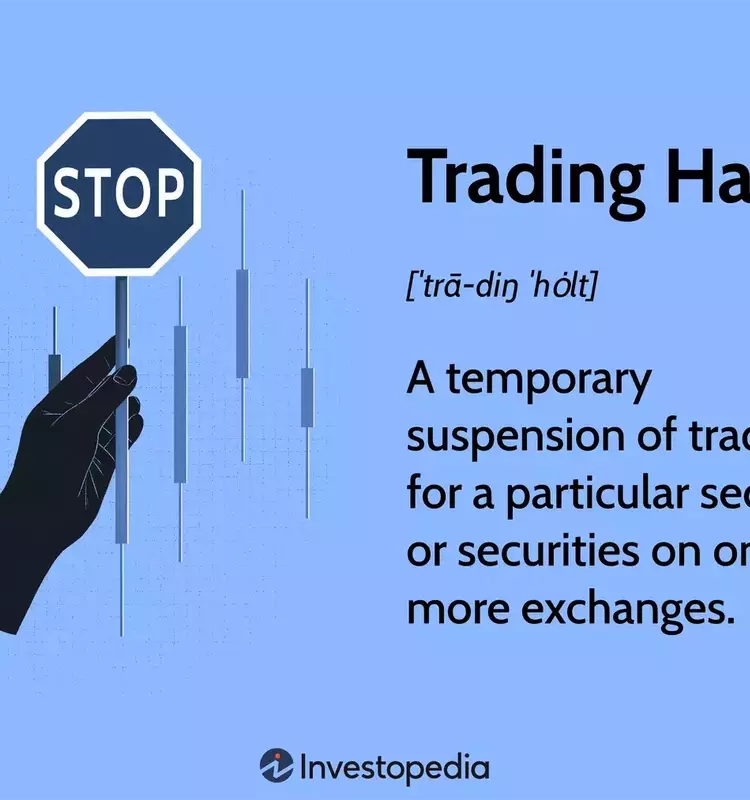
Trading halts represent a crucial mechanism within financial markets, temporarily pausing the exchange of specific securities or even entire market segments. These interruptions are not arbitrary but are strategically employed to address a range of market dynamics that could otherwise lead to instability or unfair trading practices. Whether triggered by impending corporate announcements, significant disparities between buy and sell orders, or pronounced shifts in asset values, trading halts serve to stabilize the market environment. They afford participants the necessary time to assimilate new data, adjust their strategies, or allow exchanges to restore equilibrium, thereby safeguarding the integrity and fairness of the trading process. This stands in contrast to more prolonged trading suspensions enacted by regulatory bodies, which typically address severe breaches of market rules or investor protection concerns.
The Purpose and Functionality of Trading Halts
A trading halt involves the temporary cessation of trading activity for a particular security or a group of securities, affecting either a single exchange or multiple trading platforms. This mechanism is primarily utilized in anticipation of significant news releases, to rectify substantial order imbalances, in response to technical malfunctions, due to regulatory directives, or when the price of a security or market index undergoes rapid and extensive fluctuations that trigger predefined rules set by exchanges. During a trading halt, pre-existing orders may be subject to cancellation, while options contracts typically retain their exercisable status. These halts are distinct from trading suspensions imposed by regulatory bodies, such as the Securities and Exchange Commission (SEC), which can last for up to ten days and are primarily aimed at protecting the investing public. This proactive measure ensures that all market participants have equitable access to critical information and helps prevent unfair advantages.
Trading halts are categorized into regulatory and non-regulatory types, each serving a specific function to maintain market order and fairness. Regulatory halts are enacted when there are uncertainties regarding a security’s compliance with established standards, providing a crucial window for market participants to evaluate new information—such as a regulatory body’s decision concerning a pharmaceutical product. These halts ensure that all investors receive timely access to price-sensitive news, preventing those with early information from gaining an unfair trading advantage. Other material developments necessitating regulatory halts include major corporate actions, legal judgments, or leadership changes. Critically, a regulatory halt initiated by a primary U.S. exchange for a security is universally recognized and upheld by all other U.S. exchanges. In contrast, non-regulatory halts, often observed on exchanges like the NYSE, address significant imbalances between buy and sell orders. These typically resolve within minutes, allowing trading to resume once market equilibrium is re-established. Companies frequently opt to release sensitive information post-market close to give investors time for assessment, but this can cause order imbalances at the market's opening, leading to brief trading delays until balance is achieved. Furthermore, the SEC possesses the authority to suspend trading in any publicly traded stock for up to ten days if it deems continued trading poses a risk to investors, especially if companies fail to submit required financial reports.
Circuit Breakers: A Mechanism for Market Stability
U.S. financial markets are equipped with predefined rules, known as circuit breakers, designed to implement market-wide trading halts during periods of extreme price declines. These measures are crucial for preserving market liquidity and stability. Specifically, cumulative drops of 7% and 13% in the S&P 500 index from the previous day’s closing level will trigger a 15-minute market-wide trading halt, provided these declines occur before 3:25 p.m. ET. A more severe 20% decline in the S&P 500, regardless of the time of day, results in a halt of the entire stock market for the remainder of that trading day. These circuit breakers prevent panic selling and allow market participants to reassess the situation.
Beyond market-wide applications, circuit breakers also extend to individual stock trading under U.S. regulations. For stocks listed on major indices like the S&P 500 or Russell 1000 and priced above $3, as well as certain exchange-traded products (ETFs), trading is temporarily halted for five minutes if their prices experience sudden movements of more than 5% (either up or down) that persist for over 15 seconds, based on the average price over the preceding five minutes. For other stocks priced above $3, a 10% sudden price movement is required to trigger a halt. For stocks priced between $0.75 and $3, the threshold for a trading halt is a 20% sudden gain or loss. These granular circuit breakers help to manage volatility at the individual security level, ensuring orderly trading and preventing extreme, unfounded price swings.
