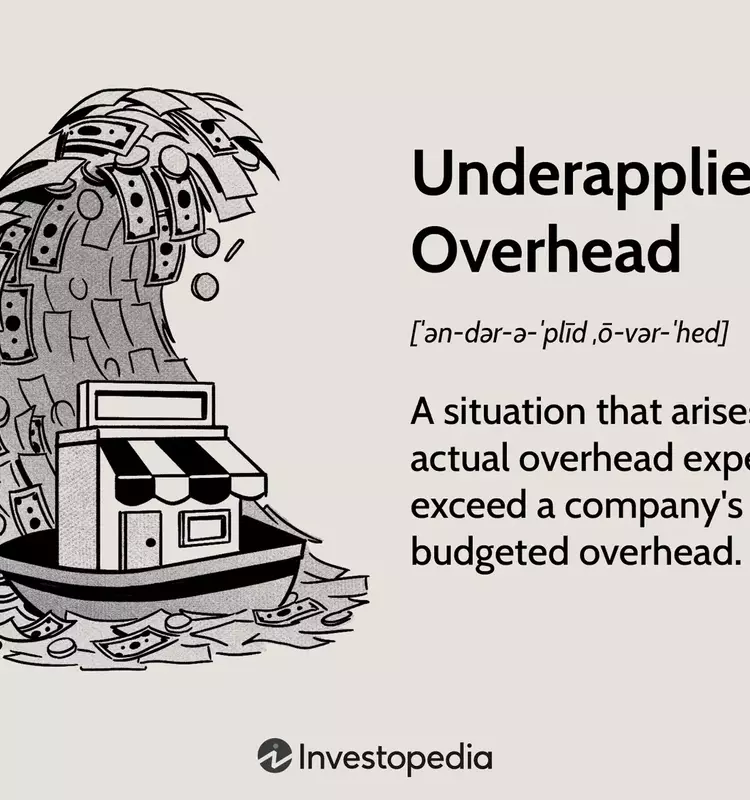
When a business faces the challenge of underapplied overhead, it signifies that the actual expenses associated with its operations have surpassed the amounts initially allocated in its budget. This financial divergence, while not inherently negative, serves as a crucial indicator that warrants careful examination. It suggests potential gaps in a company's budgeting strategies or a response to evolving economic landscapes. Understanding and addressing underapplied overhead is essential for maintaining financial accuracy and enhancing operational efficiency within any enterprise.
Detailed Analysis of Underapplied Overhead
In the intricate world of business finance, comprehending overhead costs is fundamental. These are the expenditures crucial for daily operations but not directly tied to the creation of specific products. They form the backbone of a company's operational structure, influencing pricing strategies and overall profitability. When a company projects a budget for these overheads, and the actual spending exceeds this projection, it results in what is known as underapplied overhead. For instance, if a company earmarks $100,000 for overheads but ultimately spends $150,000, the resulting $50,000 difference is considered an unfavorable variance. This means the cost of producing goods is higher than anticipated, directly impacting the cost of goods sold (COGS).
Accountants record underapplied overhead as a prepaid expense on the balance sheet, classifying it as a short-term asset. This temporary debit necessitates an adjustment, typically by the fiscal year's end, through a debit to the COGS and a corresponding credit to prepaid expenses. Financial analysts and management often scrutinize these variances not as a sign of immediate failure but as a window into broader business shifts or economic trends. Fluctuations in production or seasonal demands can often explain these variances. The initial overhead rate is established by dividing the budgeted overhead by the projected activity level. Advanced electronic systems for inventory and production management have greatly simplified the analysis of underapplied overhead, providing managers with precise metrics to assess operational effectiveness and optimize resource allocation.
Conversely, overapplied overhead occurs when actual expenses are lower than budgeted. This favorable variance means the company has managed its costs more effectively than planned. Similar to underapplied overhead, overapplied overhead is meticulously recorded on the balance sheet, typically as a credit in the overhead section, balanced by a credit to COGS and a debit to overhead at year-end. Both scenarios offer valuable insights into a company’s financial health, enabling better planning and strategic adjustments.
The meticulous examination of underapplied overhead is not merely an accounting exercise; it is a critical component of strategic financial planning and analysis. By diligently tracking these variances, businesses can fine-tune their cost control mechanisms and enhance forecasting accuracy. This process empowers management to make informed decisions regarding capital investments and the strategic deployment of essential resources, including time, financial capital, and human talent. Ultimately, a deep understanding of both underapplied and overapplied overhead facilitates a more robust and responsive financial framework, capable of adapting to the dynamic demands of the market and internal operational shifts.
