Understanding the Upstream Sector in Oil and Gas Industry
Finance

Understanding the Upstream Sector in Oil and Gas Industry

authorBy Robert Kiyosaki
DateMay 05, 2026
Read time2 min

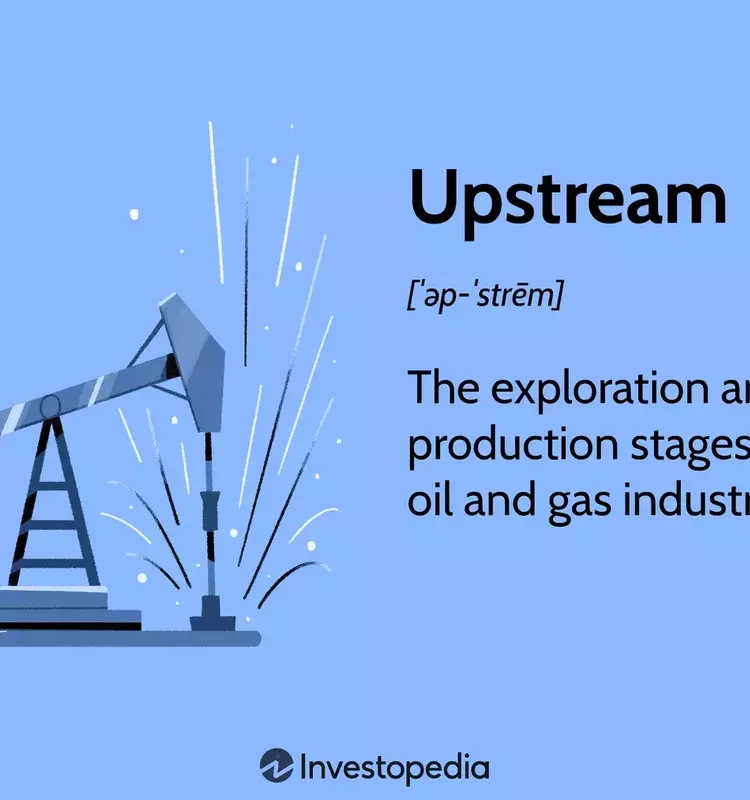
The upstream sector of the oil and gas industry, often called the exploration and production (E&P) sector, represents the foundational stage of hydrocarbon extraction. This crucial phase encompasses all activities from identifying potential oil and gas reserves to bringing these valuable resources to the surface. It serves as the starting point for the entire oil and gas value chain, preceding the midstream (transportation) and downstream (refining and distribution) operations.

The Intricate Process of Upstream Operations

Upstream activities involve a comprehensive and technologically advanced process to locate and recover crude oil and natural gas. The journey begins with meticulous land surveys and geological studies, where geologists and geophysicists analyze rock formations and soil layers to pinpoint areas likely to contain hydrocarbons. Advanced techniques such as seismology, which utilizes seismic waves generated by machinery or explosives, help in mapping underground reservoirs and estimating their potential. Once promising reserves are identified, exploratory wells are drilled to confirm the presence and viability of the resources. If successful, these exploratory efforts lead to the construction of production wells, which are then operated to bring the crude oil and natural gas to the surface. This segment also includes specialized services like rig operations, feasibility studies, and the provision of essential machinery and chemical supplies.

From a global perspective, the oil and gas industry is a complex and interconnected ecosystem. The upstream sector's efficiency directly impacts the subsequent midstream and downstream operations, highlighting its pivotal role. Continuous advancements in exploration and extraction technologies are shaping how these initial stages are conducted, leading to more precise and environmentally responsible practices. For individuals seeking to comprehend the intricate workings of this vital industry, understanding the upstream segment is paramount. It reveals how raw energy resources are sourced, eventually flowing through transportation networks, refined into various products, and finally delivered to meet the world's energy demands.

More Articles
Finance
Navigating the Market with Quant Insights: Micron, Lumentum, Credo, and More
This article explores the application of quantitative analysis in stock selection and portfolio management, featuring discussions on top picks like Micron, Lumentum, and Credo. It delves into the nuances of 'hold' versus 'sell' ratings, the impact of cyclical industries, and the role of factors like PEG ratio and EPS revisions. The piece also examines how small-cap stocks are affected by broad market recommendations and the unique advantages individual investors have over large institutions.
By David RubensteinMay 05, 2026
Finance
Mexico's ETF: A Comprehensive Analysis of Its Strong Rally
This article evaluates the iShares MSCI Mexico ETF (EWW), reiterating a buy rating due to its robust outperformance and attractive valuation. The ETF trades at 12.7x earnings with a promising 7.6% long-term growth rate, boasting a price-to-earnings-to-growth (PEG) ratio significantly below 2. Technical indicators suggest a constructive setup, with a potential breakout above $82 targeting $94, supported by a key support level at $69–$71. The ETF's performance is influenced by its sector allocations, notably a zero tech exposure and a heavy weighting in Materials, which have shaped its recent market trajectory. While a strong rally has been observed, short-term headwinds related to seasonality are anticipated through October.
By Lisa JingMay 05, 2026
Finance
Mastering Investment Analysis: Fundamental, Technical, and Quantitative Approaches
This article explores three core investment analysis methods: fundamental, technical, and quantitative analysis. It explains how long-term investors combine these approaches to evaluate a company's growth potential and profitability, ultimately guiding informed decision-making in the stock market. Understanding these distinct analytical frameworks is crucial for assessing risk and maximizing returns over time.
By Strive MasiyiwaMay 05, 2026
Finance
Navigating the Complexities of Estee Lauder's Financial Performance
Estee Lauder has demonstrated top-line expansion across all product categories and most geographical segments. However, while gross margins have improved due to the 'Profit Recovery and Growth Plan,' operating margins have seen a contraction, attributed to restructuring costs and potential legal disputes. The company, like its industry peers, continues to face headwinds from challenging macroeconomic conditions, including subdued consumer confidence and elevated crude oil prices. Given these mixed financial signals and ongoing risks, I maintain a neutral stance on the stock.
By Robert KiyosakiMay 05, 2026
Finance
US Stock Market Rebounds as Geopolitical Tensions Ease and Trade Hopes Rise
U.S. stock indices have fully recovered their previous losses, driven by a de-escalation of Middle East tensions and a retreat in crude oil prices. Investors are now shifting their focus towards the upcoming Trump-Xi meeting, which is perceived as a positive catalyst. This article delves into the technical levels of the Dow Jones, Nasdaq, and S&P 500, providing an intraday outlook for these key benchmarks.
By David RubensteinMay 05, 2026