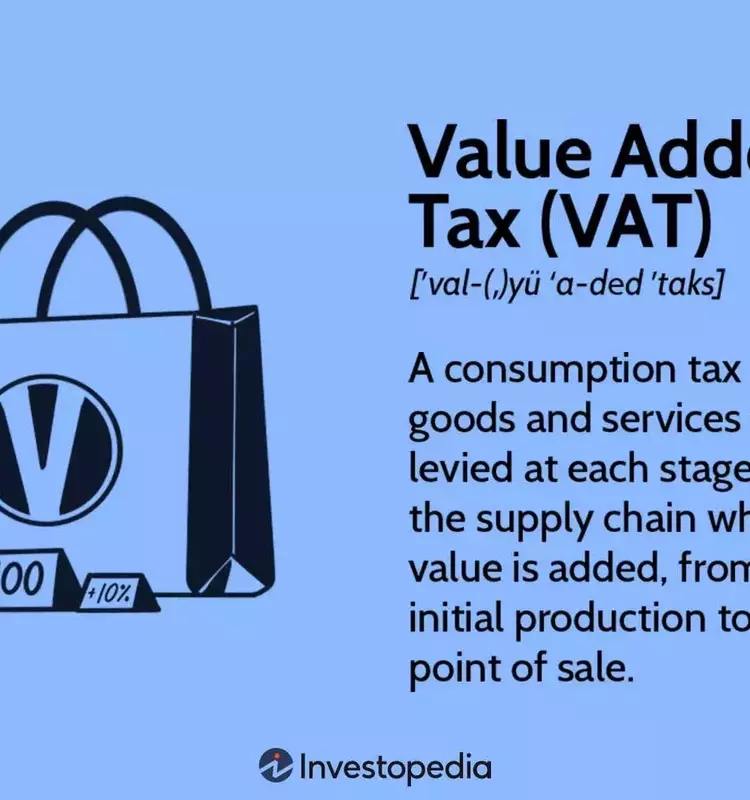
The Value-Added Tax (VAT) is a consumption-based levy imposed at each stage of the production and distribution of goods and services. This differs significantly from a sales tax, which is exclusively collected at the point of final retail. With over 170 nations adopting it, VAT is a prevalent global taxation model, notably across the European Union. While proponents argue for its capacity to generate consistent government revenue and streamline tax administration, critics raise concerns about its regressive impact on lower-income individuals and the potential for increased business expenses. The United States remains a major economy that has not implemented a federal VAT system.
Understanding how VAT functions is crucial, as it impacts businesses throughout the supply chain and ultimately influences consumer prices. The incremental collection mechanism of VAT, where tax is remitted at each value-addition point, contrasts with the single-point collection of sales tax. This distinction forms the basis of arguments for and against its adoption, highlighting its unique role in fiscal policy and its potential macroeconomic effects. Additionally, non-residents may be eligible for VAT refunds on certain purchases made abroad, providing a mechanism to mitigate its impact on international travelers.
The Mechanics of Value-Added Tax (VAT)
Value-Added Tax (VAT) operates as a consumption tax imposed at every phase of a product's journey, from its initial manufacturing to its ultimate sale. This system ensures that tax is collected incrementally as value is added to the good or service. The ultimate financial burden of VAT is typically absorbed by the consumer, as the accumulated tax is factored into the final retail price. Unlike a progressive income tax, which taxes higher earners at a greater rate, VAT is applied uniformly to all purchases, making it a consumption-based tax rather than an income-based one. This model has been widely adopted globally, with a significant presence in the European Union, demonstrating its broad international acceptance.
The process of VAT collection involves businesses paying tax on their inputs and charging tax on their outputs. The difference between the output tax and the input tax is remitted to the government, effectively taxing only the value added at each stage. For instance, consider a product with a 10% VAT: if a manufacturer buys raw materials for $2 (plus $0.20 VAT) and sells the finished product to a retailer for $5 (plus $0.50 VAT), the manufacturer remits only $0.30 to the government, representing 10% of their $3 gross margin. This incremental collection contrasts sharply with sales tax, where the entire tax amount is collected solely from the final consumer. While advocates praise VAT for its revenue-generating potential and administrative simplicity, critics argue that its regressive nature disproportionately affects low-income households and can lead to increased prices for consumers due to added business costs.
VAT's Global Adoption and Economic Implications
The concept of Value-Added Tax (VAT) originated in Europe, with its formal introduction by French tax authority Maurice Lauré in 1954. Despite earlier discussions in Germany regarding taxing production stages, it was Lauré's framework that laid the foundation for modern VAT systems. Today, the majority of industrialized nations, including members of the Organisation for Economic Co-operation and Development (OECD), have embraced VAT, with the United States standing out as a notable exception. Historical data, such as a study by the International Monetary Fund (IMF), indicates that while the initial adoption of VAT might temporarily decrease tax revenues, it typically leads to a sustained increase in government income over the long term, proving its effectiveness as a fiscal tool.
The implementation of VAT has not been without its challenges, sometimes leading to political backlash. For example, a Filipino lawmaker faced electoral defeat after championing VAT, only to be re-elected later as the public grew to accept the tax system. In the U.S., proposals to replace the income tax system with a federal VAT have sparked extensive debate. Studies, like one by the Congressional Budget Office in 1992, projected significant revenue generation from VAT, while a 2010 analysis by the Baker Institute for Public Policy and Ernst & Young warned of potential economic contraction and job losses. Conversely, a 2013 Brookings Institution report suggested a 5% VAT could effectively reduce the national deficit without negatively impacting savings and investment. These varied perspectives highlight the complex economic implications and ongoing debate surrounding VAT's potential role in different national economies.
