Understanding the Volatility of Gas Prices: Trends, Influencing Factors, and Future Outlook
Finance

Understanding the Volatility of Gas Prices: Trends, Influencing Factors, and Future Outlook

authorBy Mariana Mazzucato
DateJun 12, 2026
Read time3 min
This article provides an in-depth analysis of the fluctuating landscape of gasoline prices, examining the factors that drive these changes and their broader economic implications. It delves into recent price movements, highlighting significant regional variations and the unpredictable nature of the market, particularly in light of global geopolitical events.

Navigating the Volatile World of Fuel Costs: Insights and Outlook

Significant Decline in Fuel Prices Across the Nation

Following a three-week trend of decreasing prices, the national average for regular gasoline has dropped considerably. From a peak of $4.56 per gallon in mid-May, prices have now settled at $4.11 per gallon. This reduction offers a much-needed respite for consumers who have faced heightened costs earlier in the season.

Regional Differences in Fuel Costs: A State-by-State Overview

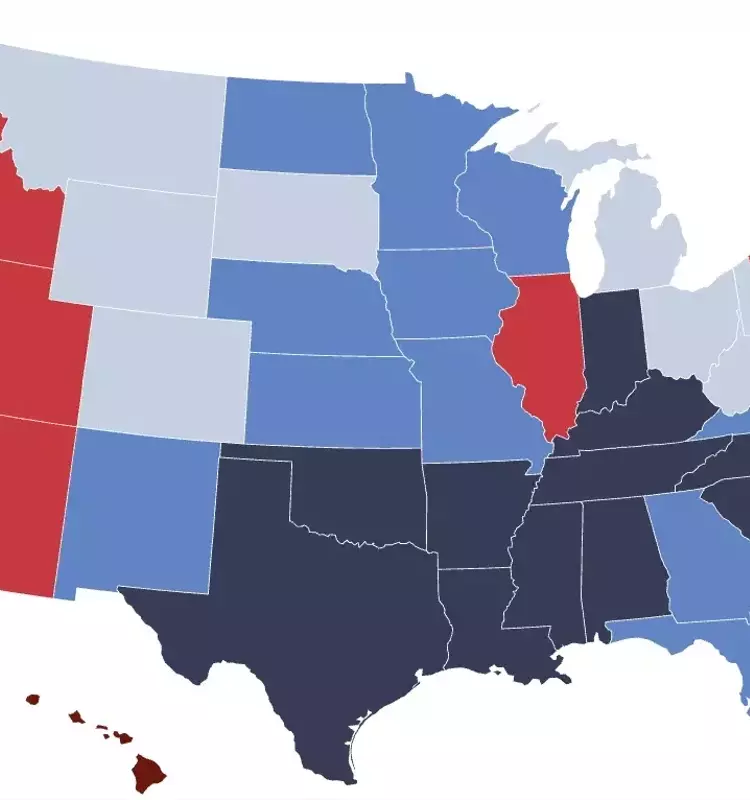
While the overall trend shows a decrease, the price of gasoline varies significantly by state. Nearly half of U.S. states now report average prices below $4 per gallon, a stark contrast to the earlier period when all states exceeded this threshold. The most affordable fuel can be found in states like Indiana, Texas, Oklahoma, Tennessee, Kentucky, and Louisiana, where prices are generally under $3.70. Conversely, states such as California, Hawaii, Washington, Alaska, and Oregon continue to experience prices above $5 per gallon, with California leading at $5.79. This disparity highlights the influence of local factors such as taxation, distribution networks, and environmental regulations on fuel costs.

Factors Influencing Fuel Price Volatility and Future Projections

The recent surge in fuel prices earlier this year was largely attributed to geopolitical tensions, particularly the conflict involving Iran and its impact on global energy markets. The potential for resolution in these conflicts and the reopening of critical shipping routes like the Strait of Hormuz could further alleviate oil prices, suggesting a continued short-term relief at the pump. However, experts warn that the market remains highly unpredictable. Negotiations and supply concerns could easily reverse current trends, making the summer fuel market potentially very unstable. This inherent volatility is also shaped by the "rockets and feathers" phenomenon, where gasoline prices tend to increase rapidly but decrease at a much slower rate. This occurs partly because consumers tend to be less vigilant about price shopping when prices are falling, reducing competitive pressure on gas stations.

The Broader Economic Impact of Changing Fuel Prices

Despite recent declines, current gasoline prices remain higher than pre-spring levels. This sustained elevation translates into tangible financial impacts for households, with a typical family purchasing 50 gallons per month facing an additional $56 in expenses compared to periods when gas cost $3.00 per gallon. Geopolitical events, such as Russia's invasion of Ukraine in 2022, have historically demonstrated how quickly international crises can drive up oil prices and, consequently, gasoline costs. The ongoing stability of fuel prices, therefore, largely hinges on the de-escalation of global tensions and the consistent flow of oil supplies.

More Articles
Finance
Franklin Managed Income Fund: Q1 2026 Performance and Strategy
The Franklin Managed Income Fund (Advisor Class shares without sales charges) outperformed its benchmark in Q1 2026. The fund strategically reduced fixed income and increased equity exposure, with top performers including US Treasuries, Freddie Mac, and Fannie Mae within fixed income. This commentary offers insights into market conditions, sector performance, and future outlook.
By Morgan HouselJun 12, 2026
Finance
Understanding Support and Resistance Levels in Trading
Support and resistance levels are core concepts in technical analysis, helping traders identify crucial price points where asset movements are likely to pause or reverse. These levels, influenced by supply, demand, and market psychology, serve as potential entry or exit points, guiding trading decisions and risk management.
By Suze OrmanJun 12, 2026
Finance
The Rising Demand for AI Graduate Degrees: Opportunities and Top Programs
The increasing influence of Artificial Intelligence (AI) is reshaping the job market, making graduate degrees in AI and machine learning highly sought after. While some entry-level roles are vulnerable to AI automation, advanced degrees can position individuals to lead in AI development, offering significant career growth and high salaries. This article explores the current landscape of AI-related employment, highlights leading academic programs, and provides guidance on choosing the best educational path.
By Lisa JingJun 12, 2026
Finance
Whirlpool Corporation Faces Sector Instability, Rating Downgrade Due to Slowing Sales and Market Volatility
Whirlpool Corporation is navigating a challenging sales landscape, marked by a housing market slowdown and declining consumer confidence. Despite aggressive pricing strategies and cost efficiencies, the company's margins remain pressured. While there's potential for earnings recovery if demand stabilizes, market visibility is low. The stock's valuation is highly volatile, with an estimated 28% upside in a base scenario, making it a high-risk investment.
By Robert KiyosakiJun 12, 2026
Finance
Navigating the 2026-2029 Financial Landscape: Fiscal Flows, Oil, Bank Credit, and Fed Policy
This report examines the intricate relationship between fiscal policies, economic cycles, and asset performance. It highlights how government spending and easing inflation are fueling private sector growth. While current market trends suggest an upward trajectory for June, a potential global liquidity crisis looms for 2026-2027, posing significant risks for crypto and other volatile assets. The analysis also anticipates future Federal Reserve rate adjustments in response to changing economic indicators.
By Mariana MazzucatoJun 12, 2026