Unraveling the Mystery of Monday Market Dips
Decoding the Weekend Effect in Financial Markets
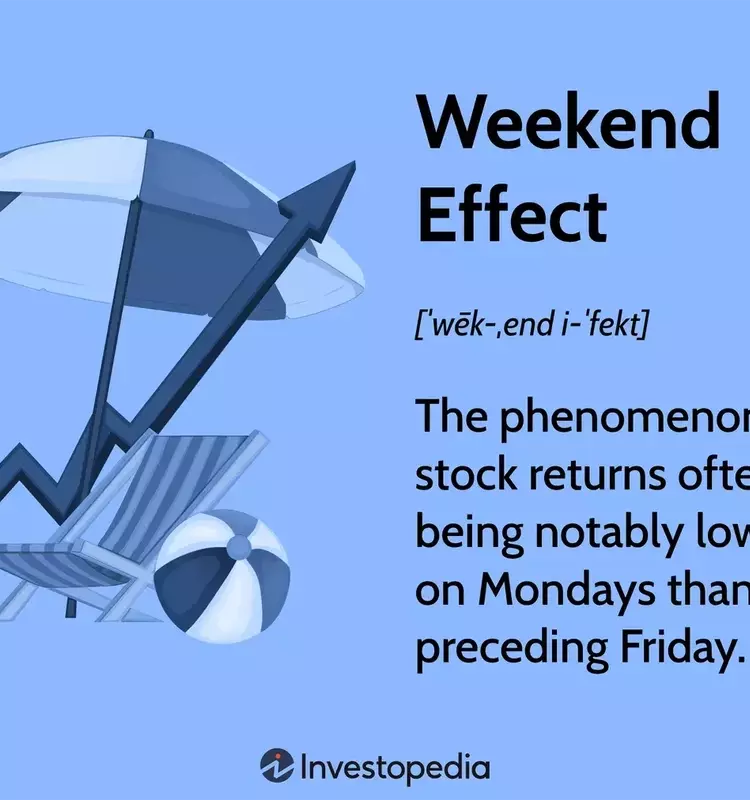
The 'weekend effect' highlights a noticeable trend where stock market returns on Mondays are typically lower than those recorded on the preceding Friday. This recurring pattern prompts questions about the dynamics of trading behavior and corporate practices that might contribute to such a financial irregularity.
Exploring the Dynamics of Weekend Market Behavior
The weekend effect, sometimes referred to as the 'Monday effect,' suggests a pattern where Monday's stock market performance often follows the trend from Friday. If the market closed positively on Friday, the expectation would be a continued rise on Monday, and vice versa. Understanding these patterns is crucial for navigating market fluctuations.
Analyzing Investor Psychology and Market Anomalies
A key factor behind the weekend effect could be irrational human behavior. The trading decisions of individual investors seem to play a significant role. When faced with uncertainty, people often make suboptimal choices. Financial markets, with their inherent volatility, sometimes mirror the irrationality of their participants, as investors' decisions can be swayed by external and often unconscious factors. Moreover, investors tend to sell more aggressively on Mondays, particularly after receiving negative market news over the weekend.
Historical Insights and Contributing Theories
In 1973, Frank Cross's research in the Financial Analysts Journal shed light on the phenomenon of negative Monday returns. His findings indicated that the average returns on Fridays consistently surpassed those on Mondays, illustrating a distinct difference in price change patterns between these days. Consequently, stock prices frequently decline on Mondays after experiencing gains on Fridays, leading to generally low or negative returns from Friday to Monday. Theories for this pattern include companies releasing unfavorable news on Fridays, which subsequently lowers stock prices on Mondays, or the impact of short selling on stocks with high short interest. Another perspective suggests that the weekend effect might simply be due to a decline in trader optimism between Friday and Monday.
The Evolution and Persistence of the Weekend Effect
The weekend effect has historically been a consistent feature in stock trading. A Federal Reserve study revealed that prior to 1987, weekend returns were frequently negative. However, this trend disappeared between 1987 and 1998. Since 1998, weekend market volatility has re-emerged, and the exact causes of this effect continue to be a subject of debate among financial analysts.
Unveiling the "Reverse Weekend Effect"
Counter-arguments suggest a "reverse weekend effect," where Monday returns are actually higher than on other days, challenging the traditional view. Some studies propose the existence of multiple weekend effects, with smaller companies experiencing lower returns on Mondays and larger companies enjoying higher returns. This reverse effect has also been observed primarily in the United States stock markets, indicating regional variations in market behavior.
Key Takeaways for Investors
The weekend effect represents a notable market anomaly characterized by generally lower stock returns on Mondays compared to Fridays. This pattern is influenced by factors such as investor irrationality and the strategic release of negative corporate news. While its intensity has varied over time, comprehending the weekend effect can provide investors with valuable insights into market dynamics and potential strategic investment opportunities. Investors should remain attentive to how these dynamics might impact their short-term trading decisions, especially since research indicates that company size and prevailing market conditions can alter these effects.
