Understanding Whipsaw Patterns in Financial Markets
Finance

Understanding Whipsaw Patterns in Financial Markets

authorBy David Rubenstein
DateMay 14, 2026
Read time2 min

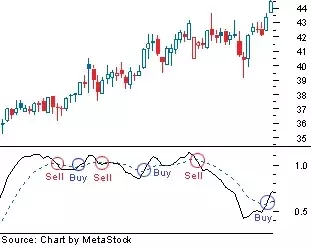
A whipsaw in financial trading denotes a scenario where an asset's price reverses direction abruptly after establishing a clear trend. This occurrence is prevalent in dynamic markets, frequently leading to financial setbacks for both short-term and day traders through false signals. Whipsaw patterns manifest as either sharp ascents followed by swift descents or rapid drops succeeded by quick recoveries. Grasping these patterns is essential for making informed trading decisions, effectively managing risk, and maintaining composure amidst immediate market fluctuations.

The term "whipsaw" originates from the action of lumberjacks using a two-person saw, where one person pulls while the other pushes. In finance, a trader experiences a "whipsaw" when the price of a recently acquired security suddenly moves in the opposite direction from their expectations. These patterns are most noticeable in unpredictable markets, where price movements are erratic. While long-term investors often navigate these volatile periods without significant losses, short-term traders frequently encounter challenges. For example, an investor buying a stock at its peak, anticipating further growth, might find themselves holding a depreciating asset if an unfavorable report causes an unexpected and sustained price drop. Conversely, short sellers hoping for a market decline might face losses if a sudden rally invalidates their put options, illustrating how whipsaws can affect both bullish and bearish positions.

To effectively manage the inherent volatility of whipsaw markets, adopting a long-term, buy-and-hold strategy or diversifying across various asset classes is recommended to weather price fluctuations. Technical indicators such as envelopes, momentum indicators, and parabolic SAR can aid in identifying these patterns, enabling more informed trading decisions. Furthermore, understanding the impact of macroeconomic policies, regulations, and variables on stock patterns is crucial, as these factors frequently contribute to the emergence of whipsaw movements. By combining robust analytical tools with a disciplined, long-term perspective, investors can better mitigate risks and even find opportunities within these challenging market conditions.

Understanding the intricacies of market dynamics, particularly phenomena like whipsaws, empowers investors to develop resilience and strategic foresight. Embracing education and analytical tools fosters a proactive approach to market participation, transforming potential pitfalls into opportunities for growth and informed decision-making. Continuous learning and adaptability are the cornerstones of navigating the ever-evolving financial landscape successfully.

More Articles
Finance
Navigating Inflation: High-Yield Strategies for Investor Portfolios
Persistent inflation continues to erode the real returns of investment portfolios, posing a significant challenge for investors seeking sustainable income. Since 2021, inflation has cumulatively impacted portfolios by approximately 27%. To counteract this, investors must consider high-yielding assets that can not only preserve but also enhance their purchasing power. This article explores two such investment avenues, offering monthly yields exceeding 11%, specifically designed to perform well in an inflationary economic climate.
By Mariana MazzucatoMay 14, 2026
Finance
Pfizer's Post-COVID Revival: A Detailed Analysis
Pfizer's recent financial results indicate a promising turnaround following the post-COVID era. The company reported first-quarter revenue of $14.5 billion, surpassing expectations. This growth was largely driven by newly acquired products and strong performance in oncology, specialty care, and hospital portfolios. Despite a significant debt load and declining COVID-related revenues, strategic cost reductions and patent extensions are positioning Pfizer for future stability and earnings recovery.
By Robert KiyosakiMay 14, 2026
Finance
The Strategic Advantage of Dual Degrees in Today's Job Market
In an increasingly unpredictable job market, a growing number of college students are pursuing double majors. This trend, which has seen a 100% increase over the last decade, is driven by students seeking a competitive edge and enhanced career resilience. Research indicates that combining diverse fields of study, akin to diversifying an investment portfolio, can significantly mitigate earnings risk and reduce unemployment chances, suggesting a strategic approach to human capital development.
By Nouriel RoubiniMay 14, 2026
Finance
EVI Industries: Evaluating Growth Versus Value in the Commercial Laundry Sector
EVI Industries, a microcap firm in the commercial laundry sector, has pursued an aggressive acquisition strategy. However, despite revenue growth, the company has faced challenges with cash flow and margin improvement. This analysis will delve into the persistent operational and financial difficulties that have led to significant recent stock price depreciation, building upon previous concerns regarding its valuation relative to its fundamental performance.
By David RubensteinMay 14, 2026
Finance
Understanding the Role and Responsibilities of a Realtor
This article clarifies the distinct role of a Realtor in the real estate industry. Unlike general real estate agents, Realtors are members of the National Association of Realtors (NAR) and adhere to a stringent Code of Ethics. The text explores the requirements for NAR membership, the specific guidelines for using the 'Realtor' trademark, and the ethical obligations these professionals uphold. It also touches upon recent changes in NAR rules that aim to enhance transparency and consumer control in real estate transactions.
By David RubensteinMay 14, 2026