Understanding Work-in-Progress (WIP) in Accounting and Production
Finance

Understanding Work-in-Progress (WIP) in Accounting and Production

authorBy Morgan Housel
DateMay 12, 2026
Read time2 min

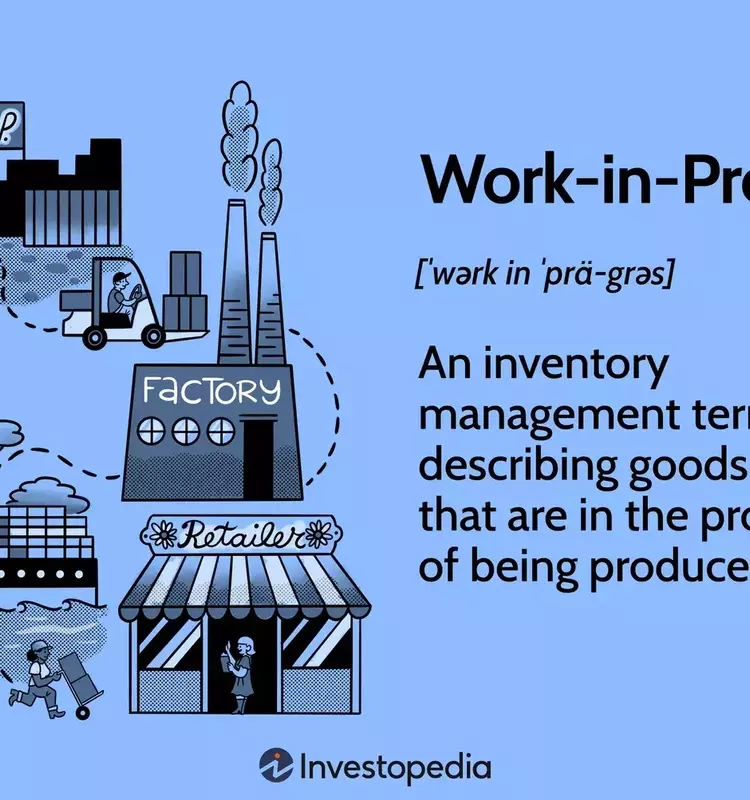
Work-in-Progress (WIP) is a fundamental concept in both production and accounting, referring to goods that are currently undergoing the manufacturing process but are not yet finalized. This includes the aggregate costs of raw materials, direct labor, and manufacturing overhead invested in products that are in various stages of completion. WIP is recognized as an asset on a company's balance sheet, representing the value tied up in these unfinished items. Efficient management and accurate accounting of WIP are crucial for businesses to maintain clear financial records, optimize production flows, and make informed decisions.

The Intricacies of Work-in-Progress in Business Operations

In the dynamic realm of modern manufacturing and supply chain management, understanding Work-in-Progress (WIP) is paramount. At its core, WIP represents the critical juncture where raw materials begin their metamorphosis into finished products. Consider the detailed journey of a product, from the initial acquisition of its foundational components to the intricate labor involved in its assembly, and the myriad overhead expenses that accrue throughout its creation. For instance, in the creation of a sophisticated electronic gadget, the journey begins with its fundamental elements: semiconductors, wiring, and casing, which are initially classified as raw materials. As these components are meticulously integrated through various stages of assembly, the accumulated costs of materials, the skilled labor involved in each step, and a portion of factory overhead, such as utilities and equipment maintenance, collectively form the WIP. Once the gadget is fully assembled and tested, its value transitions from WIP to finished goods. This transformation is not merely an accounting entry but a reflection of the physical progression of the product towards market readiness. Businesses meticulously track these transitions to ensure that their financial statements accurately reflect the true value of their inventory at any given moment.

A critical aspect of WIP management is its valuation. Accurately estimating the completion percentage of goods still in production can be a complex endeavor, yet it is essential for precise financial reporting. This challenge often prompts companies to strategically minimize their WIP inventory levels before the close of reporting periods. Such a practice not only streamlines the estimation process but also contributes to reduced storage costs and mitigates the risk of inventory obsolescence, thereby enhancing operational efficiency and financial agility.

More Articles
Finance
A Comprehensive Review of the American Century US Quality Growth ETF (QGRO)
The American Century US Quality Growth ETF (QGRO) provides investors with a factor-driven investment approach that harmonizes resilience and expansion through dynamic sub-portfolios. This ETF is best suited for long-term investors focused on capital appreciation. However, its significant exposure to the technology sector introduces considerable beta risk relative to the broader market. While offering alpha through security weightings, investors should consider its performance against peers like WisdomTree US Quality Growth Fund (QGRW), which has historically delivered superior returns.
By Morgan HouselMay 12, 2026
Finance
April Inflation Surpasses Expectations, Raising Rate Hike Possibilities
In April, inflation figures exceeded forecasts, with the Consumer Price Index (CPI) increasing by 0.64% month-over-month and 3.81% year-over-year. Core CPI also saw a rise of 0.376%, marking a four-year high at 2.75% year-over-year. This upward trend was further underscored by an unexpected surge in 'supercore' inflation, coupled with a decline in real average hourly earnings, primarily driven by escalating energy costs. Despite these developments, market reactions were subdued, with equity futures and Treasury yields showing little movement. Speculation around future rate hikes has now shifted towards early to mid-2027.
By Morgan HouselMay 12, 2026
Finance
Microsoft's Dominance in SaaS: A Strong Buy Reiteration
This article reaffirms a 'Strong Buy' rating for Microsoft, highlighting its robust SaaS monetization trends, impressive profit margins, and substantial commercial RPO. Despite AI-related capital expenditures, the company maintains strong free cash flow and a net cash position, projecting double-digit growth. The analysis suggests a significant upside potential, reinforcing Microsoft's position as a leader in enterprise SaaS.
By Fareed ZakariaMay 12, 2026
Finance
Inflationary Pressures Intensify as CPI Exceeds Forecasts
Recent Consumer Price Index (CPI) figures indicate a persistent upward trend in inflation, surpassing expert predictions. The primary driver of this increase is the escalating cost of gasoline, which continues to impact consumer spending power. This sustained rise, particularly in core inflation, moves the overall economic landscape further from the Federal Reserve's target stability.
By Strive MasiyiwaMay 12, 2026
Finance
Understanding Yield Spread Premiums in Mortgage Lending
This article explores the concept of Yield Spread Premiums (YSPs) in mortgage lending. YSPs were a form of compensation mortgage brokers received from lenders for securing higher-than-par interest rates for borrowers. It details how YSPs functioned, their historical regulation through legislation in 1999, and their eventual prohibition by the Dodd-Frank Act in 2010. The article also touches upon the relationship between YSPs, par rates, and the role of mortgage brokers, emphasizing the importance of transparency and informed decision-making for borrowers.
By David RubensteinMay 12, 2026