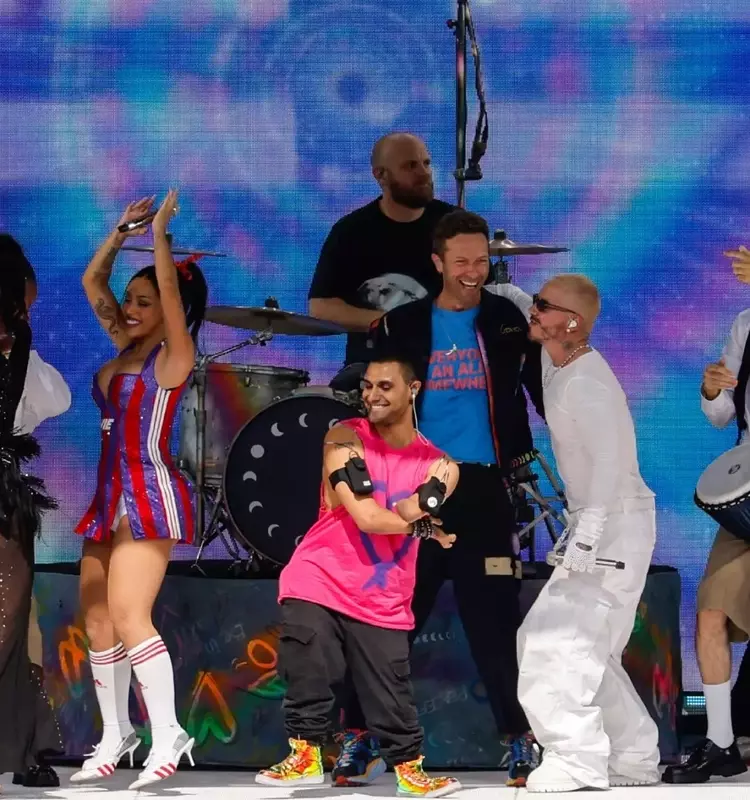
The recent FIFA Club World Cup final, a highly anticipated clash between Chelsea and Paris Saint-Germain at New Jersey's MetLife Stadium, offered more than just athletic prowess. Spectators were treated to a captivating halftime spectacle that transcended traditional entertainment, seamlessly integrating a surprise musical interlude that left a lasting impression. This meticulously orchestrated segment not only celebrated global musical talent but also highlighted an innovative approach to large-scale event production.
Central to the halftime festivities was a diverse array of international artists. J Balvin, representing South America, initiated the musical journey with an energetic rendition of “Mi Gente,” supported by a vibrant ensemble of drummers and dancers. Tems, embodying the spirit of Africa, followed with her distinct sound, performing “Love Me JeJe” before rejoining J Balvin for his second piece, “Reggaeton.” Doja Cat, the North American representative, utilized the multi-platform stage to its fullest during her performance of “Woman,” showcasing dynamic choreography. The grand finale arrived unexpectedly with Coldplay, who, joined by Australian singer-songwriter Emmanuel Kelly, delivered a stirring duet of “A Sky Full of Stars.” The collective presence of Balvin, Tems, and Doja Cat, alongside the dancers, elevated Coldplay's uplifting performance into a truly collaborative and memorable event, symbolizing unity and shared joy.
Beyond the artistic achievements, the halftime show was also a testament to innovative design and a commitment to social impact. The unique stage, strategically positioned in the upper stands, was a collaborative effort between halftime presenters Global Citizen and Coldplay's Chris Martin. This design ingeniously avoided disrupting the newly installed natural grass pitch, demonstrating a forward-thinking approach to event logistics. Furthermore, the event served a greater purpose, with Global Citizen aiming to raise $100 million for worldwide educational access through its partnership with FIFA, reinforcing the idea that large-scale events can be powerful platforms for positive change.
This remarkable event showcased how the convergence of sports and art can create moments of profound inspiration and unity. The seamless integration of diverse musical styles and an unexpected headliner created an atmosphere of collective joy, demonstrating the power of collaboration and shared experiences to transcend cultural boundaries. By prioritizing innovation and social responsibility, such global platforms not only entertain but also actively contribute to meaningful causes, reminding us that creativity and collective effort can indeed illuminate paths toward a more connected and equitable future.