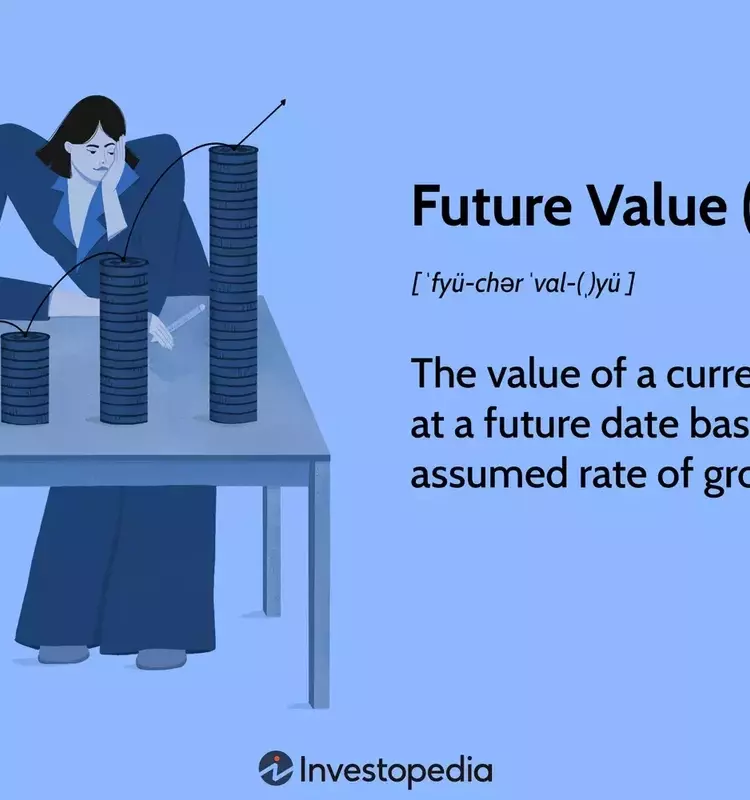
Future value (FV) is a fundamental financial concept that allows investors and financial planners to estimate the projected worth of an asset at a specific point in the future, based on a predetermined rate of return. This analytical tool is instrumental in guiding investment decisions, helping individuals understand the potential growth of their current holdings, and facilitating effective long-term financial planning. While highly beneficial, it relies on assumptions about consistent growth and market stability, which are not always guaranteed. Nevertheless, mastering future value calculations, including both simple and compound interest applications, provides a robust framework for assessing investment opportunities, understanding risk, and setting realistic financial targets. Its counterpart, present value (PV), offers a complementary perspective by determining the current worth of a future sum, together forming cornerstones of sound financial management.
The Essence of Future Value in Financial Planning
In the dynamic world of finance, pinpointing the future worth of an asset is a cornerstone of strategic planning. This estimation, known as future value (FV), serves as a compass for both individual investors and seasoned financial advisors. It projects how much an investment made today will appreciate over a specified timeframe, given an anticipated rate of growth. This metric is not merely an academic exercise; it's a practical tool for mapping out financial destinies, from saving for a dream home to strategizing retirement portfolios.
The journey to comprehending future value begins with its core principle: the time value of money. A dollar today is worth more than a dollar tomorrow due to its potential earning capacity. FV quantifies this potential. For instance, a sum placed in a savings account with a guaranteed interest rate offers a straightforward path to calculating its future worth. However, for more volatile assets like stocks, while the principle remains the same, the accuracy of the projection hinges on the assumed, and often variable, growth rate.
Unveiling the Future Value Formula
At the heart of future value calculations lie two primary methods of interest accrual: simple and compound. Understanding both is crucial for accurate financial forecasting.
For investments yielding simple annual interest, the formula is elegantly straightforward:
Where FV denotes future value, PV is present value, r is the annual interest rate, and n represents the number of periods. For instance, a $1,000 investment held for five years at a 10% simple annual interest rate would mature to $1,500.
However, the true power of growth often lies in compound interest, where earnings from previous periods also begin to earn interest. The formula for future value with compounded annual interest is:
Here, 't' represents the time in years. Applying this to our $1,000 investment over five years at 10% compounded annually, the future value escalates to $1,610.51, showcasing the significant impact of compounding. Interestingly, FV calculations can also incorporate negative interest rates, offering insights into potential losses in challenging market conditions.
Advantages of Employing the Future Value Model
The utility of the future value concept extends across several critical areas:
- Strategic Planning: FV empowers individuals to visualize their financial trajectory, enabling them to strategize savings targets for significant life events, such as a home purchase or retirement.
- Comparative Analysis: By calculating and comparing the future values of different investment options, investors can make more informed choices, weighing potential returns against their investment goals.
- Flexibility and Accessibility: Given its reliance on estimations, FV is a versatile tool for hypothetical scenario planning, allowing users to project outcomes based on estimated savings, interest rates, and investment durations.
Limitations and Considerations
Despite its benefits, the future value formula is not without its caveats:
- Assumption of Constant Growth: Real-world market conditions are rarely linear; growth rates can fluctuate, making fixed assumptions potentially misleading.
- Sensitivity to Estimates: The accuracy of FV projections is heavily dependent on the reliability of the estimated return rates. Inaccurate estimates can render the calculated value impractical.
- Challenges in Comparative Analysis: While useful for individual projections, FV can sometimes complicate comparisons between different projects, especially when initial investment amounts vary significantly, as it primarily offers a final dollar value rather than a nuanced view of the investment journey.
Future Value vs. Present Value: A Dual Perspective
Future value is intimately linked with present value (PV), its conceptual inverse. While FV calculates an asset's future worth, PV determines its current worth. Both methods utilize discount or growth rates, compounding periods, and initial investments. For example, reversing the FV calculation shows that a future sum of $1,050, assuming a 5% interest rate, holds a present value of $1,000 today. This interrelationship highlights how these two concepts provide a comprehensive view of an investment's value across time.
Real-World Applications
- Consider a taxpayer facing the IRS's Failure to File Penalty, which is 5% of unpaid taxes for each month late. For a $500 tax obligation, the future value of this obligation after one month, incorporating the 5% penalty, becomes $525. This simple calculation allows the taxpayer to understand the growing cost of delay.
- Another example involves a zero-coupon bond trading at $950 with a two-year maturity and an 8% yield to maturity. An investor keen on its future worth can calculate that its future value will be $1,108.08 after two years, offering clarity on its projected return.
The future value formula stands as a cornerstone in financial analysis, offering a structured approach for individuals and institutions to forecast the potential growth of investments. It serves as an indispensable guide for making informed decisions, setting achievable financial objectives, and navigating the complexities of market dynamics. By carefully applying this tool and acknowledging its reliance on projected rates and market consistency, investors can cultivate a clearer vision for their financial future, thereby enhancing their strategic investment and planning capabilities.
A Forward-Looking Perspective on Financial Growth
In the intricate landscape of personal and corporate finance, the future value concept stands out as a beacon for forward-thinking decision-making. As a journalist observing the widespread adoption and critical evaluation of financial tools, it's evident that understanding future value is no longer just for financial professionals but for anyone keen on securing their economic future. The ability to project an investment's growth—from a simple savings deposit to a complex bond—empowers individuals with a sense of control and foresight. This insight transforms abstract financial aspirations into concrete, quantifiable goals, making the journey toward financial independence feel more attainable.
However, the real-world application of future value also brings to light the inherent uncertainties of economic forecasting. The reliance on assumed growth rates and stable market conditions, while necessary for calculation, underscores the dynamic nature of investments. It prompts a critical reflection on the importance of flexibility and continuous reassessment in financial strategies. The stark contrast between simple and compound interest calculations, dramatically illustrating the power of compounding, serves as a powerful lesson for everyone: early investment and patience can yield substantially greater returns. Ultimately, future value is more than just a formula; it's a philosophy that encourages proactive planning, prudent decision-making, and an informed approach to navigating the ever-evolving financial markets.
