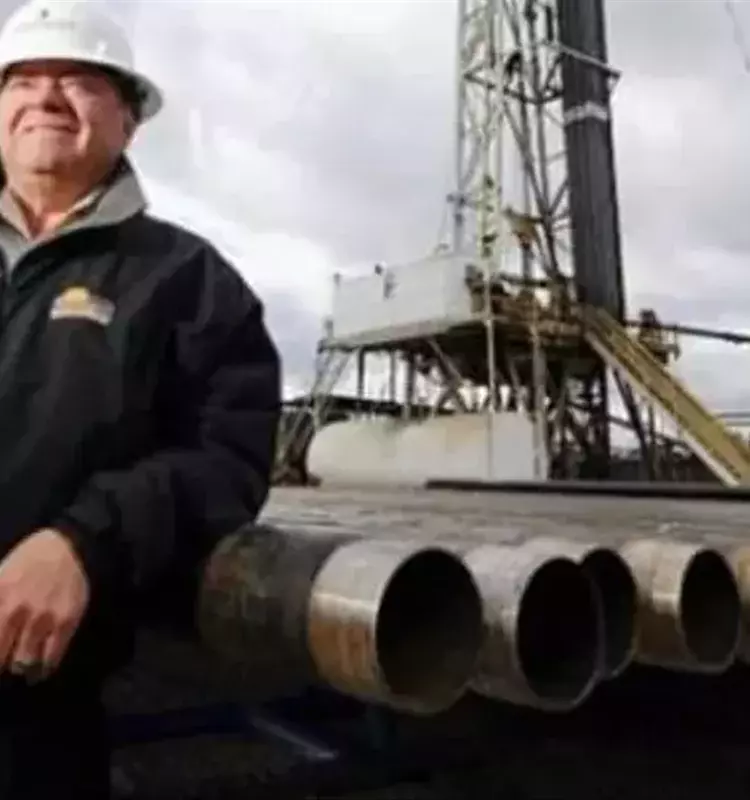
American billionaires are increasingly focusing their investments on Argentina's Vaca Muerta shale formation, a region experiencing rapid expansion and showing immense potential. This strategic influx of capital is driven by a combination of Vaca Muerta's substantial hydrocarbon reserves and Argentina's recent economic policy shifts, which aim to attract foreign direct investment and stimulate growth in its energy sector.
Harold Hamm, a prominent figure in the U.S. shale industry, has spearheaded a significant multi-billion dollar commitment through Continental Resources. This investment, alongside a separate notable stake acquired by Peter Thiel, underscores a strong belief in the region's profitability and future prospects. These developments highlight a growing trend of international investors recognizing Argentina as a burgeoning hub for energy production, particularly in unconventional resources.
Strategic Investments Fueling Vaca Muerta's Growth
Harold Hamm, through Continental Resources, is spearheading a substantial investment in Argentina's Vaca Muerta shale. The company has entered a joint venture with Mercuria Energy Group, acquiring a 50% interest in Phoenix Global Resources. This partnership plans to allocate over $4 billion across five years to significantly increase Phoenix's oil equivalent production from 28,000 barrels per day to more than 100,000. Continental's prior engagements in Argentina, including acquisitions from Pluspetrol and interests in blocks operated by Pan American Energy, have laid the groundwork for this expanded commitment. CEO Doug Lawler attributes the favorable investment climate to President Javier Milei's economic reforms, which have created conditions conducive to large-scale foreign investment. This move is poised to not only boost production capabilities but also introduce advanced operational expertise to the region.
The strategic move by Hamm's Continental Resources represents a major bet on the future of Vaca Muerta. The joint venture with Mercuria Energy Group is set to manage approximately 163,000 net acres across six blocks within the Vaca Muerta formation. This expansion is designed to leverage Continental's deep expertise in horizontal drilling and hydraulic fracturing, technologies that were pivotal in revolutionizing the U.S. shale industry. The objective is to replicate this success in Argentina, transforming the region into a global energy powerhouse. This extensive investment plan, which is pending definitive agreements and regulatory approvals, signifies a robust confidence in Argentina's potential as a key player in the international energy landscape. The application of proven U.S. shale techniques is expected to unlock significant value from Vaca Muerta's vast reserves, leading to a substantial increase in output.
Billionaire Interest and Economic Reforms Drive Confidence
The allure of Vaca Muerta extends beyond Harold Hamm, attracting other high-profile U.S. billionaires. Peter Thiel, chairman of Palantir, recently acquired a 1% stake in Vista Energy, a leading shale producer in the region, valued at approximately $76 million. This investment from Thiel further validates Vaca Muerta's growing status as a prime target for international capital. The increasing interest coincides with Vaca Muerta establishing itself as one of the world's most rapidly expanding oil-producing regions. Argentina's revised estimates now place the technically recoverable oil resources in the formation at 30.17 billion barrels, a significant 89% increase from previous assessments. This upward revision underscores the vast untapped potential and the economic viability that draw such considerable investments.
The current wave of foreign investment is largely underpinned by the Argentine government's concerted efforts under President Javier Milei to implement economic deregulation and enhance the country's appeal to international investors. These reforms are critical in creating a stable and predictable environment for large-scale energy projects. Companies like Chevron are also expanding their presence in Vaca Muerta, joining the ranks of investors capitalizing on the improved economic conditions and the rich geological endowments of the region. The combined commitment of billions from figures like Hamm and Thiel, alongside other major international players, signals a profound and growing confidence in Argentina's ability to support and benefit from significant foreign direct investment. This trend is set to redefine Vaca Muerta's role in the global energy market, positioning it as a critical source of unconventional oil and gas.
