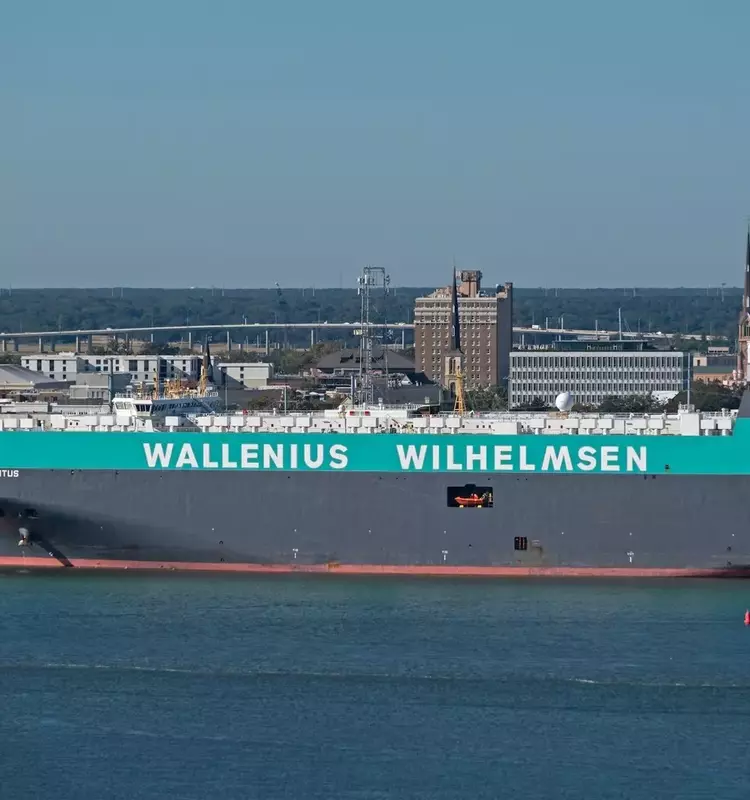
Wallenius Wilhelmsen, a company operating in a specialized shipping niche, has recently delivered exceptional market returns. However, a closer examination suggests that its current valuation may not be sustainable, leading to a revised investment stance. Despite a robust backlog in its Roll-on/Roll-off (Ro-Ro) shipping segment, the company faces headwinds from an anticipated increase in new vessel supply and a potential softening of demand for Chinese electric vehicles, which could impact its future earnings trajectory. The consensus among analysts points to a normalization of EBITDA, implying that the stock's current price might be less attractive compared to its intrinsic value. Investors are encouraged to consider these evolving market dynamics when assessing their positions.
Revisiting Wallenius Wilhelmsen's Investment Outlook Amidst Shifting Market Dynamics
Wallenius Wilhelmsen, a prominent player in the specialized Roll-on/Roll-off (Ro-Ro) shipping sector, has recently experienced a period of remarkable market outperformance, delivering substantial returns to its investors over the past year. This impressive rally, however, necessitates a re-evaluation of its investment appeal. While the company's niche market position and strong contractual backlog have been key drivers of its success, emerging factors suggest that its valuation may now be stretched, prompting a downgrade to a 'HOLD' rating. The anticipated normalization of the sector, coupled with specific operational and market challenges, indicates that future returns may not mirror past performance.
The company's backlog, particularly within its Ro-Ro division, currently surpasses its entire market capitalization, underscoring its operational strength and existing demand. Nevertheless, the outlook is tempered by two significant developments: the imminent increase in new vessel supply and a projected decline in demand for Chinese electric vehicles. The introduction of 58 new Ro-Ro vessels into the market by 2026 is expected to boost capacity by 5-8%. This expansion could erode Wallenius Wilhelmsen's ability to command premium freight rates, thereby placing downward pressure on future earnings. Furthermore, the waning enthusiasm for Chinese EVs, a key cargo for the company, represents a considerable headwind. Despite the company's solid asset base and long-term contracts, these macroeconomic and industry-specific shifts are likely to reshape its earning potential, making its current stock price less compelling for new investments.
Evaluating Future Performance: Earnings Normalization and Emerging Risks
As the Ro-Ro shipping sector moves towards normalization, Wallenius Wilhelmsen's earnings are projected to realign with historical averages, significantly impacting its future valuation. The expectation is for the company's EBITDA to stabilize within the range of $800 million to $1 billion. This anticipated moderation in profitability directly influences the target price, which remains at 85 NOK. Such an outlook suggests that the current market prices are less attractive, as the premium valuation it commands may not be justified by its normalized earnings potential. Consequently, investors should temper their expectations for continued outsized gains, focusing instead on the company's long-term stability rather than short-term growth.
While Wallenius Wilhelmsen benefits from strong fundamental safety and a portfolio of robust contracts, the investment landscape is not without its risks. The inherent volatility of its earnings, a characteristic of the shipping industry, and the unpredictable nature of its dividend payouts limit its overall risk/reward appeal at present levels. Although the company possesses formidable assets and diversified operations, including land-based logistics, the confluence of increased competition from new vessel supply and a potential slowdown in key cargo segments like Chinese EVs points to a less favorable growth environment. For investors seeking significant upside potential, Wallenius Wilhelmsen's current standing may not offer the compelling narrative it once did, suggesting a cautious approach as market conditions evolve and earnings normalize.
