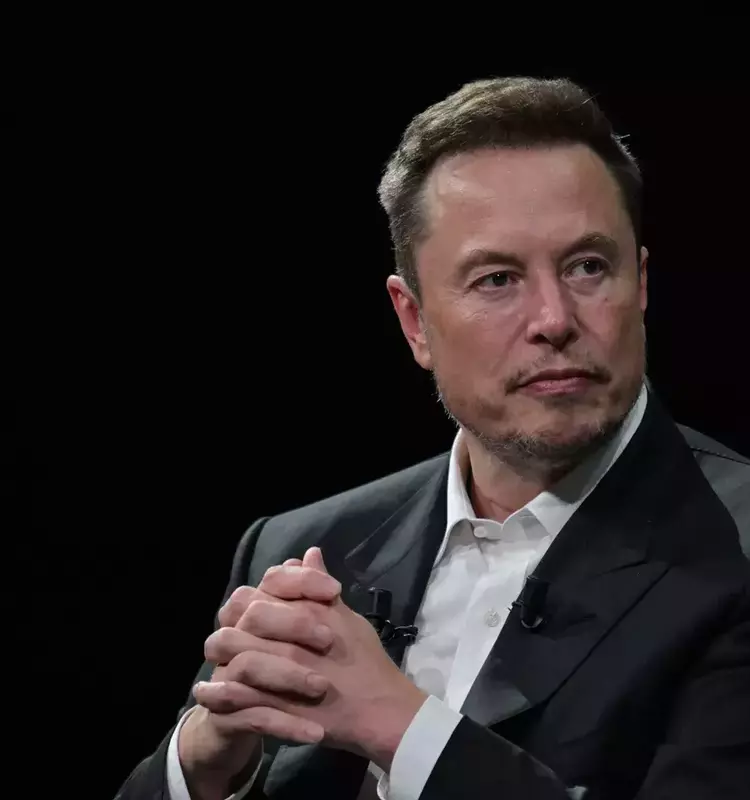
As of July 2026, a select group of individuals commands an astonishing portion of global wealth, wielding considerable influence across economic, political, and philanthropic landscapes. This compilation profiles the ten wealthiest people on Earth, as detailed by the Bloomberg Billionaires Index. Their monumental fortunes largely stem from their groundbreaking ventures in technology, although a few distinguished figures from other industries also feature prominently. These billionaires often retain significant equity in the enterprises they founded, employing sophisticated financial strategies, such as borrowing against their holdings, to defer or even eliminate tax liabilities on unrealized capital gains. This approach underscores a complex interplay between wealth accumulation, market dynamics, and fiscal planning, where the valuations of publicly traded assets directly impact their net worth.
Topping this exclusive list is Elon Musk, the visionary behind Tesla and SpaceX, who achieved the unprecedented milestone of becoming the world's first trillionaire following SpaceX's public offering. His journey from a South African-born student to a titan of industry is a testament to relentless innovation and strategic investment. Musk's early ventures, including Zip2 and X.com (which evolved into PayPal), laid the groundwork for his future successes. His leadership at Tesla has revolutionized the electric vehicle market, while SpaceX has transformed space exploration. In a significant move, Musk also acquired Twitter, later rebranded as X, and founded xAI, an artificial intelligence company focused on advancing scientific discovery, which eventually merged with SpaceX.
Following Musk are other prominent figures whose names are synonymous with technological advancement and immense wealth. Larry Page and Sergey Brin, co-founders of Alphabet (the parent company of Google), exemplify the transformative power of internet technology. Their innovative search engine, initially known as Backrub, blossomed into Google, the world's leading search platform, subsequently expanding into mobile operating systems with Android and video streaming with YouTube. Their continued involvement as board members ensures their enduring influence on the digital realm. Brin, in particular, has dedicated substantial resources to Parkinson's disease research, reflecting a commitment to leveraging wealth for societal benefit.
Jeff Bezos, the founder of Amazon, stands as another colossus of wealth, having built an e-commerce empire from humble beginnings in a Seattle garage. Amazon's evolution from an online bookstore to a global retail behemoth, encompassing diverse sectors like cloud computing (AWS), grocery (Whole Foods), and pharmacy services, highlights Bezos's relentless pursuit of diversification and market dominance. Despite stepping down as CEO, his role as executive chair and his ventures into aerospace with Blue Origin and media ownership with The Washington Post underscore his wide-ranging interests and continued impact. His personal journey, culminating in a historic space flight, mirrors the ambitious spirit of these billionaires.
Michael Dell, CEO of Dell Technologies, carved his path to success by pioneering the direct-to-customer model for personal computers. His astute leadership transformed Dell into a global infrastructure and computing giant, with a significant portion of his wealth tied to his substantial ownership in the company and strategic investments in entities like Broadcom. Similarly, Larry Ellison, co-founder, chairman, and CTO of Oracle, built a software powerhouse from the ground up. His journey from a college dropout to a programming luminary led to the creation of Oracle, a company at the forefront of database technology and cloud computing. Ellison's philanthropic efforts, particularly in medical research, and his involvement in high-profile ventures like the Oracle Team USA sailing team, showcase his multifaceted contributions beyond the tech sector.
Mark Zuckerberg, the co-founder and CEO of Meta Platforms, revolutionized social interaction with Facebook, which has grown into the world's largest social networking service. Under his leadership, Meta has expanded its digital footprint through acquisitions like Instagram, WhatsApp, and Oculus, establishing a formidable presence in photo sharing, messaging, and virtual reality. Zuckerberg and his wife, Priscilla Chan, have also launched the Chan Zuckerberg Initiative, a philanthropic endeavor aimed at tackling global challenges through technology. Jensen Huang, CEO of NVIDIA, has steered his company to the forefront of processor and AI technology, accumulating vast wealth through his significant stake in the enterprise. Finally, Warren Buffett, the venerable "Oracle of Omaha," represents a different school of wealth accumulation. His disciplined value investing strategy, epitomized by Berkshire Hathaway, has transformed a textile company into a diversified conglomerate with holdings across insurance, energy, and consumer products. Despite his immense fortune, Buffett is renowned for his commitment to philanthropy, having pledged the majority of his wealth to charitable causes, notably through the Bill & Melinda Gates Foundation.
This overview reveals that while many of the world's richest derive their fortunes from the rapidly evolving technology sector, their paths to unparalleled wealth are varied. They share common traits of innovation, strategic foresight, and an unwavering drive to reshape industries. Their influence extends beyond mere financial power, touching upon global development, social causes, and the very fabric of modern life.
