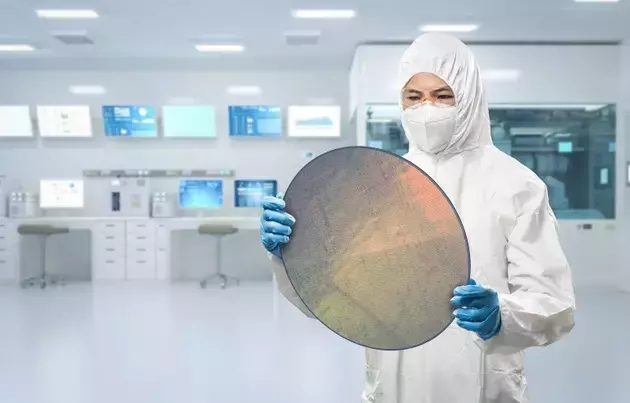
Aeluma's Manufacturing Transition: A Key Shift for Deep-Tech Investors
Finance

Aeluma's Manufacturing Transition: A Key Shift for Deep-Tech Investors

authorBy Morgan Housel
DateJul 06, 2026
Read time3 min
This article explores the pivotal transition of deep-technology companies from scientific proof to commercial production, using Aeluma as a prime example. It highlights how investors often misinterpret the valuation of such firms, focusing on early-stage metrics rather than critical manufacturing readiness. The piece delves into the implications of this shift, especially in the context of rapidly expanding AI infrastructure, where industrial scalability and supply chain resilience are becoming as vital as technological performance.

Unlocking Value: The Manufacturing Pivot in Deep-Tech Investment

Recognizing the Inflection Point: From Lab to Market

Deep-tech companies frequently navigate a complex journey, initially proving their scientific concepts before confronting the demanding realities of commercial production. This transition from scientific validation to manufacturing validation represents a crucial turning point, often underestimated by investors who may continue to assess these firms based on their research achievements rather than their industrial capabilities. For Aeluma, a company at the forefront of photonics, this shift is currently underway, signaling a maturing phase that could redefine its market value.

Indicators of Commercialization Readiness

Several key developments indicate Aeluma's increasing readiness for commercialization. The strategic recruitment of new talent, the establishment of manufacturing collaborations, and dedicated efforts towards customer qualification collectively demonstrate a focused push towards scalable production. Furthermore, the receipt of a U.S. Army Direct-to-Phase II award underscores external recognition of their technological and operational potential, aligning with a broader strategy to industrialize their platform.

The Evolving Landscape of AI Infrastructure

In the burgeoning era of artificial intelligence, the demand for robust and scalable infrastructure is paramount. This environment elevates the importance of manufacturing capability, stringent qualification processes, and resilient supply chains. Beyond the raw performance of individual devices, the ability to produce them economically and at scale is becoming a differentiating factor. Investors who grasp this nuance will recognize that a company's capacity to industrialize its innovations can be as critical, if not more so, than its initial technological breakthroughs.

Market Misperception: Photonics vs. Manufacturing Platform

A significant challenge for Aeluma lies in the market's perception. Many investors continue to categorize it predominantly as an early-stage photonics company. This viewpoint, however, overlooks the substantial investments and strategic maneuvers Aeluma is making to establish itself as a leader in manufacturing complex technological platforms. Bridging this perception gap is vital for the company to fully realize its valuation potential, as its long-term success hinges on its transformation into a scalable industrial player.

The Core Investment Thesis: Scalability and Adoption

Ultimately, the long-term viability and attractiveness of Aeluma as an investment are inextricably linked to its success in two critical areas: demonstrating the ability to manufacture its sophisticated technology both affordably and at a large scale, and subsequently achieving widespread commercial adoption. These factors will determine whether Aeluma can effectively transition from a promising deep-tech innovator to a commercially dominant force in its sector.

More Articles
Finance
Putnam Large Cap Value Fund Q1 Performance Analysis
The Putnam Large Cap Value Fund's Q1 performance saw positive returns but underperformed its benchmark. Key contributions came from energy, financials, and consumer staples, while information technology lagged. Overweight sectors at quarter-end included consumer staples and materials.
By Fareed ZakariaJul 06, 2026
Finance
TeraWulf Forges $19 Billion Data Center Alliance with Anthropic, Pivots to AI Infrastructure
TeraWulf, a bitcoin mining firm, has announced a significant 20-year data center lease agreement with Anthropic, valued at approximately $19 billion. This deal marks a strategic shift for TeraWulf towards AI infrastructure, moving away from its primary reliance on bitcoin mining. The news propelled TeraWulf's shares up by over 16% in premarket trading, signaling strong investor confidence in its new direction.
By Suze OrmanJul 06, 2026
Finance
Mastercard's Renewed Momentum: A Shifting Outlook
Despite recent underperformance, Mastercard's long-term investment prospects have improved due to emerging positive trends. While a neutral stance was previously warranted, current market dynamics and favorable shifts now support a more optimistic view on the company's future growth and performance.
By Strive MasiyiwaJul 06, 2026
Finance
Novus Foods Appoints New Chief Executive Officer
Novus Foods, a leading US chilled snacks producer, has announced the appointment of Admir Basic as its new Chief Executive Officer, effective July 1. Basic, previously CEO of Great Kitchens Food Company, takes over from Tom Davis. The company, backed by CapVest Partners, emphasizes that its strategic direction and leadership team will remain consistent. This move marks a significant leadership transition for Novus Foods, which was formed last year through the merger of Noosa yogurt and Lakeview Farms.
By Mariana MazzucatoJul 06, 2026
Finance
Franklin Growth Opportunities Fund: Q1 2026 Insights
The Franklin Growth Opportunities Fund (Advisor class without sales charges) outperformed the Russell 3000 Growth Index benchmark in Q1 2026, primarily due to effective stock selection and strategic allocation. Despite challenges from technology-focused shares and geopolitical risks, the fund's positioning in industrials and underweight in IT contributed positively to its relative returns, while consumer discretionary and communication services sectors lagged.
By Morgan HouselJul 06, 2026