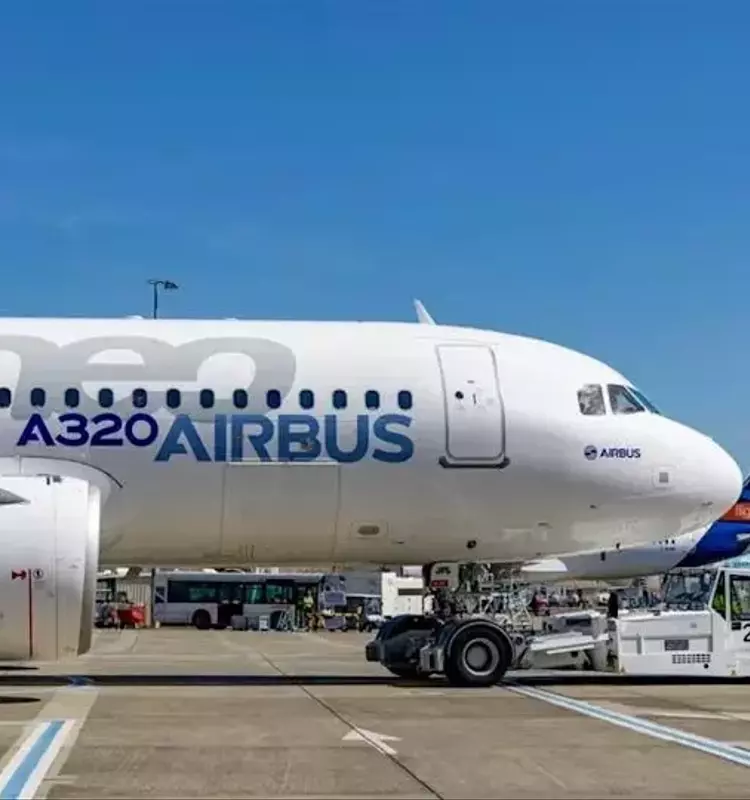
Airbus Experiences Significant Profit Decline and Reduced Deliveries in Q1 2026
Finance

Airbus Experiences Significant Profit Decline and Reduced Deliveries in Q1 2026

authorBy Robert Kiyosaki
DateApr 28, 2026
Read time3 min

Airbus recorded a significant decrease in its first-quarter financial results for 2026, with adjusted operating profit plummeting by 52% to €300 million, a stark contrast to €624 million reported in the previous year. This downturn was largely attributed to a reduction in commercial aircraft deliveries, a period during which its competitor, Boeing, surpassed Airbus in quarterly handovers. The aerospace giant's revenue also experienced a 7% decline, settling at €12.65 billion, and its earnings per share were reported at 74 euro cents.

During the initial three months of the year, Airbus delivered only 114 commercial jets, a notable decrease from the 136 aircraft delivered in the corresponding period last year. While the defense and space sector demonstrated a 7% growth, and the helicopter division remained stable, the commercial aircraft unit faced an 11% year-over-year sales reduction. Despite these setbacks, Airbus confirmed its commitment to its full-year objectives, aiming for approximately 870 commercial deliveries, an adjusted EBIT of about €7.5 billion, and a free cash flow of around €4.5 billion, excluding customer financing. The company acknowledges that supply chain limitations from engine manufacturer Pratt & Whitney are influencing its delivery forecasts.

Guillaume Faury, the Chief Executive Officer of Airbus, commented on the situation, stating that the company is actively monitoring the potential impacts stemming from the ongoing conflict in the Middle East. He emphasized that the commercial aircraft division is focused on increasing production in line with its plans, while simultaneously addressing the scarcity of Pratt & Whitney engines. Faury also highlighted the defense sector's priority on fulfilling global demand by escalating production across its diverse product and service portfolio.

On a more positive note, new commercial aircraft bookings for the quarter reached 408 on a gross basis, which is almost double the number recorded in the same quarter of the previous year. This surge in orders suggests a resilient demand for Airbus products.

In contrast, Boeing's earlier quarterly results indicated that the manufacturer had surpassed its loss projections, driven by a broad market recovery that included growth in commercial aviation. Boeing has been engaged in a prolonged recovery effort following various quality control issues, most notably a door plug incident on a 737 Max in January 2024, which eroded confidence in its manufacturing standards. The European planemaker has capitalized on its rival's struggles, securing additional orders and expanding its market share as Boeing navigated intense scrutiny over its 737 Max aircraft. Despite regional conflicts, demand for Boeing jets has remained consistent, according to investor updates.

The first quarter of 2026 presented financial challenges for Airbus, marked by a substantial fall in profits and fewer aircraft deliveries. However, the company is actively addressing these issues by managing supply chain constraints, monitoring geopolitical events, and maintaining its strategic full-year targets. The increase in new aircraft orders also provides a promising outlook amidst the competitive landscape and ongoing industry challenges.

More Articles
Finance
Travelers: Not Exciting, Just Reliable
Travelers Companies, Inc. (TRV) consistently demonstrates reliability through disciplined capital management, strong underwriting, and a history of increasing dividends. The company's recent Q1 2026 performance showcased an impressive combined ratio of 88.6%, driven by reduced catastrophe losses in personal lines. Despite a valuation that isn't considered cheap, TRV's stable profitability, cautious investment approach, and consistent returns to shareholders underpin its appeal as a dependable investment.
By Mariana MazzucatoApr 28, 2026
Finance
Australia's Top Retirement Havens: Affordable Cities for American Expats
This article explores the most affordable Australian cities for American retirees, highlighting five prime locations: Hobart, Adelaide, Coffs Harbour, Toowoomba, and Launceston. These cities offer a significantly lower cost of living compared to the U.S., despite potentially higher median home values. Each location boasts established retiree communities, ensuring access to essential infrastructure, healthcare, and social networks, alongside appealing lifestyles and natural beauty.
By Lisa JingApr 28, 2026
Finance
Understanding Consignment: A Modern Retail Approach
Consignment is a retail model where a third party sells goods on behalf of an owner, earning a commission from the sale. This system benefits those without a retail presence, providing access to broader markets. However, sellers face high commission fees, sometimes up to 50%, impacting profitability. This article explores the mechanics, benefits, challenges, payment agreements, and popular items involved in consignment, offering insights into this dynamic sales strategy.
By David RubensteinApr 28, 2026
Finance
Understanding Cash-on-Cash Return in Real Estate Investment
Cash-on-cash return is a vital metric for real estate investors, particularly in commercial properties, to assess the annual profitability of their cash outlay. This measure distinctly evaluates the performance of an investment by focusing on the actual cash invested, thus offering a transparent view of potential cash distributions, especially when long-term debt is involved. It contrasts with traditional ROI by isolating the return generated from the investor's direct cash contribution, making it an indispensable tool for strategic financial planning in real estate ventures.
By Fareed ZakariaApr 28, 2026
Finance
Daily Journal Corporation: A Deep Dive into Value and Market Position
Daily Journal Corporation (DJCO) presents an interesting valuation case, with a significant portion of its worth derived from its marketable securities. The company's operational strength is evident in its Journal Technologies division, which consistently generates robust revenue through high-margin licensing and maintenance services. Despite a seemingly rich valuation compared to competitors like Tyler Technologies (TYL), this disparity can be partially attributed to tax considerations and its structure as a holding company. However, the current economic climate and the company's exposure to cyclical US banking stocks suggest a cautious approach for immediate investment.
By Robert KiyosakiApr 28, 2026