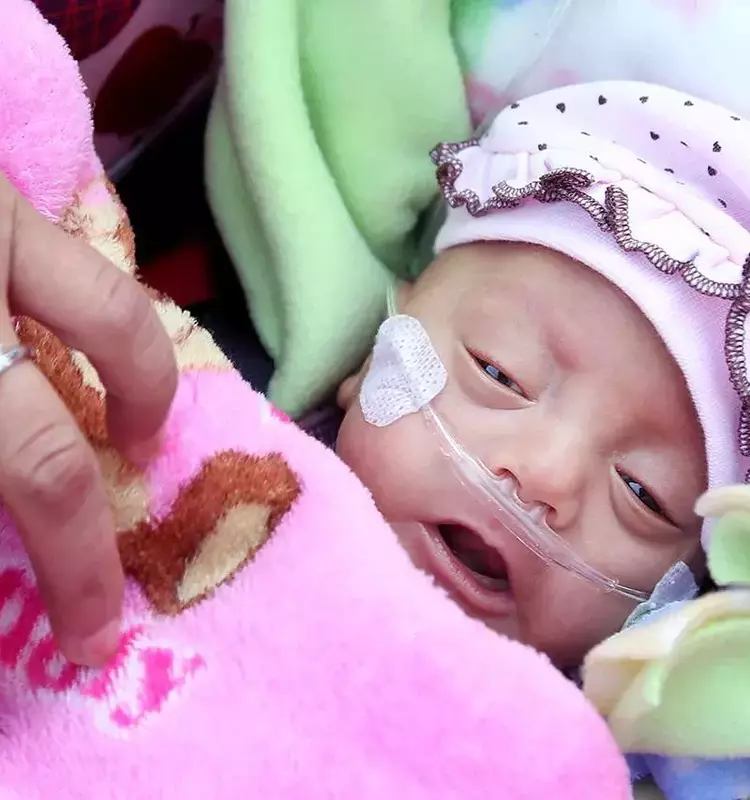
This piece examines the extraordinary journeys of some of the smallest and youngest premature infants who have defied daunting odds to survive. It delves into how breakthroughs in medical science have substantially elevated the chances of survival for babies born prematurely, sometimes as early as 21 weeks gestation. These narratives aim to provide comfort and encouragement to families navigating the complexities of preterm birth.
The remarkable resilience demonstrated by these infants underscores the ongoing advancements in neonatal medicine, offering a beacon of hope for challenging situations. Their stories serve as powerful testaments to human perseverance and the continuous evolution of healthcare for the most vulnerable among us.
Advances in Neonatal Care and Preemie Survival
Approximately one in ten births in the United States are premature, with a significant number occurring before 28 weeks. While many of these extremely preterm infants face severe health challenges and a lower chance of survival, remarkable strides in neonatal intensive care have led to improved outcomes. These medical advancements now allow even younger and smaller babies to survive, though the gap in survival rates between high-income and low-income countries continues to widen. For parents of preterm infants, these stories of resilience offer a source of hope and support, reminding them that positive outcomes are possible even in the most challenging circumstances.
The generally accepted age of viability is 24 weeks gestation, which often serves as a critical benchmark for medical interventions. Research indicates that babies born between 24 and 25 weeks have a survival probability ranging from 26% to 44%. However, in certain unique situations, infants born before 24 weeks have also survived, albeit with even lower odds. Despite surviving, micro-preemies often require extensive medical resources and may experience various developmental impairments, including cerebral palsy, visual or hearing loss, and cognitive delays. The continuous evolution of medical care is crucial in improving the long-term health and well-being of these fragile newborns.
Remarkable Journeys of the Tiniest Survivors
The world has witnessed several awe-inspiring cases of extremely small premature babies who have not only survived but are now flourishing. Kwek Yu Xuan, born in Singapore in June 2020 at just 24 weeks and weighing a mere 7.5 ounces due to her mother’s preeclampsia, made history as the smallest surviving baby. After 13 months of groundbreaking intensive care, she went home weighing 14 pounds, defying expectations with her growth and development. Similarly, Baby Saybie, born in December 2018 at 23 weeks and weighing 8.6 ounces, is another testament to medical miracles. Unlike many micro-preemies, she experienced minimal medical complications, and despite her initial tiny size, she continues to thrive at home in California, displaying remarkable progress.
Other notable survivors include Rumaisa Rahman, born in 2004 at 25 weeks and 8.6 ounces, who, despite having laser eye surgery, shows no other long-term effects from her premature birth. Melinda Star Guido, born in 2011 at 24 weeks and 9.5 ounces, was the second-smallest baby in the U.S. to survive, overcoming significant medical hurdles including bronchopulmonary dysplasia and requiring surgery for a patent ductus arteriosis. The German baby nicknamed “Tom Thumb,” born in 2009 at 25 weeks and 9.7 ounces, defied expectations as a male micro-preemie, a rarity among the smallest survivors. Madeline Mann, born in 1989 at 26 weeks and 9.9 ounces, set a world record and is now a healthy young woman. Kenna Moore, born in 2012 at 24 weeks and 9.6 ounces, continues to make progress after extensive therapy. These extraordinary narratives highlight that while these babies were very small, each additional day in the womb significantly contributes to their maturity and enhances their chances of a positive outcome.
