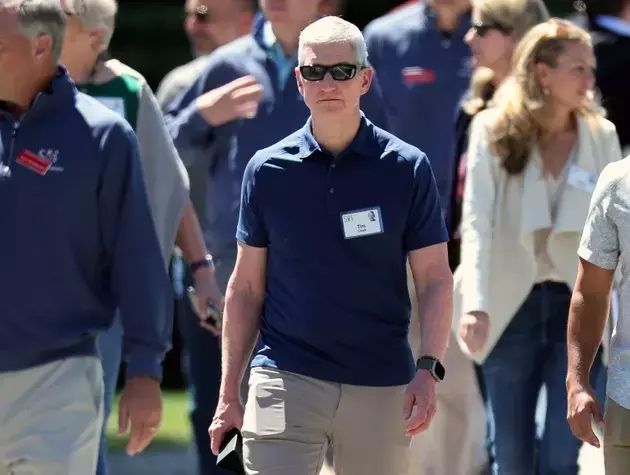
Apple Inc. is on the cusp of a major leadership shift, with Tim Cook's tenure as CEO nearing its end and John Ternus expected to step into the role. This pivotal moment arrives as the technology giant grapples with several operational hurdles. Analysts are scrutinizing the company's future, particularly in light of slowing iPhone upgrade cycles and the perceived absence of a comprehensive artificial intelligence strategy. The stock's current valuation, trading at more than 31 times its projected fiscal year 2026 earnings, raises questions about the sustainability of its growth trajectory, especially given the remarkable nearly 1,900% increase in stock value seen during Cook's leadership. The coming period will be critical for Apple as it navigates this leadership transition and addresses market concerns to maintain its competitive edge and investor confidence.
In a significant development for the technology world, Tim Cook, the long-standing CEO of Apple Inc. (AAPL), is preparing to step down from his leadership position. John Ternus, a prominent figure within the company's executive ranks, is slated to assume the coveted role of CEO. This transition unfolds at a crucial juncture for Apple, a period marked by considerable operational challenges and strategic evaluations. Observations suggest that the traditional iPhone replacement cycle, a cornerstone of Apple's revenue stream, may be decelerating, with the March quarter potentially signaling the conclusion of this trend. Furthermore, a key area of concern among market watchers is Apple's current stance on artificial intelligence. Despite the growing industry emphasis on AI, the company is perceived to lack a robust and clearly defined AI strategy, a factor that could impact its long-term innovation and market positioning. This perception is exacerbated by predictions of weaker App Store revenue, further highlighting the need for strategic diversification and growth drivers. Financially, Apple's stock is currently trading at a premium, commanding over 31 times its estimated earnings for fiscal year 2026. This elevated valuation is drawing scrutiny, especially when contrasted with the company's revenue growth, which has not kept pace with the monumental nearly 1,900% surge in the stock's value during Tim Cook's tenure. The incoming leadership will be tasked with revitalizing growth, innovating in key technological areas like AI, and ensuring that the company's valuation is underpinned by sustainable and compelling business performance.
This impending change at the helm of Apple Inc. prompts contemplation on the trajectory of technology giants in an ever-evolving market. The narrative suggests that even industry leaders, despite past successes, are not immune to the pressures of innovation and market dynamics. The focus on a new CEO, the challenges with the iPhone cycle, and the apparent gap in AI strategy underscore the relentless demand for adaptability and foresight in the tech sector. It serves as a reminder that sustained growth is not merely about maintaining existing strengths, but constantly reinventing and anticipating future trends. For investors and consumers alike, this transition will be a critical test of Apple's resilience and its capacity to chart a new course for innovation and market leadership in a post-Cook era.
