Embrace Smart Investing: Let Algorithms Work for Your Wealth!
Demystifying Automated Tax-Loss Harvesting
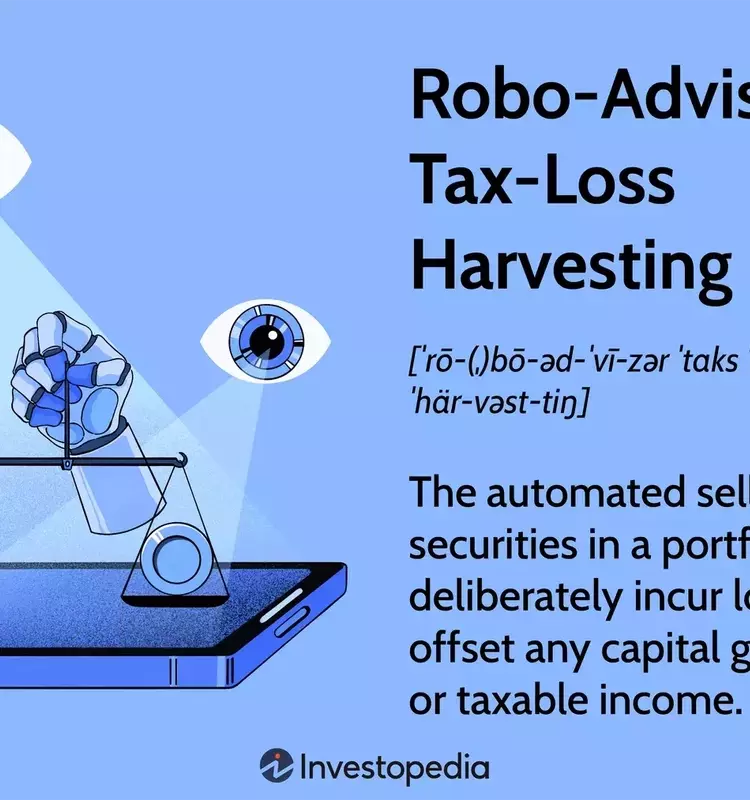
Financial technology, or fintech, has ushered in a new era where financial services are readily available and cost-effective through intelligent investment platforms. These robo-advisors meticulously construct personalized investment portfolios for their users, subsequently overseeing and recalibrating them periodically at affordable management fees. Tax-loss harvesting is a key offering from these platforms, representing a deliberate approach to reduce tax liabilities by realizing losses from security sales in taxable accounts, which then offset capital gains or income subject to taxation.
Illustrative Scenario of Portfolio Rebalancing
Robo-investment platforms employ sophisticated automated metrics to ensure that investor portfolios remain consistently balanced. Following a sale, the system automatically procures another exchange-traded fund (ETF) to substitute the sold asset, thereby maintaining the portfolio's equilibrium and market exposure. For instance, a platform like Wealthfront might divest from a broad market index ETF to realize a loss, subsequently acquiring a different, yet positively correlated, broad market index ETF. This strategy preserves the portfolio's optimal risk-return profile without infringing upon IRS regulations concerning substantially similar investments. After the statutory 30-day wash-sale period, the original ETF may be repurchased. Consider a scenario where a capital loss of $15,000 completely offsets a capital gain of $7,000. The residual $8,000 from the capital loss can then be utilized to diminish the investor's ordinary income for tax purposes, with a maximum of $3,000 deductible annually against ordinary income. Any surplus loss can be carried forward to future tax years.
Advantages of Robo-Advisor Tax-Loss Harvesting
Robo-advisors have significantly broadened access to tax-loss harvesting. These automated systems continuously monitor investment opportunities around the clock, aiming to minimize tax burdens. Successful implementation can lead to substantial savings without compromising the portfolio's stability or balance. Reinvesting these savings has the potential to yield even greater returns. A keen understanding and application of tax-efficient strategies are crucial components of intelligent investing. Executing this effectively can result in reduced tax obligations and amplified returns.
Potential Disadvantages and Considerations
Investors must be vigilant about the wash-sale rule, which prohibits repurchasing an identical or substantially similar security within 30 days of its sale. Non-compliance renders the capital loss invalid for tax purposes. Additionally, heightened trading activity incurs transaction fees, and meticulous record-keeping for cost basis reporting to the IRS is essential. Furthermore, tax-loss harvesting might prove disadvantageous if an investor anticipates a higher tax rate in subsequent years.
Automated vs. Human Financial Advisory for Tax-Loss Harvesting
While traditional financial advisors typically conduct tax-loss harvesting annually due to its labor-intensive nature, leading robo-advisors can perform these operations daily without human intervention. Robo-advisors possess the capability to identify numerous tax-loss harvesting opportunities across multiple portfolios, a feat impractical for a human advisor. Moreover, robo-advisors are programmed to be particularly alert during market downturns, capitalizing on and executing tax-loss harvesting opportunities as they emerge.
Final Thoughts on Tax-Loss Harvesting
Historically, tax-loss harvesting, the practice of selling securities at a loss to offset capital gains tax, was a complex and time-consuming endeavor, often overlooked by many investors. Robo-advisors have transformed this landscape, making automated tax-loss harvesting a simpler and more cost-effective method to reduce taxes without compromising portfolio integrity. While most robo-advisors offer this comprehensive service, making enrollment an apparent advantage, it is crucial to recognize that tax-loss harvesting is not universally beneficial and may not always be the most suitable strategy for every investor.
