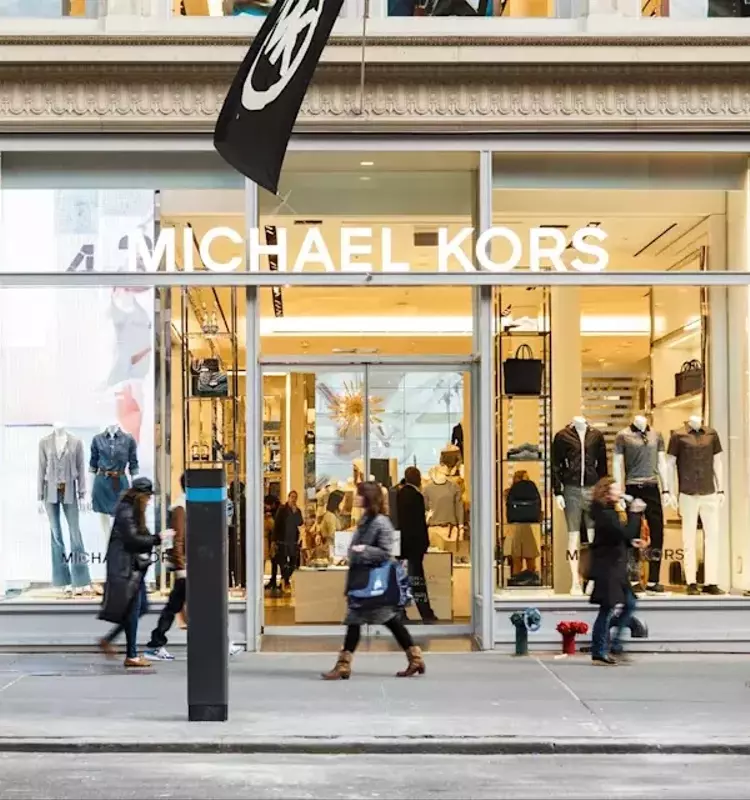
Capri Holdings Closes 41 Stores Amidst Luxury Market Shifts
Finance

Capri Holdings Closes 41 Stores Amidst Luxury Market Shifts

authorBy Mariana Mazzucato
DateAug 11, 2026
Read time2 min

Luxury fashion conglomerate Capri Holdings is strategically reducing its global retail presence, having shuttered 41 stores worldwide. This move reflects a wider industry trend among high-end brands navigating a challenging economic landscape characterized by fluctuating consumer spending and macroeconomic volatility. The company aims to consolidate its efforts, focusing on strengthening its remaining brands, Michael Kors and Jimmy Choo, and enhancing their appeal in a competitive market.

Capri Holdings Adjusts Retail Strategy with Significant Store Closures

In a significant corporate maneuver, Capri Holdings, the parent entity behind renowned luxury labels Michael Kors and Jimmy Choo, confirmed the closure of 41 retail outlets globally by June 27, 2026. This decision saw the discontinuation of 33 Michael Kors stores and 8 Jimmy Choo boutiques, marking a considerable reduction from its previous total of 912 locations to 871. This strategic recalibration follows a prior fiscal year where 79 locations were also closed, underscoring a continuous effort to optimize its physical footprint. Concurrently, the company reported a slight decrease in net revenue by 3.5% year-over-year to $769 million for the first quarter of fiscal year 2027, with Michael Kors' revenue declining by 7.1% to $590 million, while Jimmy Choo experienced a positive surge, increasing its revenue by 10.5% to $179 million.

This restructuring comes after Capri Holdings divested its Versace brand to Prada Group in December 2025 for approximately $1.44 billion, further narrowing its portfolio to focus on its two remaining key brands. The company has outlined a five-pronged strategy to boost growth, emphasizing enhanced brand appeal through compelling storytelling, innovative design reflecting brand heritage, improved customer experiences across all channels, personalized interactions leveraging data analytics, and strategic investments in store renovations, technology, and digital operations, alongside continued share buybacks. Despite a revised outlook for fiscal year 2027, projecting revenue of approximately $3.4 billion, CEO John Idol expressed optimism, highlighting a clear vision to elevate desirability, deepen consumer engagement, and strengthen product innovation for Michael Kors and Jimmy Choo.

The current retail landscape dictates a pragmatic approach, compelling luxury brands to reassess their physical presence. Capri Holdings' strategic closures are a testament to this, reflecting a broader industry-wide trend where competitors like Prada Group, Kering, Saks Global, Ferragamo, and Burberry have also significantly reduced their store counts. This collective shift underscores a concerted effort to adapt to evolving consumer behaviors, streamline operations, and channel resources into areas that promise sustained growth and heightened brand value in an increasingly selective luxury market.

More Articles
Finance
Understanding Price Movements in Financial Markets: Points, Ticks, and Pips
Financial markets utilize specific terminology to describe price fluctuations. Points, ticks, and pips are key metrics, each relevant to different asset classes. Points represent significant shifts in stock and index values, typically whole numbers. Ticks denote the smallest permissible price change, often seen in futures. Pips, primarily in forex, quantify minimal exchange rate variations, equivalent to 0.0001 of a currency unit. Grasping these distinctions is crucial for accurate market analysis and informed trading decisions.
By Suze OrmanAug 11, 2026
Finance
Nvidia's AI Financing Platforms: A Game Changer in GPU Depreciation Debate
Nvidia's CEO, Jensen Huang, is challenging traditional GPU depreciation models by promoting longer useful lives for these assets, a stance supported by the company's new compute financing platforms. These platforms, backed by major lenders, aim to inject over $500 billion into AI infrastructure, potentially extending the economic viability of older GPUs. This initiative contrasts sharply with Michael Burry's more bearish outlook, suggesting a dynamic shift in how AI hardware is valued and financed.
By Nouriel RoubiniAug 11, 2026
Finance
eToro's Strategic Acquisition of TradeZero: A Deep Dive into its US Expansion and Market Reaction
eToro has announced its acquisition of TradeZero for up to $231 million, signaling a major push into the US equities market. This move aims to accelerate eToro's product offerings and enhance its competitive edge against established brokers like Robinhood. Despite the strategic expansion, eToro's stock experienced a significant drop, reflecting investor concerns amidst a challenging crypto market and the high valuation of the acquisition.
By Mariana MazzucatoAug 11, 2026
Finance
NVIDIA's New Funding Framework Challenges Cloud Giants
NVIDIA CEO Jensen Huang has unveiled a groundbreaking financing initiative worth over $500 billion, collaborating with major financial institutions. This plan aims to reclassify GPU computing as a vital infrastructure component, facilitating significant investment in AI data centers. While NVIDIA's stock has seen an uptick, leading cloud providers like Amazon, Microsoft, and Alphabet have experienced declines, reflecting concerns about intensified competition from emerging cloud entities and AI research labs. This strategic move by NVIDIA is poised to democratize access to high-performance AI infrastructure, potentially reshaping the competitive landscape of the tech industry.
By Morgan HouselAug 11, 2026
Finance
Costco's Stock Performance: An End to Outsized Returns?
Costco's stock (COST) is currently trailing the broader market, signaling a potential shift as the era of valuation multiple-driven gains may be concluding. While consistent dividend increases and the possibility of a special dividend are attractive, they might not be sufficient to warrant a "Buy" rating for long-term investors. This analysis suggests that while short-term price fluctuations are probable, sustained outperformance is now considerably less likely for COST.
By Mariana MazzucatoAug 11, 2026