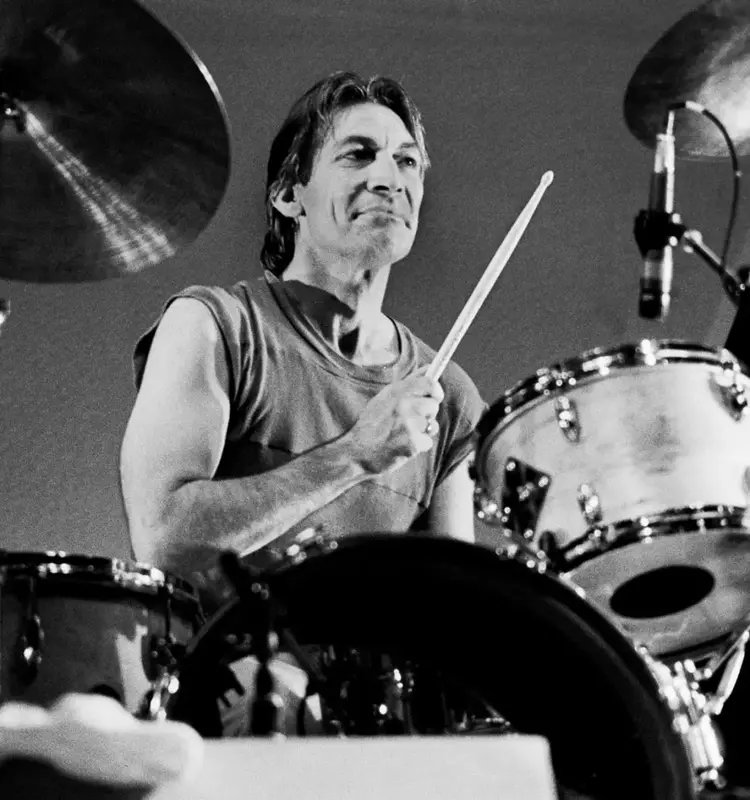
Charlie Watts's drumming was the foundational element of the Rolling Stones' sound, a fact often overshadowed by the more flamboyant personalities of Mick Jagger and Keith Richards. His unique blend of jazz and blues influences, combined with an understated yet powerful technique, created a rhythmic signature that defined the band's identity. This deep dive into Watts's artistry reveals how his distinctive approach to the drums made him an indispensable force in the world of rock and roll.
Watts's unwavering commitment to his individual style, even amidst changing musical trends and the band's escalating fame, solidified his place as a drumming legend. His preference for vintage, no-frills equipment and his quiet, precise playing demonstrated a profound understanding that true musical impact often comes from nuance and personality, rather than sheer volume or showmanship. His contributions transcended mere timekeeping, imbuing the Rolling Stones' music with a rhythmic vitality that remains instantly recognizable.
The Unique Rhythmic Signature of Charlie Watts
Charlie Watts's drumming was a distinctive and integral part of the Rolling Stones' sonic identity, characterized by his deep roots in jazz and blues. Unlike many rock drummers who favored a thunderous, aggressive style, Watts approached his instrument with a nuanced sensibility, allowing his personality to shine through subtle rhythmic peculiarities. His use of a traditional stick grip, which prioritized wrist action over brute force, produced a sharp, cracking snare sound that became his trademark. This unique technique, often complemented by frequent rim shots, gave his backbeats an unparalleled crispness and vitality. Watts's quiet yet powerful playing, even on vintage, often-banged-up equipment, demonstrated a masterful control that belied the massive stadium settings the band eventually commanded. This artistic restraint, focusing on precision and feel rather than volume, allowed the natural nuances of his drumming to be captured and amplified, contributing significantly to the Rolling Stones' iconic sound from their earliest hits like "(I Can't Get No) Satisfaction)" to their later works.
Watts's journey to becoming a rock icon was deeply shaped by the vibrant blues scene in 1950s and 60s Britain, where American jazz and blues records were a rare commodity. This scarcity fostered a tight-knit community of musicians, including Keith Richards and Mick Jagger, who were united by their shared passion for these sounds. Watts, already an accomplished drummer playing in local blues venues while attending art school, brought a sophistication and swing to the nascent Rolling Stones that set them apart from their contemporaries. His jazz-influenced timing and ability to infuse their covers of Muddy Waters and Howlin' Wolf with an authentic, yet distinct, rhythmic flair were pivotal. Even as the band began writing their own material, Watts's drumming remained central, evolving with songs like "Paint It, Black," where his pounding toms and massive fills added depth and intensity, or "Get Off of My Cloud," which opened with his signature bouncing beat. His early collaborations with Jagger and Richards established a rhythmic foundation that was both raw and precise, embodying the band's rougher edge compared to the more pop-oriented Beatles, and ensuring that the drums were an intrinsic part of every arrangement, not just a supporting element.
The Enduring Influence of a Master Drummer
Charlie Watts's enduring influence on rock drumming stems from his distinct approach, which emphasized precision, feel, and a unique sonic fingerprint. His signature snare sound, often described as a crisp crack rather than a dull thud, was achieved through a combination of his traditional grip, focused on wrist movement, and his frequent use of rim shots, which simultaneously struck the drumhead and rim. This meticulous attention to sound production, combined with his preference for unadorned, vintage drum kits, allowed him to create a powerful yet understated presence that was instantly recognizable. Watts's ability to imbue his playing with a subtle loping gait, as noted by fellow musicians, distinguished him from more conventional rock drummers who often relied on sheer force. His dedication to capturing naturalistic sounds, playing quietly and allowing microphones to pick up the nuances, further solidified his reputation as a drummer who prioritized musicality over spectacle, making his contributions to the Rolling Stones' catalog timeless and inimitable.
Watts's rhythmic innovations continued throughout his career, most notably in the 1970s when he began omitting his hi-hat during backbeats, thereby placing an even greater emphasis on the snare. This technique created a distinctive stutter in the rhythm, audible in tracks like "Sway" and "Happy," which further amplified his unique style and personality within the band's sound. His peers, including drummers like Phil Rudd of AC/DC and Bun E. Carlos of Cheap Trick, recognized and admired his uncluttered, yet deeply expressive, drumming. Watts derived his power from relaxation, a jazz technique that contrasted sharply with the more forceful approaches common in rock music. This relaxed demeanor, both on and off stage, was reflected in his drumming, allowing for a fluid, swinging rhythm that became elemental to the Rolling Stones' identity. Even when sharing the stage with elaborate stage props, Watts maintained his focused, quiet intensity, proving that true artistry lies in developing a unique voice that speaks volumes through subtle, deliberate choices.