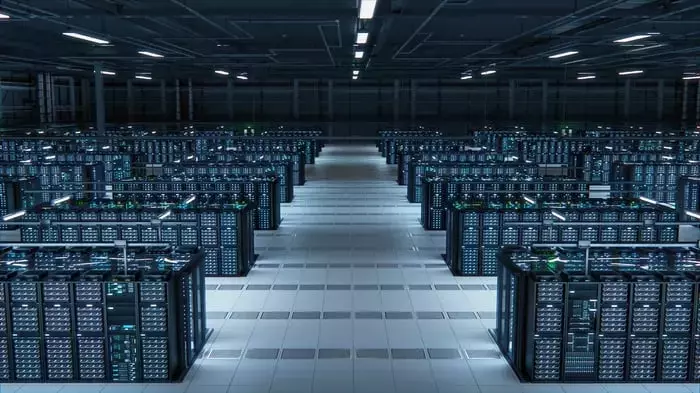
CoreWeave, a burgeoning force in specialized cloud services, recently finalized a substantial $14.2 billion agreement with Meta Platforms, solidifying its pivotal role in the rapidly expanding artificial intelligence infrastructure sector. This collaboration highlights the growing necessity for high-performance computing resources, particularly graphics processing units (GPUs), to power the next generation of AI technologies. The deal not only enhances CoreWeave's market standing but also underscores the dynamic landscape of cloud providers catering to the intricate demands of AI development.
While CoreWeave has achieved significant milestones, including its public market debut and this landmark deal, the investment landscape for such specialized companies presents both opportunities and challenges. The sector is characterized by intense competition and substantial capital requirements, making a comprehensive evaluation of these factors essential for potential investors.
The Strategic Importance of Neoclouds in AI Infrastructure
Neoclouds, exemplified by companies like CoreWeave, represent a new generation of cloud providers that diverge from traditional hyperscalers such as Amazon Web Services or Microsoft Azure. These specialized platforms are engineered primarily to deliver high-capacity GPU compute power, a critical component for advanced artificial intelligence workloads. Their operational model prioritizes rapid chip deployment, the construction of dense GPU clusters, and flexible pricing structures tailored specifically to the needs of AI developers. This focused approach is vital as the fundamental architecture of AI infrastructure continues to evolve, with a clear shift towards specialized hardware and optimized computing environments. The ability to provide scalable and reliable access to Nvidia GPUs on demand addresses a significant challenge for businesses at the forefront of developing large language models, agentic AI systems, and complex inference applications, where continuous access to computational resources is paramount to avoid bottlenecks and downtime.
CoreWeave's success in securing Meta Platforms as a major client is a testament to its capability to fulfill these specialized needs, offering a compelling alternative to internal data center expansions. By facilitating seamless access to high-performance computing, CoreWeave empowers AI innovators to push the boundaries of technology without the prohibitive costs and complexities associated with managing their own extensive hardware infrastructure. This strategic positioning not only benefits its clients by mitigating GPU shortages and stabilizing pricing but also provides CoreWeave with long-term revenue visibility, supporting its expansion and continued investment in cutting-edge technology. The shift towards such dedicated cloud solutions is indicative of the broader industry trend where specialized, high-performance computing is becoming indispensable for maintaining a competitive edge in the AI domain.
Navigating the Competitive Landscape and Investment Outlook
The specialized cloud computing sector, while lucrative, is intensely competitive, with several key players vying for market dominance. CoreWeave faces strong rivals such as Nebius Group, which recently secured a significant $17 billion deal with Microsoft, and Oracle, which cemented a massive $300 billion arrangement with OpenAI. Even companies traditionally focused on other sectors, like Iren with its Bitcoin mining operations, are repurposing their infrastructure to host Nvidia accelerators, underscoring the convergence of energy and computing resources in this evolving market. These competitors, much like CoreWeave, employ a common strategy: securing long-term, high-value contracts with leading AI enterprises to finance extensive data center expansions and scale operations rapidly in response to growing demand. These partnerships are mutually beneficial, offering customers a hedge against GPU scarcity and more stable pricing, while providers gain predictable revenue streams crucial for navigating a fast-paced market.
For investors, CoreWeave's substantial contract with Meta, following another major deal with OpenAI, creates a robust backlog. This strong demand position, coupled with the ongoing constraints in GPU supply, presents a compelling bullish case, suggesting potential for significant margin expansion and enhanced credibility. However, the inherent capital intensity of neocloud operations introduces considerable risks. These companies often rely on complex financing structures, sometimes involving hardware suppliers like Nvidia acting as financial backers. This model could prove vulnerable if demand falters, liquidity tightens, or clients shift to alternative chip technologies. Consequently, CoreWeave is often perceived more as a momentum stock driven by AI tailwinds rather than a traditional long-term compounder. While aggressive growth investors might find opportunities during market pullbacks, more conservative investors might favor established hyperscalers for their greater diversification and perceived stability.